ADHD Routine Charts That Support Calm, Focused Days
Disclosure: This page contains affiliate links. If you buy through them, PrintableBloom may earn a small commission, at no extra cost to you.
Daily routines can feel surprisingly heavy when focus shifts quickly and transitions take extra energy. For elementary-age kids, especially, the day often flows better when expectations are clear, visual, and gentle rather than rushed or verbal. That’s why thoughtfully designed ADHD routine charts have become such a helpful part of calm, supportive learning environments.
Instead of pushing productivity, these tools help create predictability. When the order of the day is visible and familiar, it becomes easier to move from one activity to the next with less resistance and fewer reminders. These routines work best as short, low-pressure activities rather than traditional worksheets. For days when routines need extra reinforcement, pairing charts with ADHD worksheets for elementary students can help strengthen focus and follow-through without adding pressure. Below is a carefully curated collection of routine charts, planners, and visual supports that work especially well as part of steady daily rhythms—at home, in classrooms, or within homeschool routines.
ADHD Planner for Kids
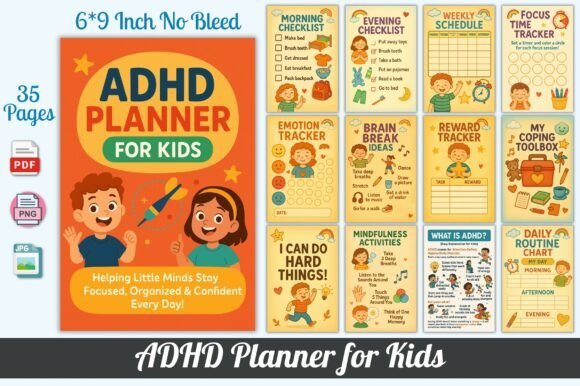
This planner offers a clear daily structure without feeling rigid or overwhelming. It’s often helpful during school weeks when tasks repeat but energy levels vary from day to day. The layout supports focus by breaking the day into manageable parts, making transitions feel more predictable. It works well as part of a calm routine where structure is present, but flexibility still matters.
2026 ADHD Planner for Kids
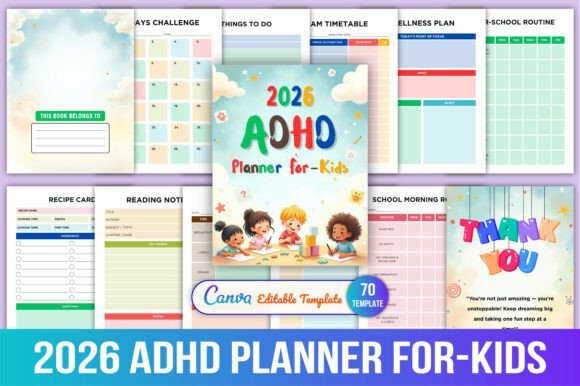
Designed for longer-term consistency, this planner supports routines that benefit from repetition over time. It’s especially useful when maintaining familiar patterns helps reduce daily decision fatigue. The structure feels steady rather than demanding, which makes it easier to return to routines even after off days. A solid option for routines that grow gradually stronger through consistency.
Daily Routine Cards
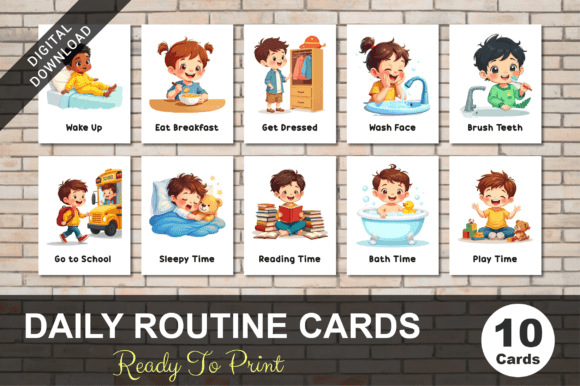
Routine cards work particularly well when visual cues are more effective than verbal reminders. They’re often helpful during morning or evening transitions, when focus can be harder to maintain. By showing each step clearly, these cards support independence while keeping routines calm and predictable. They fit naturally into environments where routines need to stay flexible but visible.
Daily Routine Cards for Kids
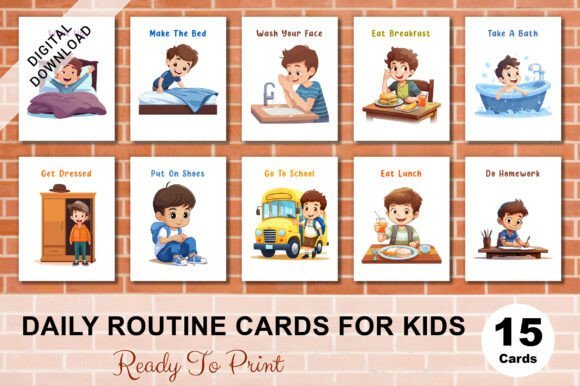
This version adds a softer, kid-friendly visual tone while keeping routines easy to follow. It’s helpful in both home and classroom settings where gentle guidance supports smoother transitions. The cards reduce uncertainty by clearly showing what comes next. As part of a daily routine, they help create a sense of flow without pressure.
2026 ADHD Planner for Kids (Canva)
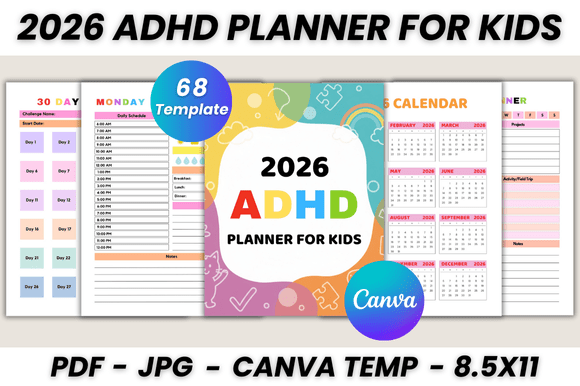
Editable and adaptable, this planner works well when routines need to adjust throughout the year. It’s often helpful during schedule changes, new school terms, or evolving daily needs. The structure supports focus while allowing small changes without disrupting the routine entirely. A practical choice for maintaining calm structure with built-in flexibility.
ADHD Planner for Kids 2024
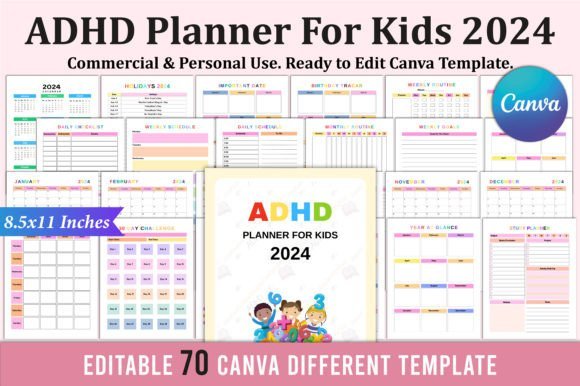
This planner focuses on day-to-day clarity rather than long-term planning. It’s especially useful when routines are built one day at a time. The layout keeps tasks visually simple, which helps reduce overwhelm. It works well as part of a routine that values gentle pacing and clear expectations.
2024–2025 ADHD Planner for Kids
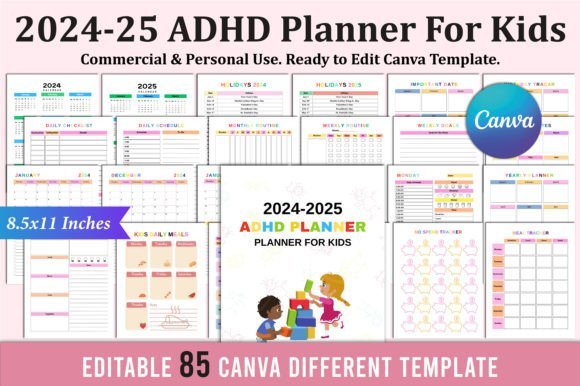
With its extended timeframe, this planner supports continuity across school years. It’s helpful when routines need to remain familiar even as schedules shift. The design encourages consistency without feeling repetitive. A good fit for long-term routine building where predictability supports focus.
ADHD Planner for Kids – Canva Interior
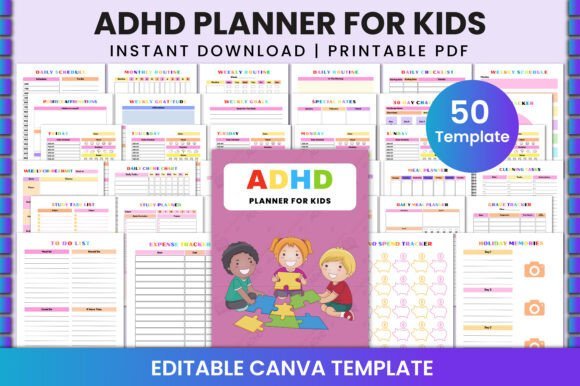
This option works well when routines are being customized from the ground up. It allows schedules to reflect individual daily rhythms rather than fixed templates. The structure supports focus while keeping everything visually organized. A flexible choice for creating calm, personalized routines.
2024 ADHD Planner for Kids
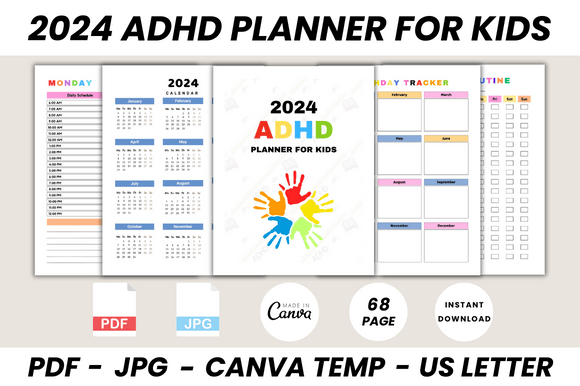
Simple and straightforward, this planner is useful for shorter routine cycles. It works well when structure is being introduced gradually. The clean layout avoids visual clutter, making it easier to stay focused. A supportive option for routines that prioritize ease and clarity.
2025 ADHD Planner for Kids
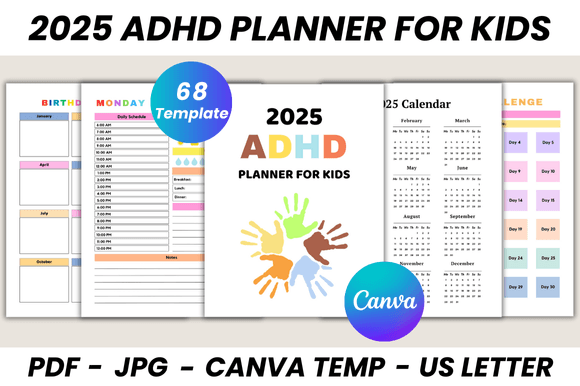
Designed with upcoming routines in mind, this planner helps maintain consistency during transitions between school years. It’s especially helpful when routines need to stay familiar while schedules change. The structure supports daily flow without adding pressure. A calm, forward-looking planning option.
Unicorn Reward Chart for Kids
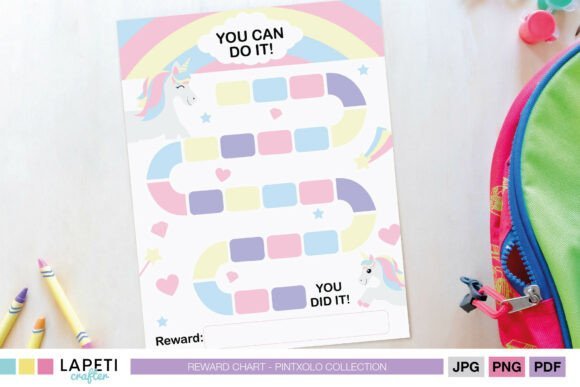
This chart adds gentle encouragement to daily routines without turning them into strict systems. It’s helpful when positive reinforcement supports consistency. The visual design keeps routines engaging while remaining calm. It pairs well with routine charts focused on steady habits rather than performance.
Morning & Evening Kids Routine Chart
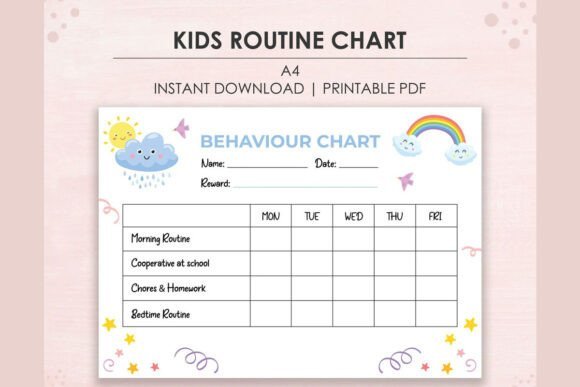
Separating morning and evening tasks makes transitions feel more manageable. This chart works especially well during busy start-and-end-of-day moments. By clearly showing expectations, it reduces verbal reminders. A reliable tool for creating smoother daily bookends.
Kids Routine Chart – Daily Routine
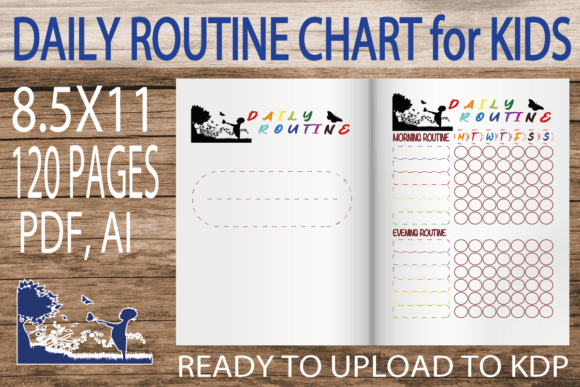
This chart focuses on repetition and clarity. It’s useful when routines need to remain simple and consistent. The visual flow supports steady movement through the day. It fits naturally into routines where familiarity helps maintain focus.
Daily Routine Chart for Kids
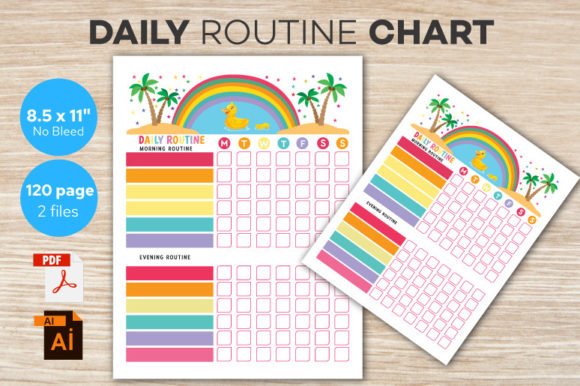
Designed for everyday use, this chart makes routines feel approachable rather than demanding. It works well during structured learning days. The layout keeps attention on key tasks without distraction. A calm foundation for daily schedules.
Daily Visual Schedule for Kids
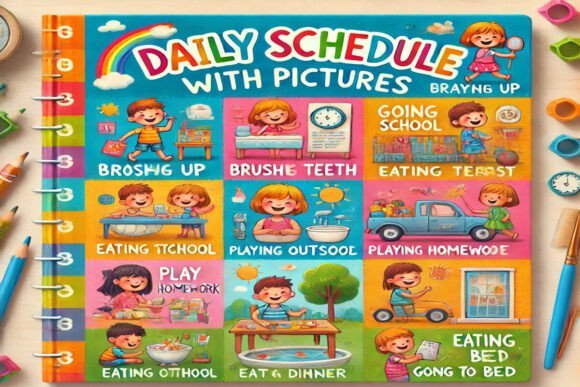
Visual schedules are especially helpful when routines need to be seen rather than explained. This format supports smoother transitions and clearer expectations. The design keeps steps easy to follow. A strong option for visually guided daily routines.
In environments where visual structure works best alongside calm sensory input, sensory-friendly learning support tools can further support attention and comfort throughout the day.
ADHD Routine Chart (Amazon)
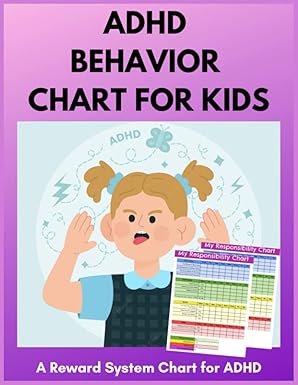
This physical routine chart offers a tangible way to support daily structure. It works well in home environments where visual reminders are part of the routine. The format supports consistency across days. A helpful addition to routine-based setups.
Daily Checklist for Kids (Amazon)
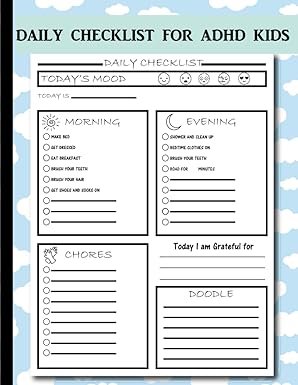
Breaking routines into checkable steps can make tasks feel more manageable. This checklist supports focus by showing clear completion points. It works especially well during busy parts of the day. A practical tool for maintaining routine flow.
ADHD Routine Charts for Kids (Amazon)
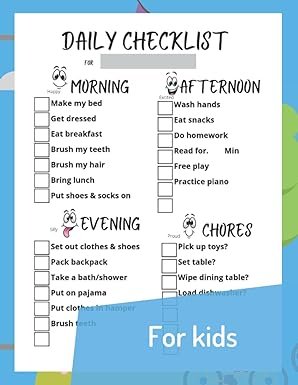
This set emphasizes repetition and visual clarity. It’s useful when routines need reinforcement without constant reminders. The layout supports steady engagement. It fits smoothly into structured daily systems.
Kids Routine Planner (Amazon)
Combining planning and routine tracking, this planner supports full-day structure. It works well when routines and tasks overlap. The format encourages consistency while remaining approachable. A solid choice for ongoing routine support.
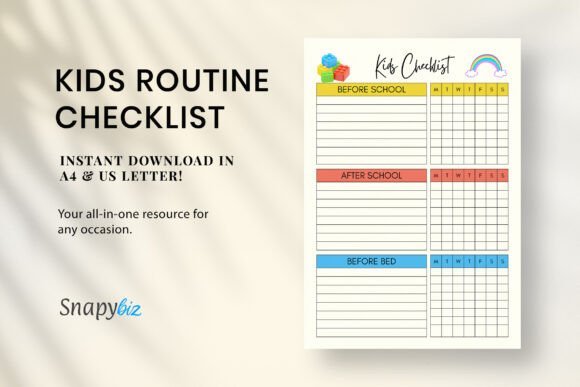
Daily Routine Checklist (Amazon)
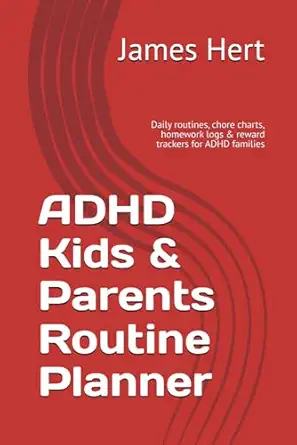
This checklist helps routines stay visible and predictable. It’s especially helpful during transitions between activities. The design keeps steps clear and easy to follow. A calm, reliable support for daily flow.
Supporting Calm, Predictable Routines
Well-designed ADHD routine charts aren’t about controlling the day—they’re about making it easier to move through it, and when routines feel overwhelming, adding calm down cards and printables can help reset emotions and keep daily flow feeling steady and manageable. When routines are clear and visually supported, focus often follows more naturally. Saving helpful ideas and returning to them later can make routine-building feel lighter and more sustainable over time.
Open & enjoy → my favorite collection