
How to Help a Young Child Calm Down (Without Losing Your Own Calm)
You know the moment. Your child is on the floor, red-faced and screaming over a snapped cracker or the wrong colored cup, and every fiber of you wants to say, “Please, just calm down.” I’ve been the mom in that hallway, and I’ve been the teacher with twenty little bodies and one big feeling filling the room. Here’s the reassuring truth I’ve learned in both places: a young child can’t calm down the way we ask them to, and once you understand why, everything about those hard moments gets a little softer.
Why young kids can’t “just calm down”
When your two-year-old melts down, it isn’t defiance and it isn’t a character flaw. It’s biology. The part of the brain that handles reasoning, impulse control, and “using words” — the prefrontal cortex — is still under heavy construction and won’t be anywhere near finished for years. In a big emotional moment, the older, faster survival part of the brain takes the wheel. Your child isn’t choosing to lose control; they’ve genuinely lost access to the thinking part of their brain for a few minutes.
This is why logic bounces right off a child mid-meltdown. Explaining, bargaining, or listing consequences all require the exact brain region that’s temporarily offline. It’s a bit like trying to teach someone to swim while they’re already underwater and panicking. The swimming lesson has to wait. First, they need to get to the surface — and that’s where you come in.
Holding this in mind changes how a meltdown feels. When you can silently remind yourself, “This is a brain that’s overwhelmed, not a child being bad,” your shoulders drop an inch. And that inch matters more than any script, because your calm is the actual tool here.
Step one is you: co-regulation before instruction
Here’s the single most important idea in this whole article: young children borrow calm from us before they can make their own. This is called co-regulation, and it’s not a technique so much as a relationship. Your steady heartbeat, your slower breathing, your softer voice — your child’s nervous system reads all of it and slowly begins to mirror it. You are, quite literally, lending them your regulated brain until theirs comes back online.
Which means the first move in helping a child calm down is not something you do to them. It’s something you do for yourself. Before you say a word, take one slow breath. Unclench your jaw. Lower your own voice on purpose, even if inside you’re frazzled. You don’t have to feel perfectly calm — you just have to act a notch calmer than the storm in front of you.
A few things that help me co-regulate in the moment:
- Get low. Kneel or sit so you’re at or below your child’s eye level. Towering over an upset child adds pressure; coming down to them signals safety.
- Soften your face and voice. A gentle “I’m right here” in a low, slow tone does more than any clever phrase said sharply.
- Offer your presence, not a fix. You don’t need to solve the cracker. You need to be a safe, warm anchor while the wave passes.
- Breathe where they can see you. Long, audible out-breaths. Children unconsciously match the rhythm around them.
If you take nothing else from this: regulate yourself first, every single time. A dysregulated adult cannot calm a dysregulated child — it just pours fuel on the fire. Your calm isn’t a bonus. It’s the intervention.
In-the-moment strategies for ages 2-3
Toddlers live in their bodies and their senses, not in their words. At this age, expect big, physical feelings and very little ability to talk about them. That’s completely normal. Your approach here is mostly wordless and sensory.
- Lead with connection. Get close and offer comfort before anything else — a hand on the back, open arms, or simply sitting nearby. Some toddlers want to be held; others need a little space and just want you close. Follow their cues.
- Name the feeling in tiny words. “You’re so mad. That cracker broke.” You’re not asking them to respond — you’re putting a small, calm label on the chaos so they slowly learn that feelings have names.
- Reduce the input. Turn off the TV, dim the lights, lower your voice, move to a quieter spot. An overwhelmed toddler brain often just has too much coming in.
- Offer a sensory anchor. A cozy blanket, a favorite stuffed animal, a big squeeze, or slow rocking. Deep pressure and rhythm are genuinely soothing to a young nervous system.
- Keep words few. Short, repeated, gentle: “I’ve got you. You’re safe. I’m here.” Save the explanations for later — much later.
Realistic expectation: a two-year-old’s meltdown often has to run its course, and that’s okay. Your job isn’t to stop the wave, it’s to keep them safe and connected while it crests and falls. That is a complete, good-enough job.
In-the-moment strategies for ages 4-7
By preschool and into the early school years, children have more language and a slightly stronger “brakes” system — but it still fails easily under stress, and that’s normal too. You can begin to invite a little more participation, as long as you still lead with connection first.
- Connect, then guide. Still start with warmth: “I can see this is really hard. I’m here.” Only once their body starts to settle can they actually hear a suggestion.
- Acknowledge before redirecting. “You really wanted to keep playing. It’s frustrating to stop.” Feeling understood lowers the temperature far faster than “you’re fine.”
- Offer a calming action, not a command. “Do you want to squeeze my hands or blow out the candle with me?” A choice gives back a sense of control, which meltdowns often steal.
- Use a calm-down space, not a time-out. Invite, don’t banish: “Want to go to our cozy corner together?” The goal is soothing, not punishment.
- Move the body gently. A slow walk to the window, a drink of water, pushing against a wall, or a big stretch can help discharge the physical charge of a strong feeling.
A gentle reminder for this age: even a very verbal five-year-old will sometimes fall completely apart over something small, and still not be able to explain it. That’s not regression or manipulation. Their regulation system is real but young, and it tires easily. Meet it with the same patience you’d give a toddler.
Simple calming tools that work
Once you’ve got the foundation — you calm first, connection before correction — a few concrete tools can give both of you something to reach for. The trick is that tools work best when they’re familiar, so introduce them during calm times, not for the first time in a storm.
Breathing you can actually see. Abstract “take a deep breath” means little to a young child. Make it visual and playful instead. Pretend to blow out birthday candles, blow a slow imaginary bubble, or “smell the flower, blow out the candle.” Trace up and down the fingers of one hand, breathing in on the way up and out on the way down. These give the out-breath — the part that actually calms the body — something concrete to do.
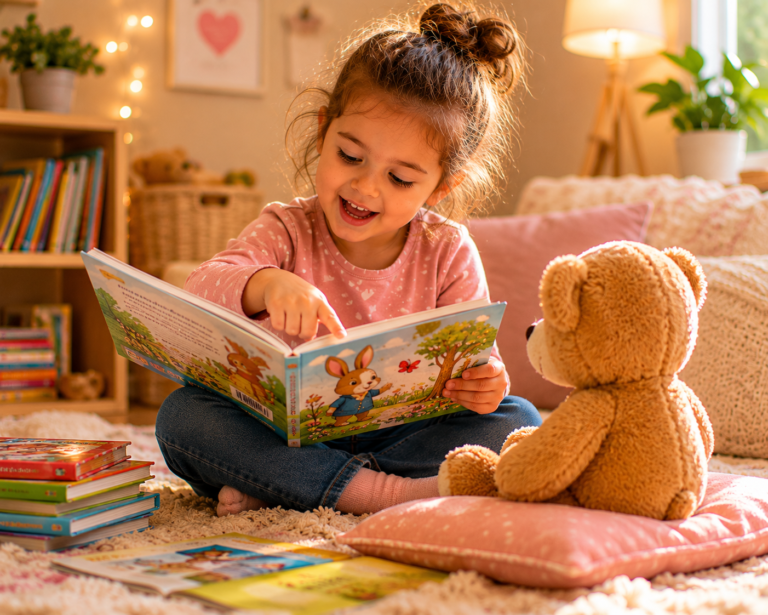
A calm corner. Set up a small, cozy spot with a cushion, a soft blanket, a stuffed animal, maybe a board book or a squishy toy. Frame it as a friendly place to reset, never a punishment. Some of the calm and quiet activities you already do together can live here too, so the space feels warm and inviting rather than like a corner of shame.
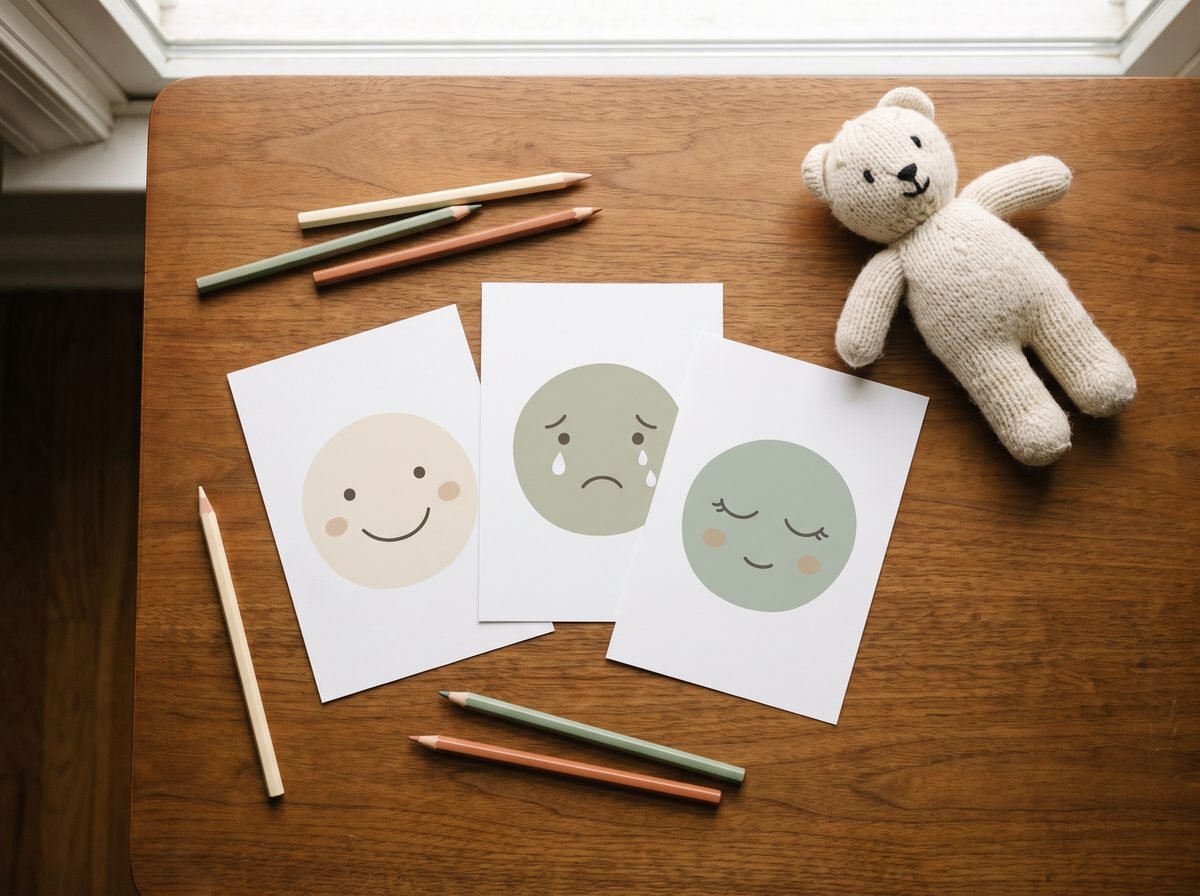
Visual feelings cards. Little cards with simple faces or calming actions give a child a way to point when words won’t come, and they turn “calm down” into something they can actually see and do. Many families keep a small set of calm-down cards for everyday support in the cozy corner or clipped to a bag for outings.
Everyday practice. The calmest kids aren’t the ones with the most tools — they’re the ones who’ve practiced regulation when nothing is wrong. Weaving in a few gentle mindfulness activities for kids during quiet parts of the day builds the muscle you’ll want to draw on later. A short breathing game before nap or a body-scan at bedtime plants the seed.
After the storm: reconnecting and naming what happened
When the crying slows and your child’s body softens, resist the urge to launch straight into a lesson. The reconnection is the lesson. This quiet moment afterward is when a little learning can finally happen, because the thinking brain is back online.
Keep it simple and warm:
- Reconnect first. A cuddle, a drink of water, a quiet “That was a big one, huh? I’m glad you’re feeling better.” Repair the connection before you review anything.
- Name it, gently and briefly. “You got really mad when we had to leave the park. That was hard.” You’re helping build the vocabulary of feelings, one calm label at a time.
- Skip the shame. No lectures, no “see what happens when…”, no making them apologize on command for having a feeling. They lost control; they didn’t commit a crime.
- Look forward lightly. “Next time we feel that mad, maybe we can blow out our candles together.” Plant the idea, then let it go.
Small, calm words at bedtime can gently reinforce all of this over time. Some parents like to fold in a few simple positive affirmations for kids — phrases like “big feelings are okay, and they always pass” — so the message lands when everyone is peaceful, not in the heat of the moment.
What to skip: why “use your words” rarely works mid-meltdown
“Use your words” is well-meaning advice that asks the impossible at the worst possible time. Mid-meltdown, the language centers of the brain are swamped by the emotional flood. A child who could count to twenty an hour ago genuinely cannot find a single sentence right now. Asking them to explain themselves often just adds frustration to overwhelm.
The same goes for reasoning, negotiating, counting to three, or listing consequences in the thick of it — they all lean on the offline part of the brain. So does asking “why did you do that?” There’s no answer available, only more pressure. Save all the words for after, when the thinking brain has come back. During the storm, fewer words and more presence almost always works better.
Building calm-down habits before you need them
The most powerful thing you can do happens on the ordinary, boring days. Regulation is a skill, and like all skills it’s built through repetition when the stakes are low, not invented in a crisis. Practice the birthday-candle breath while you wait for toast. Visit the cozy corner together just to read, so it feels like a friend and not a punishment. Name your own feelings out loud in small ways: “I’m feeling a little frustrated, so I’m going to take a big breath.” You are the most powerful model your child has.
Do this often enough and something lovely happens: one day, in a smaller upset, your child reaches for the tool on their own. Maybe they take one wobbly breath, or toddle toward the cushions, or whisper “I’m mad.” It won’t be perfect and it won’t happen every time. But that’s a child slowly learning to do for themselves what you’ve been doing for them all along.
Items for a Calm-Down Basket
A calm-down basket holds a few things that slow a child down: something to watch, something to squeeze and a way to make the room quieter.
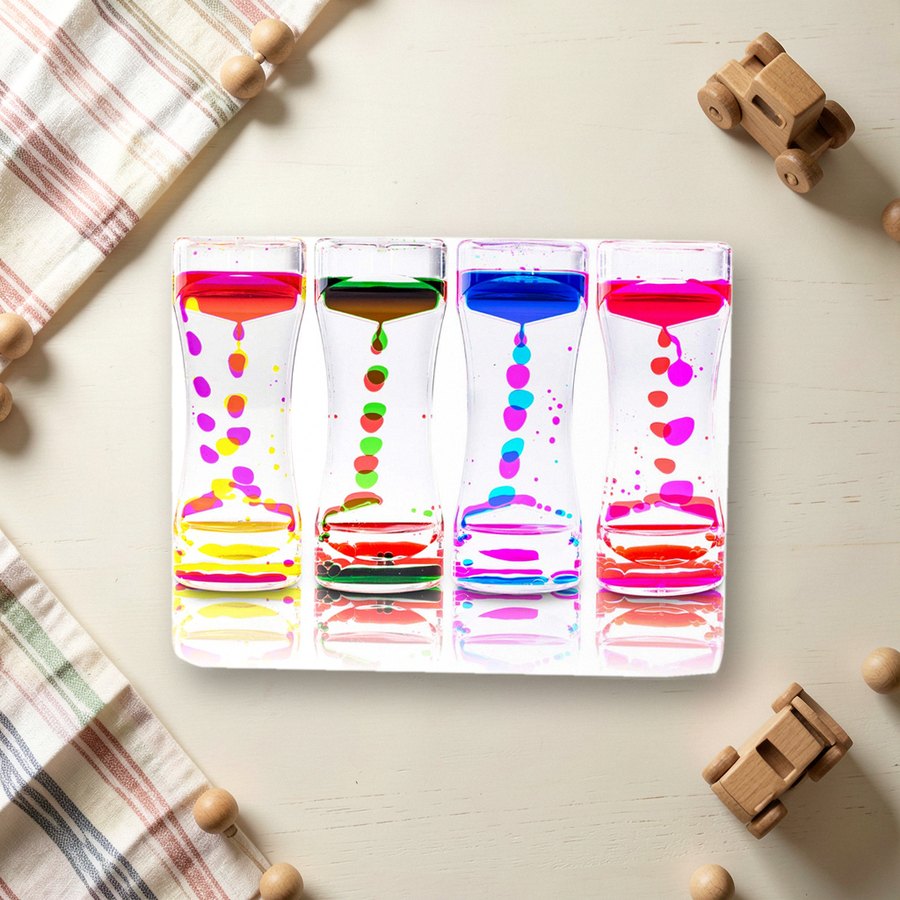 Liquid motion bubblerView on Amazon
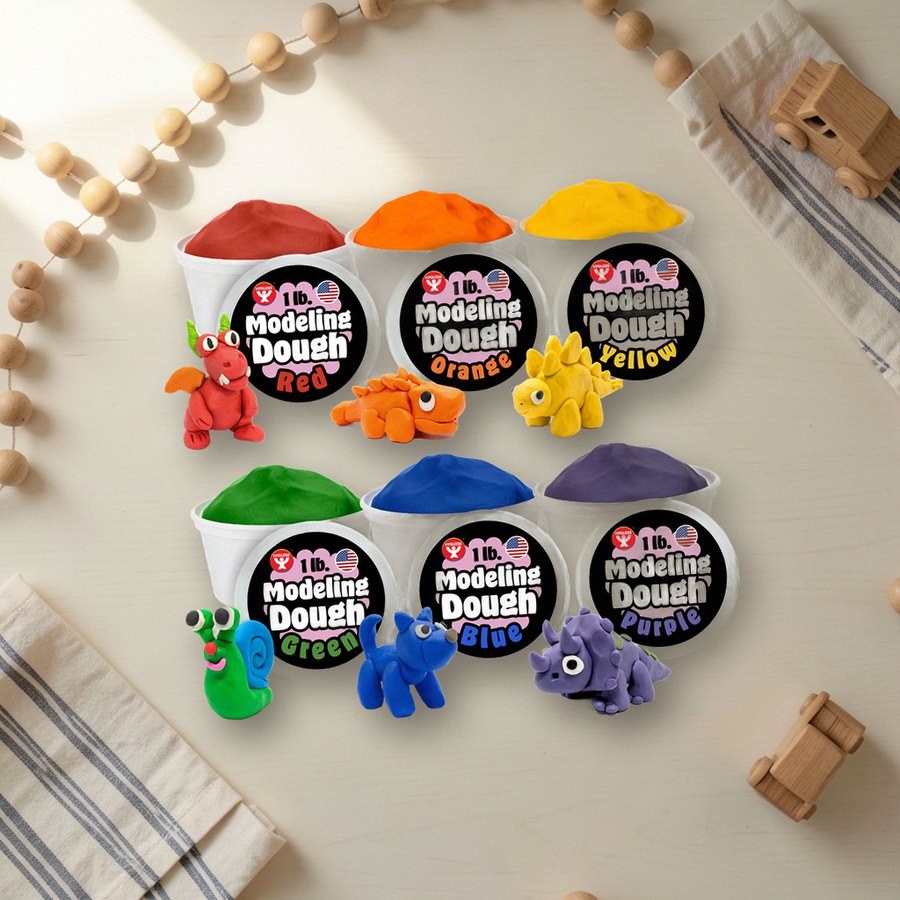 Modeling dough, 6 colorsView on Amazon
 Kids noise-reducing ear muffsView on Amazon
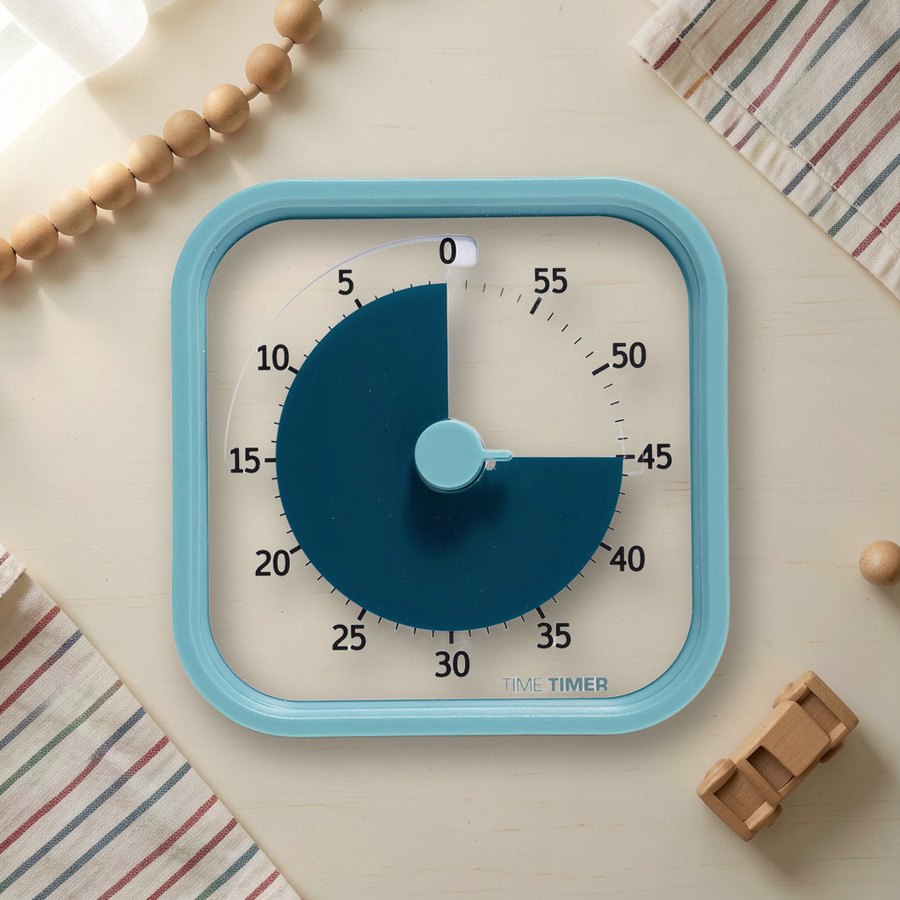 60-minute visual timer (Time Timer)View on Amazon
As an Amazon Associate, PrintableBloom earns from qualifying purchases.
A gentle wrap-up
Helping a young child calm down isn’t about having the perfect phrase or a flawless system. It’s about being a steady, warm harbor while a small person learns, over years, to weather their own storms. You will lose your own calm sometimes — I certainly do — and repairing afterward teaches just as much as staying serene ever could. Go easy on your child, and go easy on yourself. The very fact that you’re reading this, wanting to do it more gently, means your child already has exactly what they need most: you, showing up, again and again.