What Should a 4-Year-Old Know Before Kindergarten?
As kindergarten approaches, a quiet worry settles over a lot of parents: is my child ready? Do they know enough? Are they behind? It’s one of the most common sources of preschool-age anxiety — and most of it stems from not having a clear, realistic picture of what kindergarten readiness actually requires.
Here’s what’s reassuring: kindergarten readiness skills are far broader, and far more achievable, than most parents fear. It’s not about reading fluently or doing math. It’s about a foundation of social, physical, and early academic skills that most children build naturally with the right support. If you’d like structured practice to fill in any gaps, our kindergarten worksheets are designed exactly for this transition. But first — let’s get clear on what your 4-year-old actually needs to know.
What Kindergarten Readiness Skills Actually Mean
The biggest misconception about kindergarten readiness is that it’s mostly academic — that a child needs to read, write, and do math before they start. In reality, child development experts and kindergarten teachers consistently emphasize that readiness is far more about social, emotional, and self-regulation skills than academic knowledge.
When kindergarten teachers are asked what they most want incoming students to have, they rarely list reading or counting first. They list things like: can follow simple directions, can separate from a parent without prolonged distress, can take turns, can use the bathroom independently, can sit and listen for a short story. These foundational skills matter more than any worksheet — because they’re what allow a child to actually access learning in a classroom setting.
The Full Picture: Kindergarten Readiness by Skill Area
Readiness spans five areas. Here’s a realistic look at what’s typically expected in each — remembering that no child needs to master every single item, and wide variation is completely normal.
| Skill Area | What’s Typically Expected |
|---|---|
| Social & Emotional | Separates from parent, takes turns, follows simple rules, manages basic emotions, plays with others |
| Self-Care & Independence | Uses bathroom independently, washes hands, puts on coat/shoes, manages belongings |
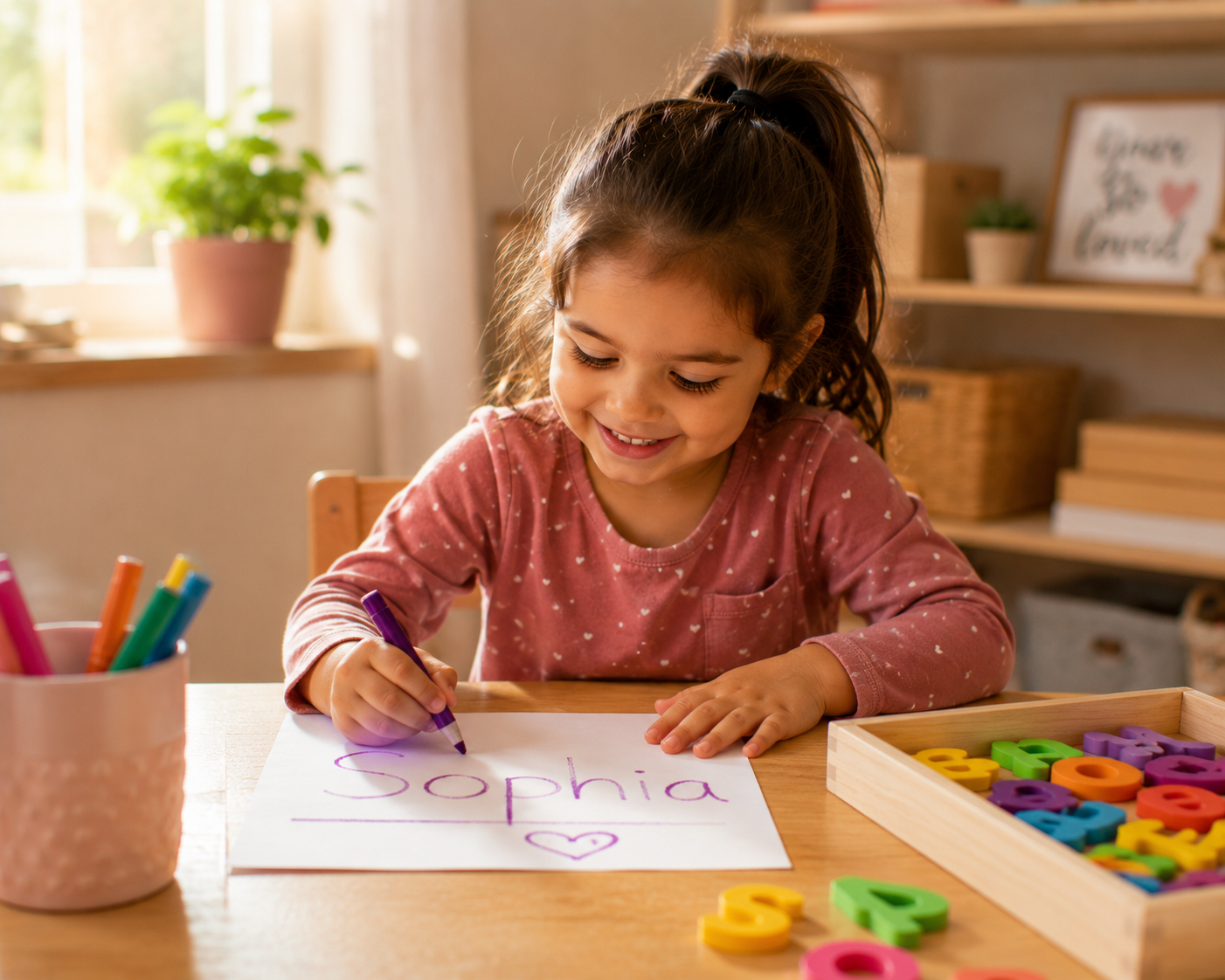
| Early Literacy | Recognizes most letters, knows some letter sounds, recognizes own name, enjoys being read to |
| Early Math | Counts to 10–20, recognizes numbers 1–10, understands more/less, knows basic shapes |
| Fine & Gross Motor | Holds pencil with fingers, uses scissors, draws shapes, runs, jumps, climbs |
Social and Emotional Skills (The Most Important Foundation)
These come first because they matter most. A child who can regulate their emotions and interact with others is positioned to thrive in kindergarten regardless of where their academic skills are.
- Separating from caregivers without prolonged distress
- Following simple two-step directions (“put your cup away and sit down”)
- Taking turns and sharing during play
- Managing big feelings with some support — recovering from disappointment, not hitting when angry
- Playing cooperatively with other children
- Sitting and listening to a short story or instruction
Early Literacy Skills for Kindergarten
Early literacy readiness is not about reading. It’s about the foundational skills that reading is built on:
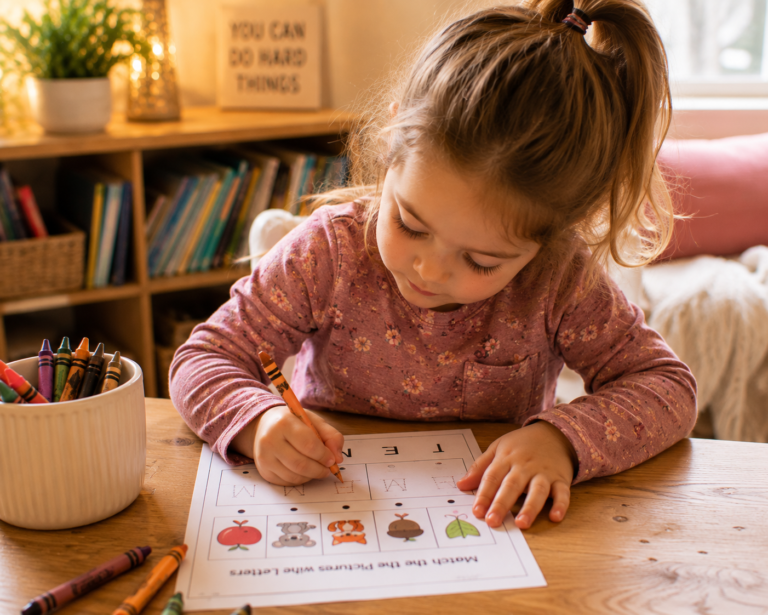
- Recognizing most uppercase letters (and some lowercase)
- Knowing some letter sounds — even just a handful
- Recognizing and possibly writing their own first name
- Enjoying read-aloud time and handling books correctly (turning pages, front to back)
- Recognizing rhyming words and beginning sounds
- Speaking in complete sentences and being understood by adults
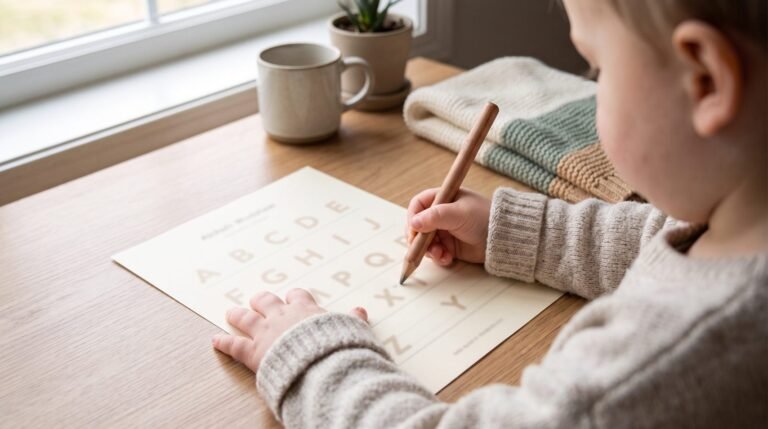
Our alphabet worksheets for kindergarten support letter recognition and early sound awareness in a calm, structured format that bridges the preschool-to-kindergarten transition.
Early Math Skills for Kindergarten
Like literacy, kindergarten math readiness is about foundations, not formal math:
- Counting to at least 10, ideally toward 20
- Recognizing numerals 1–10
- One-to-one correspondence (counting objects accurately, one number per item)
- Understanding concepts of “more,” “less,” and “same”
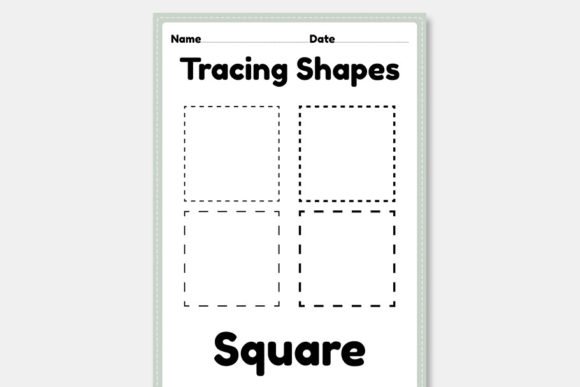
- Recognizing basic shapes (circle, square, triangle, rectangle)
- Sorting and grouping objects by attributes (color, size, type)
Our math worksheets for kindergarten cover number recognition, counting, and early math concepts in a way that builds confidence rather than pressure.
If your child can count to 20, recognize most letters, write their name, follow two-step directions, separate from you calmly, use the bathroom independently, and play cooperatively with other children — they are well prepared for kindergarten. Most children develop these skills naturally between ages 4 and 5 with consistent, low-pressure support at home. You’re likely doing more than you realize.
Fine and Gross Motor Skills
Physical development matters for kindergarten in practical ways — from holding a pencil to navigating the playground:
- Fine motor: holds a crayon/pencil with fingers, uses child-safe scissors, draws basic shapes, manages buttons and zippers
- Gross motor: runs, jumps with both feet, climbs, throws and catches a ball, balances briefly on one foot
Fine motor readiness in particular supports the writing and cutting tasks kindergarten introduces. If your child needs strengthening here, our fine motor skills worksheets offer structured practice.
What You Don’t Need to Worry About
Just as important as knowing what to build is knowing what NOT to stress about:
- Reading. Children are not expected to read before kindergarten. Reading instruction is a core part of the kindergarten curriculum itself.
- Writing sentences. Writing their name is plenty. Sentence writing comes later.
- Math beyond counting. No addition, no subtraction. Counting and number recognition is the foundation; arithmetic is taught in school.
- Knowing everything on a checklist. Readiness checklists describe a range. No child arrives knowing every item, and they’re not supposed to.

How to Build Kindergarten Readiness at Home (Without Pressure)
The most effective kindergarten prep is woven into ordinary life — not delivered as drills:
- Read every day. The single highest-impact readiness activity. Builds vocabulary, listening, letter awareness, and love of books.
- Count and sort during daily life. Stairs, snacks, laundry, toys. Number sense grows through repetition in real contexts.
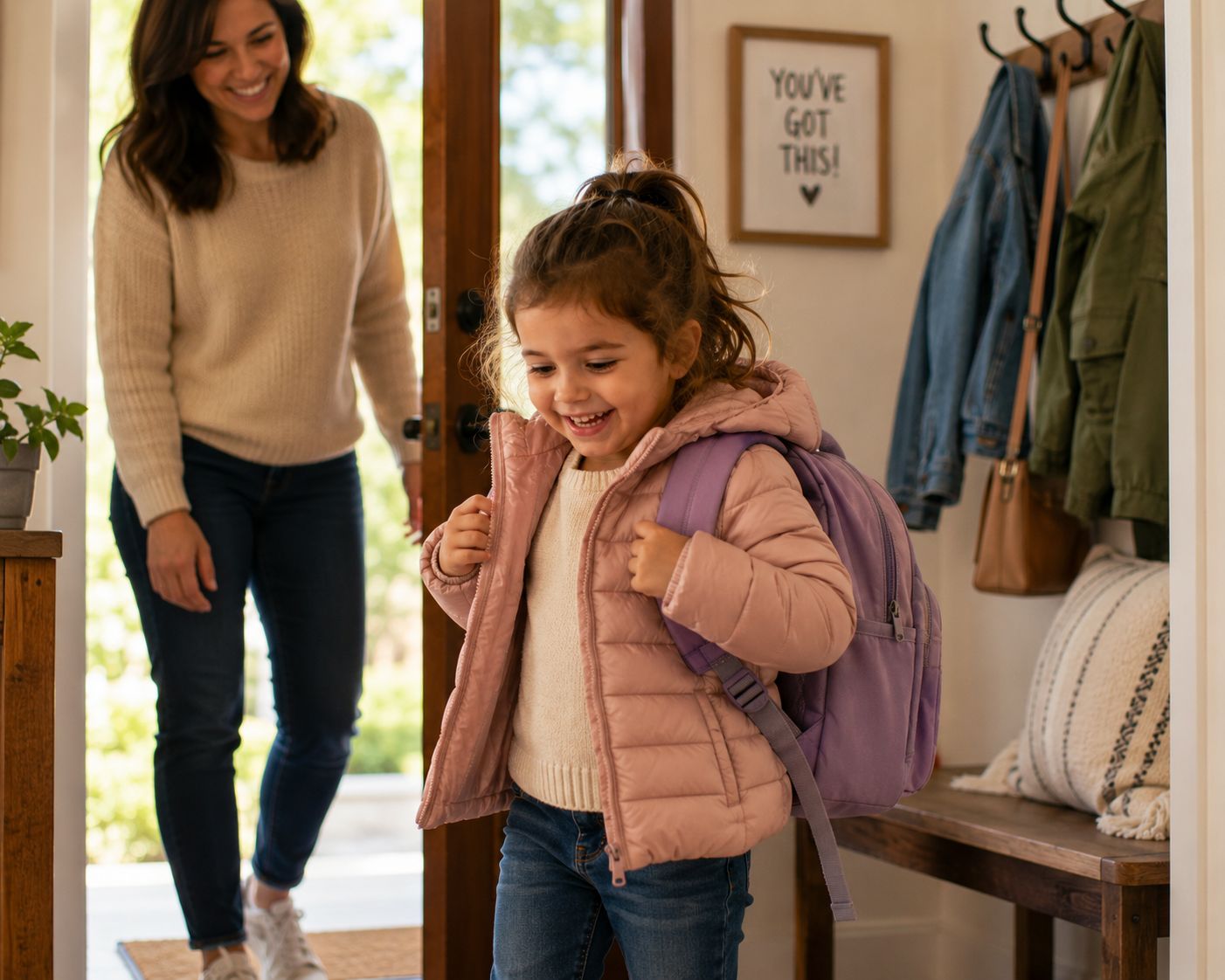
- Practice self-care skills. Let them put on their own coat, manage their own backpack, use the bathroom independently. Independence is a readiness skill.
- Set up playdates. Practice with sharing, turn-taking, and cooperation matters as much as any academic skill.
- Short, fun learning activities. A few minutes of alphabet or number practice, kept light and positive, reinforces foundations.
A Kindergarten Readiness Checklist
- Separates from caregiver without prolonged distress
- Follows simple two-step directions
- Takes turns and plays cooperatively
- Uses the bathroom and washes hands independently
- Recognizes most letters and some letter sounds
- Recognizes and ideally writes own first name
- Counts to 10–20 and recognizes numbers 1–10
- Holds a pencil with fingers and uses scissors
- Knows basic shapes and colors
- Speaks in complete sentences
Materials for Readiness Practice at Home
None of the skills above need special equipment. These simply cover cutting, letters, counting and puzzles in one small set.
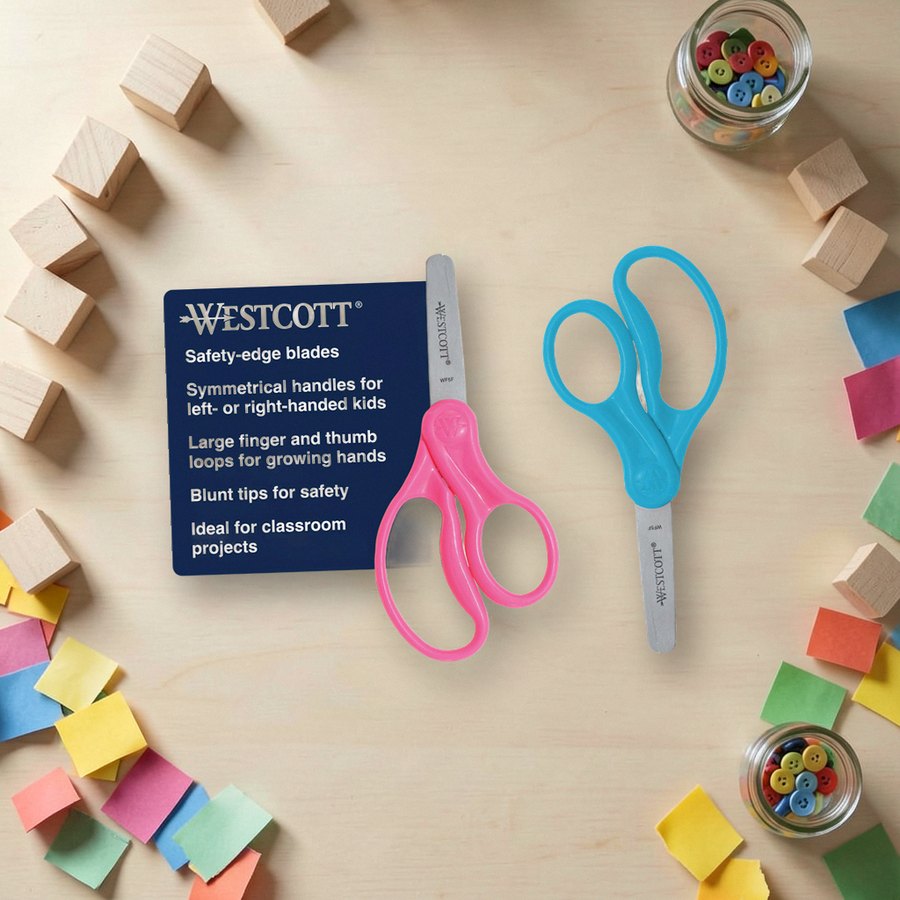 Blunt-tip kids scissorsView on Amazon
 Magnetic letters and numbersView on Amazon
 Bear counters, 102 piecesView on Amazon
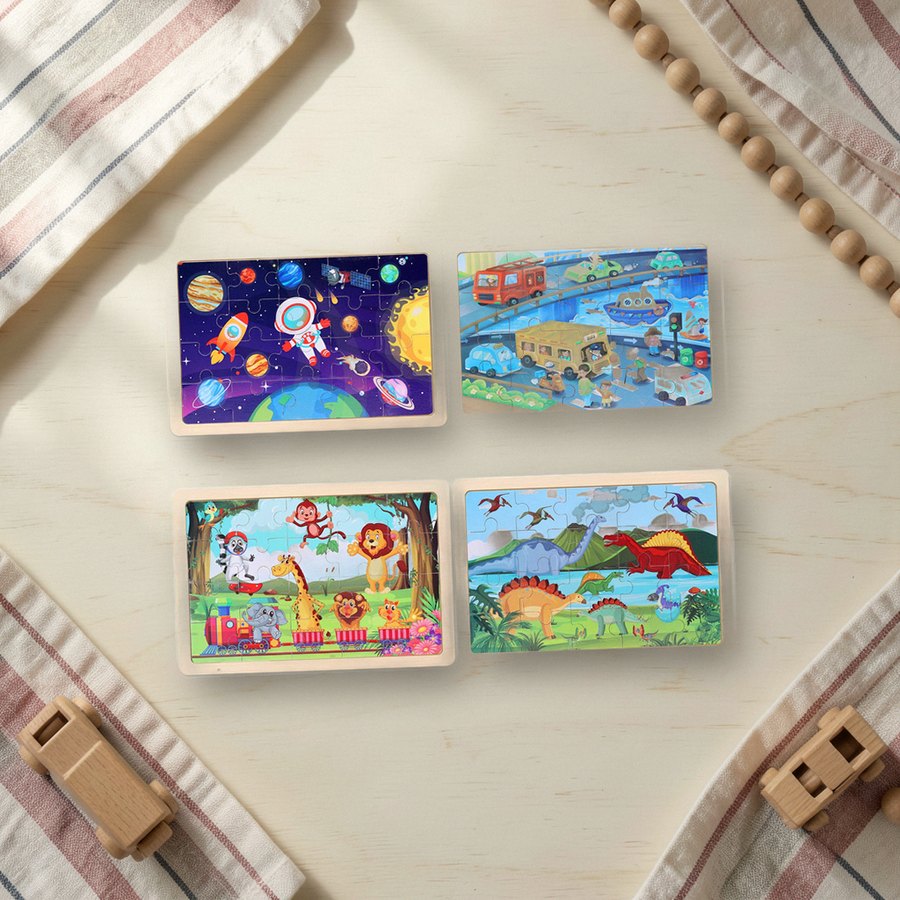 Wooden jigsaw puzzles for ages 3-5, 4 packView on Amazon
As an Amazon Associate, PrintableBloom earns from qualifying purchases.
Conclusion
What should a 4-year-old know before kindergarten? Less than you fear, and more than you’ve probably given yourself credit for already building. The reading and the math and the formal academics — those are kindergarten’s job. Your job, in this last year before school, is the foundation: a child who can manage their feelings, follow directions, take turns, care for themselves, and approach learning with curiosity rather than dread.
If your child counts the stairs, recognizes the letters in their name, separates from you with a wave instead of tears, and plays happily with other kids — they are ready. Truly ready.
Trust what you’ve built. Keep reading together. Keep it light. And send them off to kindergarten knowing that the most important preparation isn’t a stack of worksheets — it’s the confident, curious, emotionally secure little person you’ve been raising all along.
Frequently Asked Questions
What is the most important skill for kindergarten readiness?
Kindergarten teachers consistently identify social-emotional and self-regulation skills as the most important — particularly the ability to follow directions, manage emotions, take turns, separate from caregivers, and work independently. These skills matter more than academic knowledge because they’re what allow a child to access and engage with classroom learning. Academic skills are taught in kindergarten; the social foundation is the prerequisite.
Should my child be able to read before kindergarten?
No. Children are not expected to read before kindergarten — reading instruction is a central part of the kindergarten curriculum. What helps is pre-reading foundation: recognizing most letters, knowing some letter sounds, enjoying read-alouds, and recognizing their own name. A child who arrives with these foundations is well prepared, even if they can’t read a single word yet.
What math should a 4-year-old know before kindergarten?
Before kindergarten, most children should be able to count to at least 10 (ideally toward 20), recognize numerals 1–10, count objects accurately with one-to-one correspondence, understand “more” and “less,” and recognize basic shapes. Formal arithmetic — addition and subtraction — is not expected; that’s taught in kindergarten and beyond. Number sense, not calculation, is the goal at this stage.
My 4-year-old is behind on some readiness skills. Should I be worried?
Not necessarily. Readiness checklists describe a range, and no child arrives knowing every item. Children develop at different rates, and a gap in one area is rarely cause for alarm — especially with a year still to go before kindergarten. Focus gently on the areas that need support, keep the approach low-pressure, and consult your child’s preschool teacher or pediatrician if you have specific persistent concerns.
How can I prepare my child for kindergarten at home?
The most effective home preparation is woven into daily life: read together every day, count and sort during everyday activities, practice self-care independence (coats, bathroom, belongings), arrange playdates for social practice, and do short, fun letter and number activities. Keep everything low-pressure. The goal is building confidence and curiosity, not drilling academic content. Most readiness develops naturally with this kind of consistent, gentle support.
Is my child too young or not ready for kindergarten?
Kindergarten readiness depends more on developmental skills than exact age. Some children who meet the age cutoff benefit from an additional year of preschool if they’re still developing key social-emotional or self-regulation skills. If you’re unsure, your child’s preschool teacher can offer valuable perspective, and many schools offer readiness assessments. Trust your observations, seek input from people who know your child, and remember that giving a child more time to develop is never a failure.
Related reading
- Kindergarten Readiness Skills Parents Often Miss
- Best Pre-K Learning Activities for Home Practice
- Signs Your Child Is Ready for Handwriting Practice
- Best Ways to Teach Numbers to Preschoolers at Home