Early Reading Skills Every Preschooler Needs
When parents think about preparing a preschooler to read, they usually think of two things: the alphabet and sounding out words. But the science of how children learn to read tells a richer, more interesting story — and it turns out that the most important early reading skills for preschoolers happen well before a child ever sounds out their first word.
These foundational skills — the ones that make learning to read feel natural rather than frustrating — are entirely buildable at home, mostly through play and everyday reading together. If you’d like structured activities to support letter and sound learning, our phonics worksheets are designed for exactly this stage. But let’s start with what reading readiness actually involves — because it’s broader and more achievable than most parents realize.
The Foundation: What Early Reading Skills Really Means
Learning to read isn’t a single skill — it’s the coming-together of several distinct abilities that develop over years. Reading researchers have identified the key building blocks, and understanding them helps you support your child far more effectively than just drilling letters.
Child development experts and reading specialists consistently identify five core areas that underpin reading: phonological awareness (hearing and playing with sounds), print awareness (understanding how text works), alphabet knowledge (recognizing letters and their sounds), vocabulary (knowing lots of words), and narrative skills (understanding how stories work). A preschooler doesn’t need to master all of these — but exposure to each builds the foundation that formal reading instruction stands on.
The Five Early Reading Skills Every Preschooler Needs
| Skill | What It Is | How to Build It |
|---|---|---|
| Phonological Awareness | Hearing and playing with sounds in words | Rhyming games, songs, clapping syllables, sound play |
| Print Awareness | Understanding how text works on a page | Pointing to words while reading, showing left-to-right |
| Alphabet Knowledge | Recognizing letters and their sounds | Letter activities, alphabet books, name practice |
| Vocabulary | Knowing the meaning of many words | Conversation, read-alouds, naming things in the world |
| Narrative Skills | Understanding how stories are structured | Retelling stories, predicting, talking about books |
1. Phonological Awareness: The Hidden Superpower
This is the most important early reading skill — and the most overlooked. Phonological awareness is the ability to hear, identify, and play with the sounds of spoken language, completely separate from print. It includes recognizing rhymes, hearing that words are made of separate sounds, clapping out syllables, and identifying beginning sounds.
Why does it matter so much? Because reading is fundamentally about connecting sounds to letters. A child who can already hear that “cat” and “hat” rhyme, or that “ball” starts with a /b/ sound, has the auditory foundation that makes letter-sound learning click. Without it, letters are just meaningless shapes.
The wonderful thing is that phonological awareness builds through pure play — no worksheets, no screens, just sound:
- Rhyming games: “What rhymes with cat?” Make up silly rhymes together.
- Syllable clapping: Clap out the parts of words — “el-e-phant” (three claps).
- Beginning sounds: “What sound does ‘dog’ start with?” “Can you think of something that starts with /s/?”
- Sound substitution: “What if we change the /c/ in cat to /h/? What word do we get?”
2. Print Awareness: How Books Actually Work
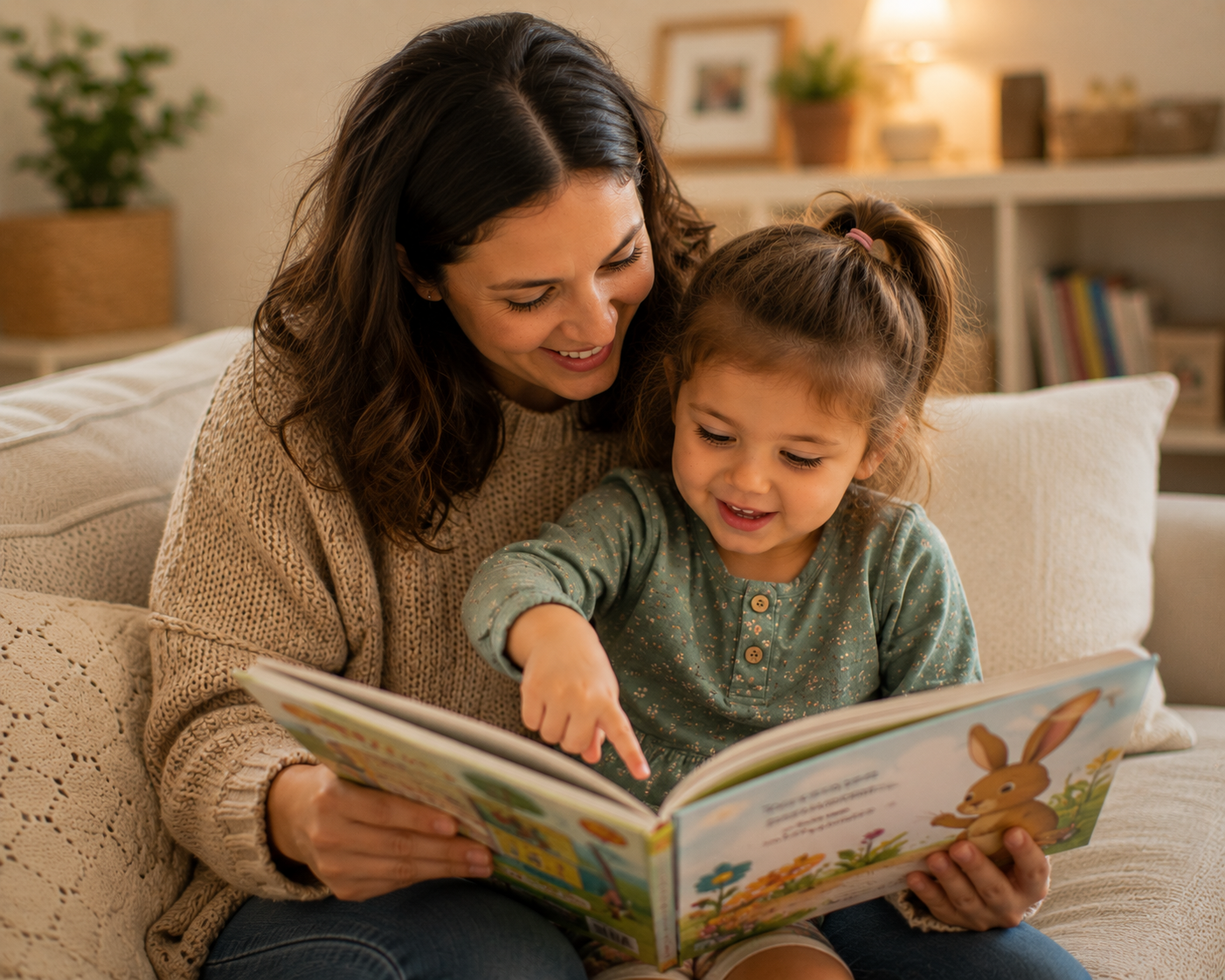
Print awareness is a child’s understanding of how written language works — knowledge adults take completely for granted. That text carries meaning. That we read left to right and top to bottom. That a book has a front and back. That the spaces between words separate them. That those squiggles, not the pictures, are what the reader is actually reading.
You build print awareness simply by drawing attention to print during read-alouds:
- Run your finger under the words as you read them
- Point out where you start reading on a page
- Occasionally note “this is the title” or “this word says…”
- Let your child turn the pages and hold the book
3. Alphabet Knowledge: Letters and Their Sounds
Alphabet knowledge is the skill most parents focus on — and it does matter. But it’s worth understanding what’s actually important here: not just naming letters, but eventually connecting letters to their sounds. Knowing that the letter B is called “bee” is useful; knowing that it makes a /b/ sound is what reading requires.
Build alphabet knowledge through letter recognition activities, alphabet books, name practice, and gradually introducing letter sounds alongside letter names. Our alphabet worksheets support both recognition and sound awareness in a structured, calm format.
When pointing out letters, emphasize the sound, not just the name: instead of only “that’s the letter S,” try “that’s S — it says /sss/, like a snake.” Connecting each letter to its sound from the start builds the letter-sound link that reading depends on. Many children learn letter names easily but need extra support connecting them to sounds — so weaving sounds in early gives them a real advantage.
4. Vocabulary: The More Words, the Better
A child’s vocabulary is one of the strongest predictors of reading comprehension down the line. The reason is intuitive: when a child eventually decodes a word, they can only understand it if they already know what it means. A rich spoken vocabulary gives reading comprehension something to connect to.
Vocabulary grows through exposure to language — and the richest source is conversation and reading:
- Talk constantly. Narrate your day, explain things, use varied and interesting words.
- Read books above their reading level. Picture books often contain richer vocabulary than everyday speech.
- Name things precisely. Not just “bird” but “robin”; not just “big” but “enormous.”
- Explain new words when they come up rather than skipping over them.
5. Narrative Skills: Understanding Stories
Narrative skills — understanding how stories work, what comes first, what happens next, how things resolve — are a quieter but important early reading skill. Children who understand story structure comprehend what they read more deeply, and they’re better at making predictions and inferences.
Build narrative skills by talking about the stories you read:
- Ask “what do you think will happen next?” before turning the page
- After reading, ask your child to retell the story in their own words
- Talk about characters: “Why do you think she did that?”
- Connect stories to your child’s life: “Have you ever felt like that?”

The Single Most Important Activity: Read Aloud Every Day
If you do nothing else, do this. Reading aloud daily builds all five early reading skills at once — phonological awareness through rhyming books, print awareness through following text, alphabet knowledge through letters on the page, vocabulary through rich language, and narrative skills through story after story.
Child development experts consistently identify daily read-aloud time as the single most powerful thing a parent can do to support future reading. It costs nothing, requires no special skill, and works. Fifteen minutes a day, every day, across the preschool years adds up to an extraordinary foundation.
For children showing strong interest who are ready for more, our reading worksheets support the transition toward early reading once these foundations are in place.
A Simple Early Reading Skills Checklist
- Read aloud together every single day
- Play rhyming and sound games (in the car, at bath time, anywhere)
- Clap out syllables in words for fun
- Point to words while reading to build print awareness
- Connect letters to their sounds, not just their names
- Talk constantly, using rich and varied vocabulary
- Ask questions about stories — predict, retell, discuss
Simple Tools for Letter Play
Books come first. Next to them, a set of letters a child can pick up and move does more than any screen.
 Magnetic letters and numbersView on Amazon
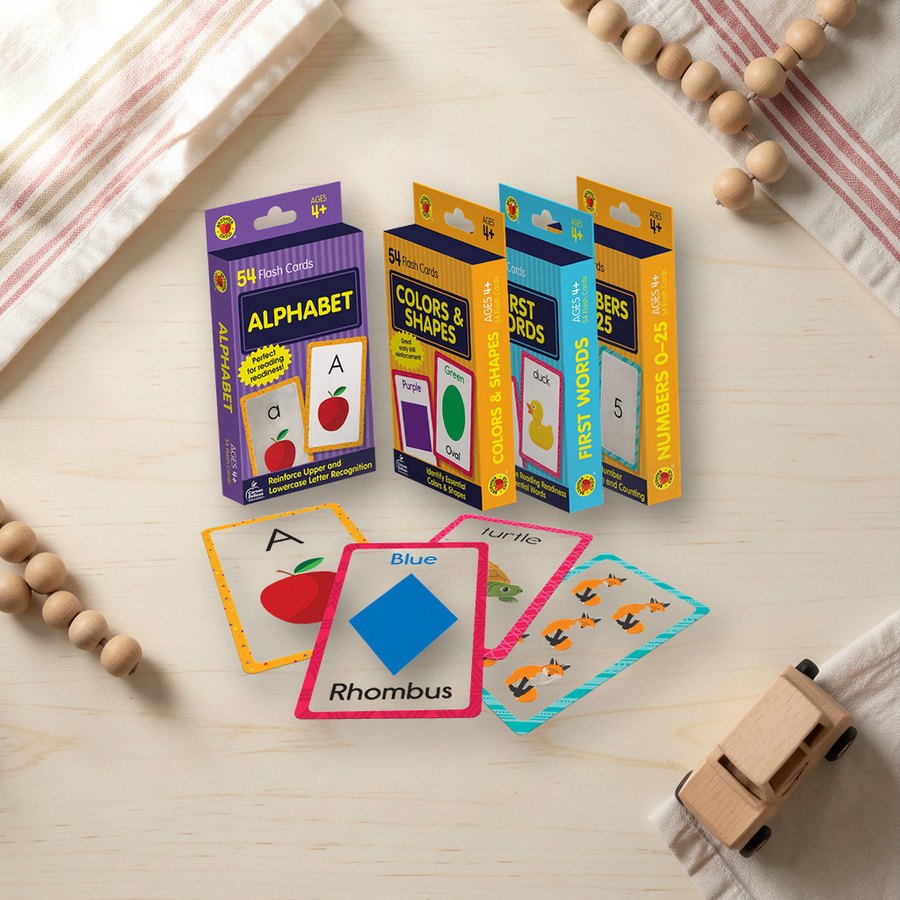 Toddler flash cards, 4-packView on Amazon
 9 x 12 dry erase lapboards, 2 packView on Amazon
As an Amazon Associate, PrintableBloom earns from qualifying purchases.
Conclusion
The early reading skills every preschooler needs aren’t found in flashcards or reading programs. They’re found in the rhyming game you play in the car, the picture book you read at bedtime, the conversation you have while making dinner, the moment you run your finger under the words and your child realizes — those squiggles say something.
Reading begins long before a child reads their first word. It begins in sounds and stories and the thousand small language-rich moments of an ordinary childhood. You don’t need to teach your preschooler to read. You need to fill their world with sounds, words, books, and conversation — and let those experiences quietly build the foundation that makes reading, when it comes, feel like the most natural thing in the world.
Read to them today. That’s the whole secret, and it’s a beautiful one.
Frequently Asked Questions
What reading skills should a preschooler have?
Preschoolers should be developing five foundational pre-reading skills: phonological awareness (hearing and playing with sounds, including rhyming), print awareness (understanding how books and text work), alphabet knowledge (recognizing letters and beginning to know their sounds), vocabulary (knowing many words), and narrative skills (understanding how stories work). Note that actual reading is not expected in preschool — these are the foundations that make learning to read smoother later.
What is phonological awareness and why is it important?
Phonological awareness is the ability to hear and manipulate the sounds in spoken language — recognizing rhymes, clapping syllables, identifying beginning sounds, and more. It’s entirely oral and develops through games and songs, not print. Reading research consistently identifies it as one of the strongest predictors of later reading success, because reading fundamentally involves connecting sounds to letters. A child with strong sound awareness finds letter-sound learning much easier.
Should preschoolers learn to read?
Most preschoolers are not developmentally ready to read, and reading is not an expectation before kindergarten. What matters in preschool is building the foundations: phonological awareness, print awareness, alphabet knowledge, vocabulary, and narrative skills. Some children do begin reading early, and that’s fine if it happens naturally through interest — but pushing reading before a child is ready can create frustration. Focus on foundations, and let reading emerge in its own time.
How can I help my preschooler get ready to read?
The single most powerful thing is reading aloud daily — it builds all the foundational skills at once. Beyond that: play rhyming and sound games, point to words while reading, connect letters to their sounds, talk constantly with rich vocabulary, and discuss the stories you read together. These activities, woven into everyday life, build a strong reading foundation without pressure or formal lessons.
At what age do children typically learn to read?
Most children learn to read between ages 5 and 7, with formal reading instruction typically beginning in kindergarten and first grade. There’s a wide normal range — some children read at 4, others not until 7, and both can become equally strong readers. The preschool years are about building foundations, not reading itself. A child who isn’t reading at 5 is not behind; they’re typically right on track.
What’s more important for early reading: letters or sounds?
Both matter, but sound awareness (phonological awareness) is foundational and often underemphasized. Knowing letter names alone doesn’t enable reading — children need to connect letters to their sounds and to hear the sounds within spoken words. The ideal approach builds both together: recognizing letters while connecting them to their sounds, alongside oral sound games that develop phonological awareness independently of print. Sound awareness deserves at least as much attention as letter knowledge.
Related reading
- How Preschoolers Actually Learn the Alphabet
- Homeschool Learning Ideas for Preschoolers That Actually Work
- Best Ways to Teach Numbers to Preschoolers at Home
- Why Tracing Activities for Preschoolers Matter Before Writing