Why Tracing Activities for Preschoolers Matter Before Writing
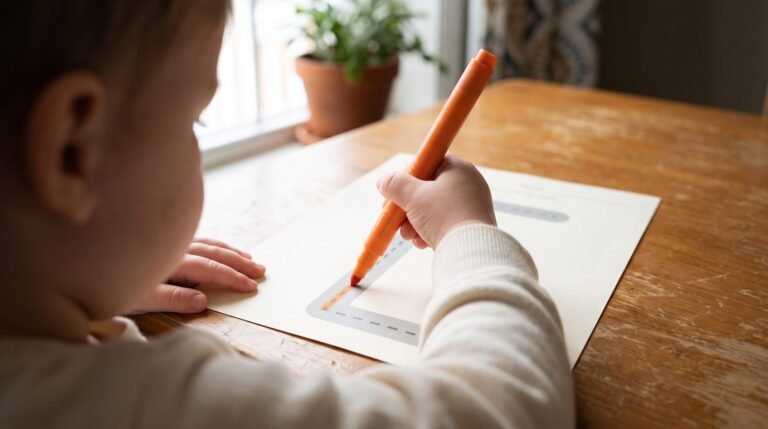
There’s a moment a lot of parents recognize: you hand your four-year-old a pencil and ask them to write their name, and they grip it in their fist, press way too hard, and produce something that looks more like a seismic reading than letters. It’s not a sign they’re behind. It’s a sign they skipped a step — and that step is tracing.
Tracing activities for preschoolers are not just busy work or a way to fill a quiet afternoon. They’re the developmental bridge between scribbling and real writing — and early childhood educators consistently point to pre-writing practice as one of the most important foundations you can build before formal handwriting begins. If you’re looking for a calm place to start, our tracing worksheets are designed exactly for this stage. But first, let’s understand why this step matters so much.
What Tracing Activities for Preschoolers Actually Do for the Brain
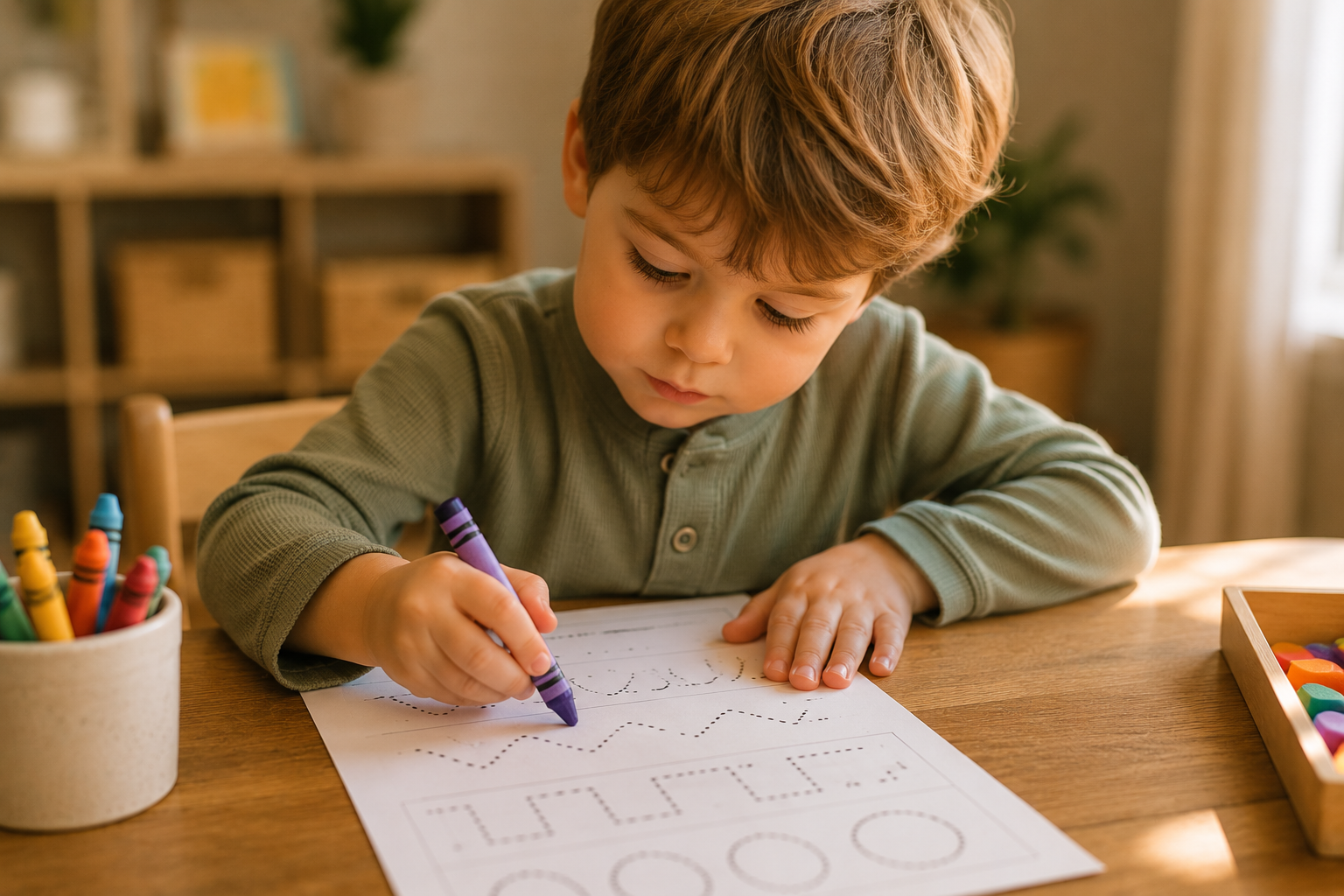
When a child traces a line — even a simple curved line on a page — several things are happening at once that have nothing to do with writing letters yet.
Their hand is learning to apply controlled, steady pressure. Their eyes are learning to follow a path and send signals to their fingers. Their brain is building the neural connections between visual input and fine motor output. Child development experts call this the visuomotor integration process, and it’s absolutely foundational to everything that comes after: writing, drawing, even cutting with scissors.
Research shows that children who spend time on structured pre-writing activities — including line tracing activities, shape tracing, and path-following exercises — develop significantly stronger handwriting readiness than those who jump straight to letter formation. The reason is simple: letters are just combinations of lines and curves. Master those first, and the letters come much more easily.
The Pre-Writing Progression: What Comes Before Letters
Most parents want to jump straight to alphabet tracing — and that makes sense. Letters feel meaningful. But there’s a natural developmental sequence that makes the whole process easier when respected:
| Stage | Typical Age | What to Practice |
|---|---|---|
| Scribbling freely | 2–3 years | No structure — just marks on paper with crayons or markers |
| Line tracing activities | 2.5–3.5 years | Horizontal, vertical, and diagonal lines; curved paths |
| Shape tracing | 3–4 years | Circles, squares, triangles — the building blocks of letters |
| Letter tracing preschool | 3.5–5 years | Uppercase letters first, then lowercase; name letters are ideal starters |
| Independent writing | 4.5–6 years | Copying and writing letters and simple words independently |
Skipping early stages doesn’t save time — it usually creates frustration at the letter-writing stage, because the foundational motor skills aren’t there yet. Think of it the way you’d think about learning to ride a bike: balance comes before pedaling.
Why Fine Motor Tracing Activities Build More Than Just Writing Skills
Here’s what surprises many parents: the benefits of fine motor tracing activities go well beyond handwriting preparation. The same hand control developed through tracing also supports:
- Cutting with scissors — both require sustained grip control and visual tracking
- Drawing — children who trace shapes first draw more intentionally and with more detail
- Puzzle completion — fine motor precision transfers across tasks
- Self-confidence — completing a tracing page gives a child a clear, visible result they’re proud of
How to Use Tracing Worksheets for Preschoolers Effectively
Not all tracing sessions are equal. A child gripping a crayon in their fist and dragging it across the page isn’t getting the same benefit as a child using a proper grip and following the path carefully. Here’s how to make tracing time count.
Start With the Right Tools
Chunky crayons or triangular pencils are easiest for small hands. Avoid standard adult pencils for children under 4 — they’re too thin and encourage an inefficient grip. As your child’s hand strength develops, transition to standard-sized colored pencils or pencils, which provide better feedback for pressure control.
Model the Motion First
Before your child picks up their pencil, trace the path with your finger together. Say “we start here, and we follow the line all the way to here.” That verbal and visual preview helps little brains understand what they’re about to do — and reduces the random scribbling that often happens when a child isn’t sure where to go.
Before any tracing worksheet session, have your child trace the path with their finger first — no pencil. This activates the same neural pathways and helps them understand the shape before the challenge of holding a writing tool is added. Early childhood educators use this technique regularly in preschool classrooms.
Keep Sessions Short and Positive
Five to ten minutes is enough for children aged 3–4. The goal is to end the session while they’re still engaged — not to push until they lose interest or get frustrated. A child who ends tracing practice thinking “that was fun” will come back to it willingly. A child who ends it thinking “that was hard and I hated it” won’t.
Progress From Simple to Complex
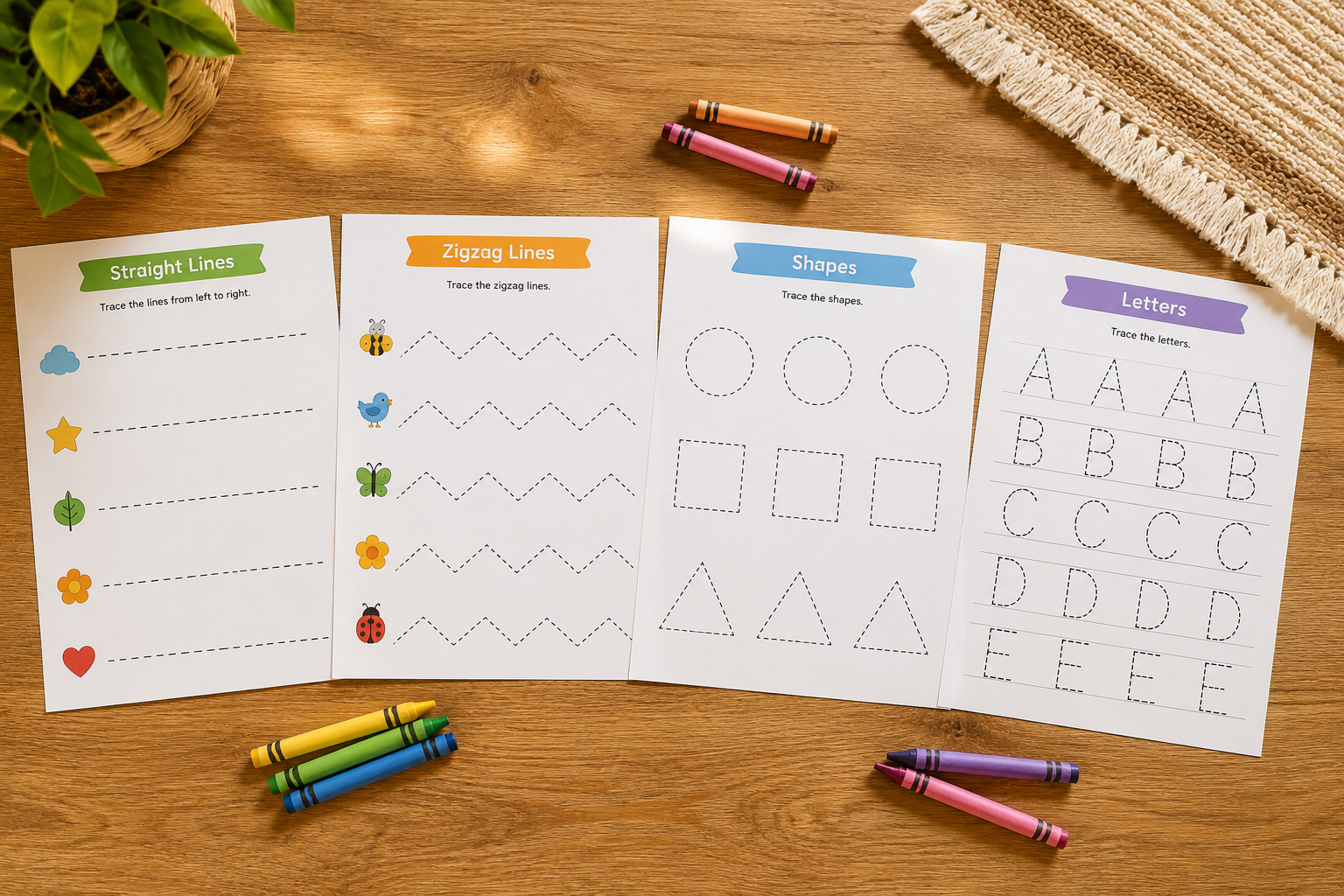
Start with straight horizontal lines, then vertical, then diagonal. Move to curved lines, then zigzags, then simple shapes. Only when shapes feel comfortable should you introduce letter tracing. Following this sequence — rather than jumping straight to alphabet tracing — makes the letter stage noticeably smoother.
Toddler Tracing Worksheets vs. Preschool Tracing Worksheets
There’s a meaningful difference between what’s appropriate for a two-year-old and a four-year-old — and using age-appropriate materials makes a big difference in how the experience goes.
Toddler tracing worksheets (ages 2–3) should feature very thick dotted lines, large paths, simple shapes, and minimal visual clutter on the page. The goal is just building the habit of following a path — precision doesn’t matter yet.
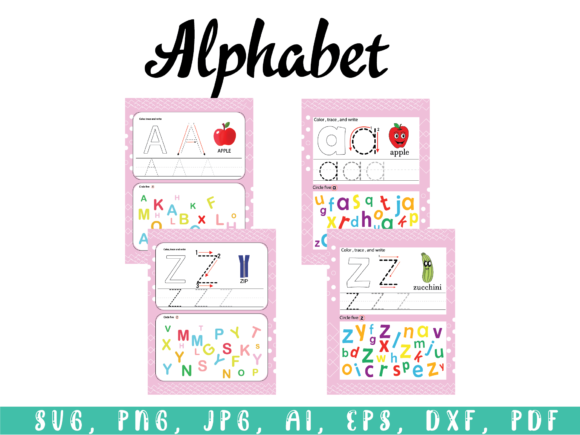
Preschool tracing worksheets (ages 3–5) can introduce finer lines, letters, numbers, and more varied shapes. At this stage you’re building real pencil control and early handwriting skills, so the activities should be a bit more structured — though still light and fun.
Our toddler tracing worksheets are designed for the earliest stage — thick paths, simple shapes, confidence-building. And our tracing worksheets for preschool step it up appropriately for 3–5 year olds building real pre-writing skills.
Pre-Writing Activities Beyond the Worksheet
Worksheets are useful, but pre-writing activities don’t have to happen on paper. These everyday experiences build the same fine motor tracing skills in different contexts:
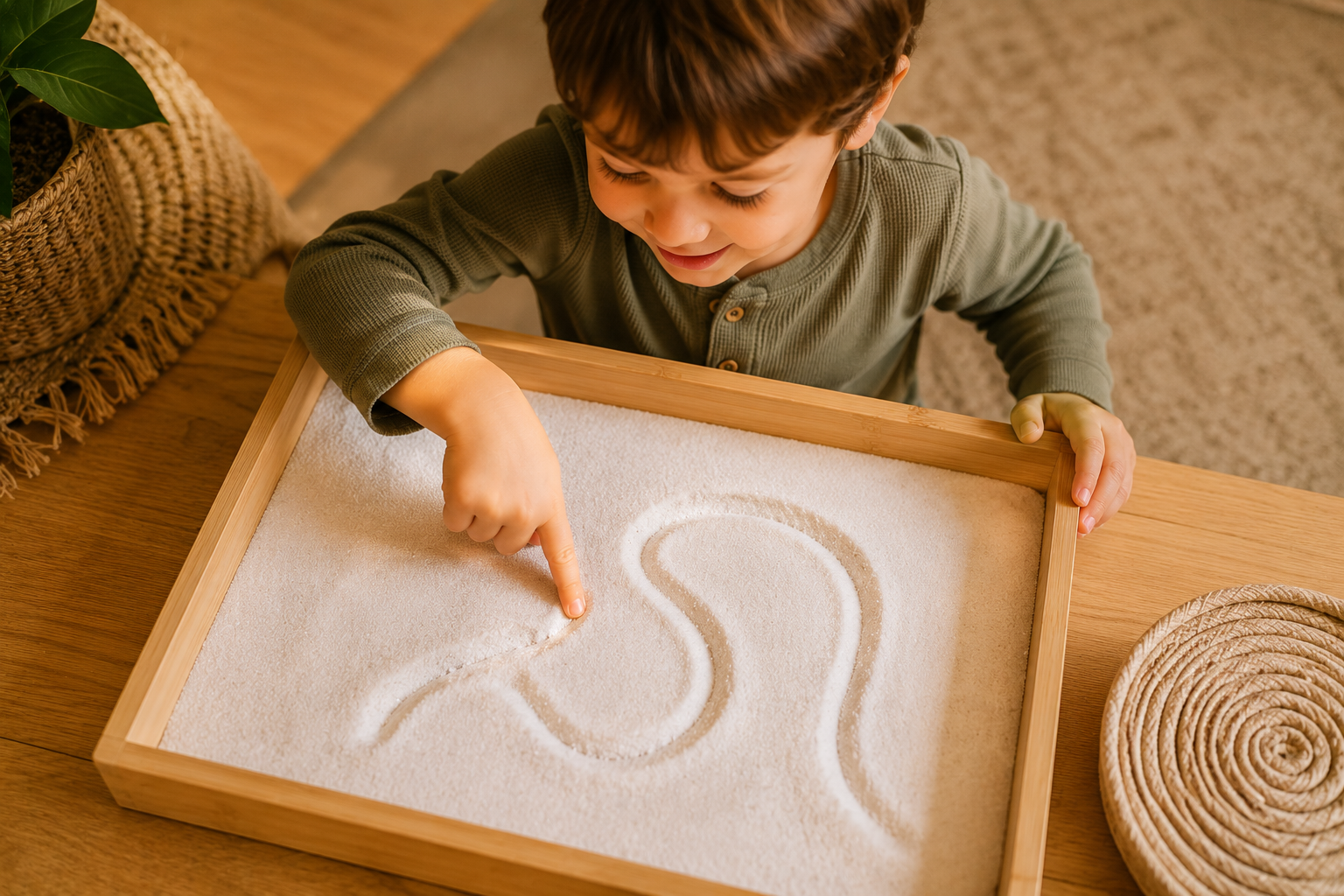
- Sand or salt tray tracing — draw lines and shapes with a finger in a shallow tray of sand or salt
- Finger painting paths — follow a line drawn on paper using finger paint instead of a pencil
- Dot-to-dot activities — connecting dots builds path-following skills in a game-like format
- Playdough lines — rolling playdough into a snake and placing it along a traced path builds hand strength alongside visual tracking
- Chalk on pavement — large-scale tracing outdoors is great for children who struggle with the small-scale precision of paper worksheets
A Simple Tracing Routine for Home
You don’t need a formal curriculum. Here’s a gentle weekly rhythm that builds real handwriting readiness over time:
- Pick one tracing worksheet — lines, shapes, or letters depending on your child’s stage
- Trace the path together with your finger before picking up the pencil
- Keep the session to 5–10 minutes maximum
- Try one non-paper tracing activity this week (sand tray, chalk, finger paint)
- End every session on a positive note — “you did great following that line”
- Don’t correct grip forcefully — model it gently and move on
Supplies for Tracing at Home
Tracing pages last longer in a clear pocket, and a marker glides more easily than a pencil for a beginner.
- Reusable dry erase pocketsView on Amazon
- Fine-tip dry erase markers with eraser capsView on Amazon
- Large crayons for small hands (Crayola)View on Amazon
As an Amazon Associate, PrintableBloom earns from qualifying purchases.
Conclusion
Tracing activities for preschoolers might look simple from the outside — just a child following a dotted line with a crayon. But underneath that simple action, something genuinely important is happening. Hand muscles are getting stronger. Eyes and hands are learning to work together. The brain is building pathways that will make writing feel natural instead of frustrating.
You don’t have to do it perfectly, and your child doesn’t either. A wobbly line traced by a three-year-old who’s trying their best is exactly where it should be. Every page they complete is one step closer to the moment they pick up a pencil and write their name — and feel proud of it.
That moment is worth every dotted line you print out between now and then.
Frequently Asked Questions
At what age should kids start tracing activities?
Most children are ready for very simple line tracing activities between ages 2.5 and 3. At this stage, thick paths and simple shapes are appropriate. Letter tracing typically becomes suitable around age 3.5 to 4, once basic line and shape tracing is comfortable. There’s no need to rush — starting too early with complex tracing can create frustration rather than confidence.
What’s the difference between tracing and pre-writing activities?
Pre-writing activities is a broader term that includes everything that builds the foundation for writing: tracing lines and shapes, finger painting, playdough manipulation, scissor practice, and more. Tracing worksheets are one type of pre-writing activity — a particularly effective one for building the visuomotor skills that handwriting requires.
How long should tracing sessions be for preschoolers?
Five to ten minutes is ideal for ages 3–4. Older preschoolers (4.5–5) can often sustain 10–15 minutes of focused tracing practice. The key is ending before your child loses interest or becomes frustrated — short, positive sessions build better habits than longer, pressured ones.
Should I correct my child’s pencil grip during tracing?
Gentle modeling is better than correction. Show your child how you hold a pencil, let them see it, and offer a light suggestion — “try holding it like this.” But don’t force a grip change mid-session, especially with younger children. Grip typically develops naturally through experience and gradually improves as hand strength increases. If grip concerns persist past age 5, an occupational therapist can offer specific guidance.
Are tracing worksheets better than apps for preschoolers?
For building genuine handwriting readiness, paper tracing worksheets have a real advantage over screen-based apps. The physical experience of applying pressure to paper with a real tool — and feeling the resistance — builds the hand strength and motor control that a touchscreen cannot replicate. Apps can complement paper activities, but they shouldn’t replace them for this particular skill.
My child rushes through tracing and doesn’t stay on the line. What should I do?
This is very common, especially in children who are eager but not yet physically ready for precision. Try the finger-first method: trace the path with a finger before using a pencil. You can also try slowing the pace by saying “let’s go really slowly — like a snail.” Avoiding pressure about staying perfectly on the line helps too — at the early stages, the habit of following a path matters more than perfect accuracy.
Related reading
- How to Improve Pencil Grip in Young Children
- Simple Fine Motor Activities for Preschoolers That Build Real Skills
- Easy Cutting Activities for Preschoolers Ages 3–5
- How Preschoolers Actually Learn the Alphabet