
How Preschoolers Actually Learn the Alphabet
If you’ve ever sat down with your three-year-old, pointed at the letter A, and watched their eyes drift toward the window — you’re not alone. Teaching the alphabet can feel surprisingly hard, especially when your child seems completely uninterested. But here’s the thing: preschoolers are learning the alphabet, just not always in the way we expect.
Understanding how young children actually absorb letter knowledge changes everything. Once you see the process clearly, you stop fighting it and start working with it. And if you’re looking for simple printables to support that process at home, our alphabet worksheets for preschool are a good place to start — but first, let’s talk about what’s actually happening in your child’s brain.
Why the Alphabet Isn’t Just “26 Letters to Memorize”
Most parents assume alphabet learning goes like this: you teach the letter, the child remembers it, done. But the brain of a three- or four-year-old doesn’t really work that way.
Preschoolers learn through patterns, repetition, and meaning. A letter only becomes real to a child when it shows up in something they care about — their name, a favorite word, a book they love. Abstract symbols on a chart? Not so sticky. The letter “M” in their own name or on a box of their favorite cereal? That sticks.
Early childhood educators and researchers consistently find that children learn letters in personally meaningful contexts first — and that this pattern isn’t random. It’s how the developing brain builds durable connections between symbol and meaning.
The Stages of Alphabet Learning in Early Childhood
Alphabet knowledge builds in layers. Here’s roughly what the progression looks like — and what’s happening underneath at each stage.
Stage 1: Noticing That Letters Exist (Ages 2–3)
Before a child can name a letter, they notice that letters are a thing. They see words in books, on signs, on cereal boxes. They scribble and call it “writing.” This is real learning — their brain is sorting out that there’s a system here, even if they can’t explain it yet.
Stage 2: Learning Letter Names (Ages 3–4)
This is where the alphabet song kicks in. Most kids learn letter names through that song before they can match a letter name to its visual shape. That’s completely normal. The song gives them a framework — a mental list — that they’ll fill in with visual knowledge over time.
Stage 3: Connecting Letters to Sounds (Ages 4–5)
This is the big shift. Knowing that “B” is called “bee” is different from knowing that B makes a /b/ sound. Research shows that letter-sound knowledge — often called phonemic awareness — is the true foundation for reading. It’s also where many children need the most support, and where consistent hands-on practice makes a real difference.
Stage 4: Recognizing Letters in Context (Ages 4–6)
Eventually, children start spotting letters everywhere — in books, on street signs, in their own name on a drawing. This “transfer” stage is when things really start to click. They’re no longer just reciting. They’re reading.
What Actually Works at Home
You don’t need to be a teacher to support alphabet learning at home. These approaches are simple, low-pressure, and genuinely effective — even on busy days.
Start With Your Child’s Name
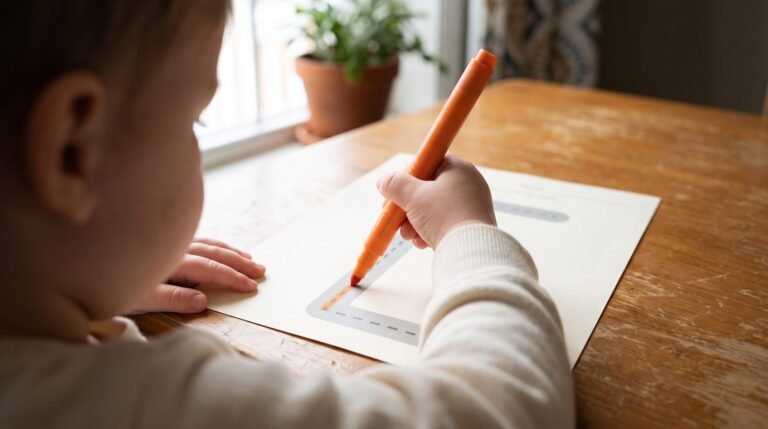
The letters in a child’s own name are almost always the first ones they truly recognize. Write their name often — on drawings, on a placemat, on their cup. Let them watch you write it. Encourage them to trace it. That name is their personal entry point into the alphabet.
Read Together Every Single Day
Nothing beats read-aloud time for building letter awareness. Point to words as you read. Occasionally pause and say “look — there’s the letter S, like in your name Sam.” You don’t need to turn every book into a lesson. Just a few natural moments of letter-pointing go a long way across weeks and months.
Make Letters Physical
Young children learn through their hands, not just their eyes. Speech development experts and early educators consistently point to hands-on letter activities as especially effective for preschoolers. Magnetic letters on the fridge, foam letters in the bathtub, tracing letters in a sand tray, forming letters with playdough — all of these create physical memory that reinforces visual recognition. The more senses involved, the stronger the learning.
Keep letter practice under 10 minutes for younger preschoolers (age 3–3.5). Their attention spans are short, and stopping while they’re still engaged leaves them wanting more — not burned out. Five good minutes beats twenty frustrated ones every time.
Use Songs and Chants (But Don’t Stop There)
The alphabet song is a great starting point, but it only teaches letter names. Add songs that emphasize letter sounds too — “A says /a/, A says /a/, every letter makes a sound, A says /a/” — that kind of rhythmic, repetitive input is powerful for little brains.
Low-Pressure Worksheets and Tracing Activities
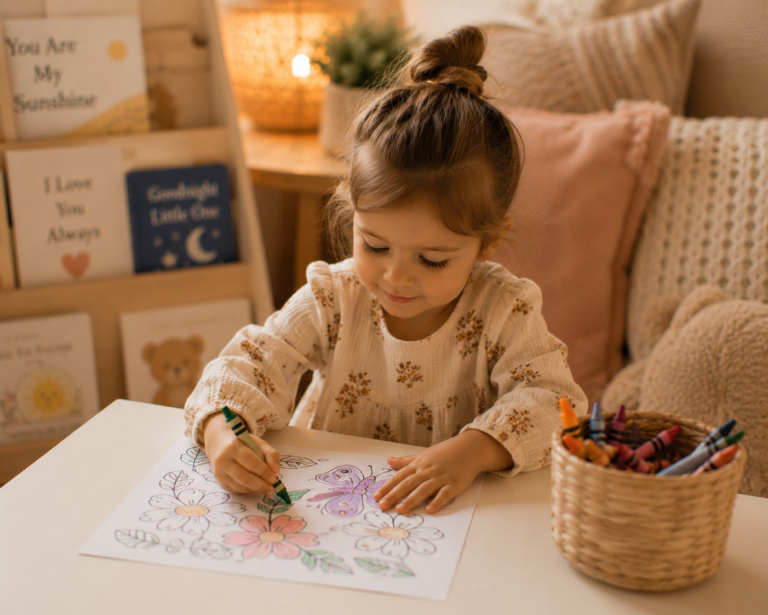
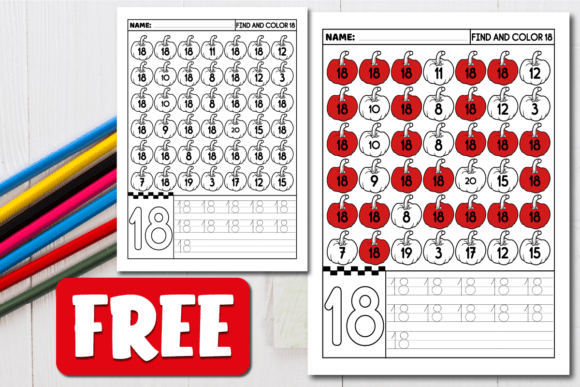
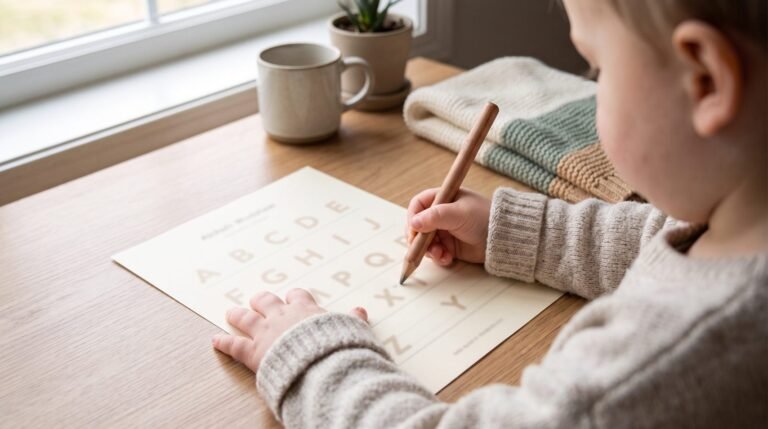
When a child is ready — usually around age 3.5 to 4 — simple printable activities can be really useful. The key word is low-pressure. Short sessions, fun presentation, no frustration. Tracing letters, matching uppercase to lowercase, circling a specific letter in a row — these activities build both visual recognition and early writing skills at the same time.
Our alphabet worksheets for preschool are designed exactly for this stage — calm, simple pages that feel more like play than work.
Common Mistakes Parents Make (And How to Avoid Them)
Teaching All 26 Letters at Once
This is the most common pitfall. Spreading all 26 letters across short sessions leads to confusion and overwhelm — for both of you. Start with 5–6 high-value letters: the ones in your child’s name, plus common ones like S, M, T. Build mastery there first, then expand.
Drilling Instead of Discovering
“What letter is this? What about this one? And this?” Rapid-fire quizzing can make kids anxious about letters rather than curious about them. Discovery works better. Let them find letters in books, on signs, in their environment. Ask “where do you see a letter B?” rather than “what is this letter?”
Expecting Too Much Too Soon
A three-year-old who knows 8 letters confidently is doing great. A four-year-old who knows most letter names but not all the sounds yet is completely on track. Early childhood educators are clear on this: developmental timelines vary, and pressure backfires. The goal at this stage is a positive, curious relationship with letters.
A Simple Home Checklist
Not sure where to start? Here’s a low-pressure checklist of things you can add to your daily routine this week:
- Write your child’s name somewhere they’ll see it every day
- Point out 1–2 letters during your daily read-aloud
- Keep magnetic letters on the fridge and play with them while cooking
- Try one tracing worksheet this week — just one, keep it short
- Sing the alphabet song in a silly voice (kids love the variation)
- Go on a “letter hunt” — find one target letter on your next walk or errand
How Printable Activities Fit Into the Picture
Printable worksheets work best as one piece of a larger learning environment — not as the whole picture. Think of them as a 10–15 minute activity that reinforces what your child is absorbing through books, songs, and play the rest of the day.
The best alphabet printables for this age group have large, clear letter forms, tracing paths that build correct stroke habits early, simple images tied to letter sounds, and enough white space to feel calm — not cluttered.
Our full alphabet worksheets collection covers all of this, organized by letter and difficulty level. And when your child is approaching kindergarten and ready for a bit more challenge — recognizing letters in words, building early writing skills — our alphabet worksheets for kindergarten bridge that transition naturally.
Apps and educational videos can play a role — some are genuinely good. But they work best as a supplement, not a substitute. The physical act of tracing, the feel of a crayon, the back-and-forth of a parent pointing at a letter in a book — these experiences build neural pathways that a screen alone can’t replicate.
Conclusion
Preschoolers learn the alphabet gradually, through meaningful exposure, physical experience, and lots of repetition across different contexts. The most important thing you can give your child isn’t the perfect worksheet or the fanciest app — it’s consistent, low-pressure time with letters in all kinds of forms.
Read together. Trace letters. Sing songs. Point out letters on signs and cereal boxes. And when they’re ready for a little structured practice, keep it short and keep it fun.
The goal isn’t to raise a child who memorizes the alphabet fastest. It’s to help them feel confident, curious, and genuinely excited about learning — because that feeling is what carries them all the way through school and beyond. And honestly? That starts with you, right now, pointing at a letter on a cereal box and saying “hey, that’s your letter.”
Frequently Asked Questions
At what age should a child start learning the alphabet?
Most children begin showing interest in letters between ages 2 and 3, often starting with the letters in their own name. Formal alphabet instruction typically begins around age 3–4 in preschool, but every child’s timeline is different. There’s no benefit to pushing before a child shows readiness — and quite a bit of downside if you do.
How many letters should a preschooler know?
By age 4, many children know most of the uppercase letters, especially those from their own name and commonly encountered letters. By the end of preschool (around age 5), knowing all 26 uppercase letters and beginning to recognize lowercase letters is a reasonable benchmark — but ranges vary widely and that’s completely normal.
What’s the best order to teach the alphabet?
Start with the letters in your child’s name, then branch out to other high-frequency letters like S, M, T, A, and B. Avoid introducing visually similar letters back-to-back (like b/d or p/q) until each one is solid — that pairing consistently causes confusion for young learners.
Should I be worried if my 4-year-old doesn’t know the alphabet yet?
Not necessarily. Children develop at different rates. If your child has had limited exposure to letters and books, adding consistent read-aloud time and simple letter activities usually gets things moving quickly. If you have ongoing concerns about language or learning development, it’s always worth checking in with your pediatrician or an early childhood specialist.
Are alphabet worksheets good for preschoolers?
Yes — when used well. Short sessions (10–15 minutes), age-appropriate format, and a no-pressure approach make worksheets a genuinely useful tool. They work best alongside other learning: books, songs, hands-on play, and real-world letter spotting.
How is learning letter names different from learning letter sounds?
Letter names are what we call the letters (“the letter B is called ‘bee'”). Letter sounds are what the letters represent in words (“B makes a /b/ sound, like in ‘ball'”). Both matter, but letter-sound knowledge is more directly tied to reading readiness. Most children learn names first, then sounds — and that sequence is natural and expected.
Related reading
- Early Reading Skills Every Preschooler Needs
- Best Ways to Teach Numbers to Preschoolers at Home
- Why Tracing Activities for Preschoolers Matter Before Writing
- Homeschool Learning Ideas for Preschoolers That Actually Work