Tracing Activities for Kindergarten: Keeping Skills Sharp for Ages 5-6
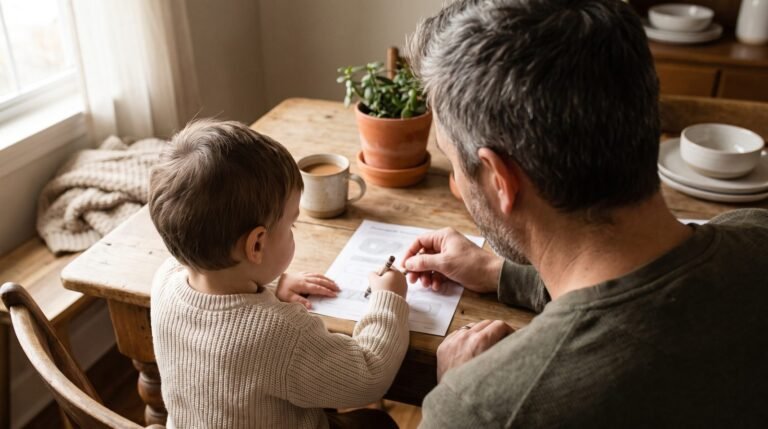
If your kindergartner used to love tracing but now sighs and says “I already know how to write my name,” you’re not alone. Around ages 5 and 6, tracing shifts from being the main event to being a quiet warm-up before the real work of writing begins. It doesn’t disappear, but its job changes. Let’s talk about what tracing is actually for at this age, and how to keep it useful without letting it feel like busywork.
What tracing is still good for at kindergarten age
By kindergarten, most children can already recognize letters and copy a few of them. So it’s fair to wonder whether tracing still earns its place. It does, but for a narrower and more grown-up reason than it did at age 3 or 4.
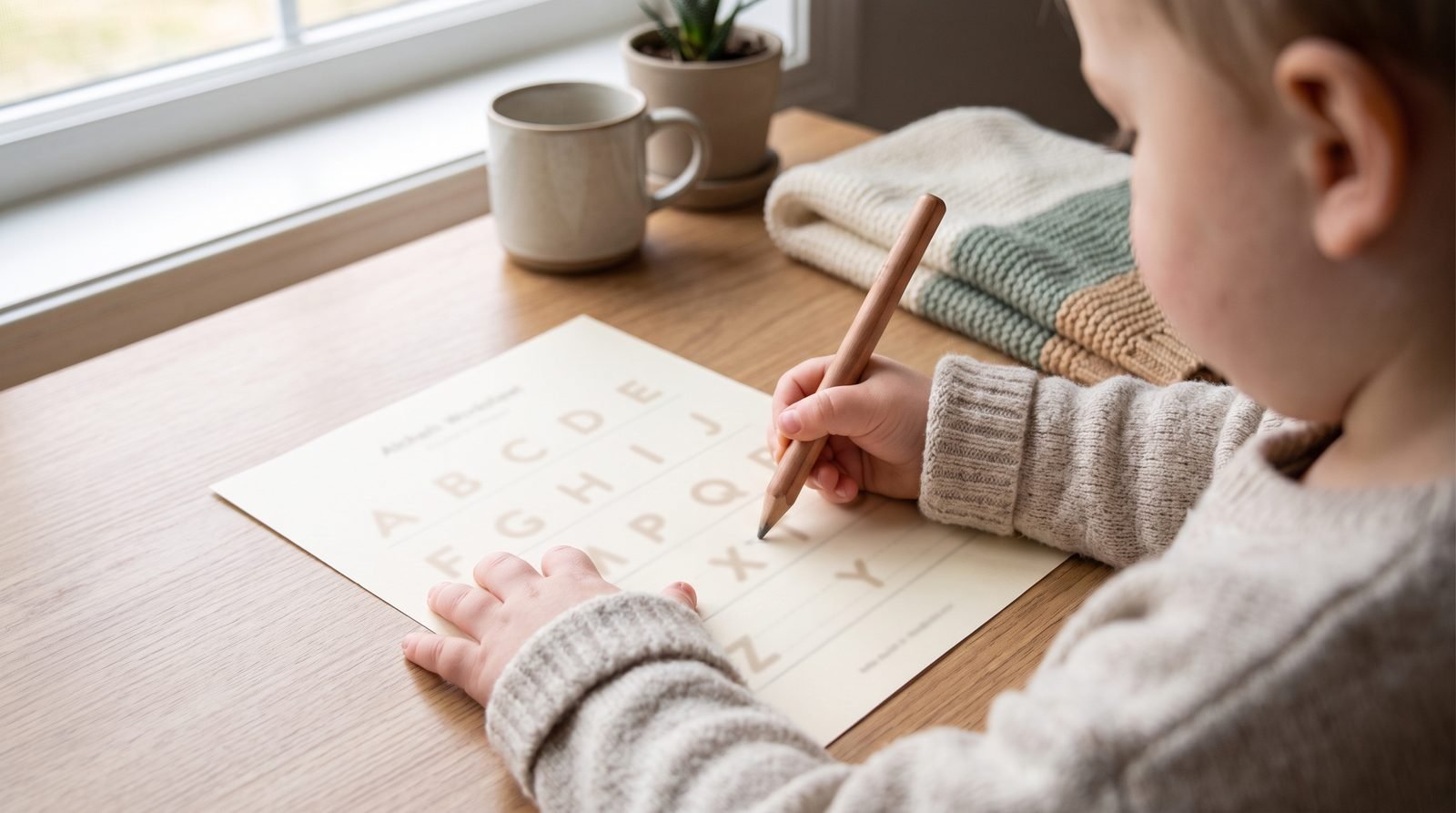
At 5 and 6, tracing is mostly about refining formation, not introducing letters. Your child knows what an “a” looks like; what they’re building now is the muscle memory to start it in the right place, move in the right direction, and land it neatly on the line every single time. Tracing gives them a guided path so those correct movements become automatic, freeing up their brain for the harder job of thinking about what they want to say.
A few specific things tracing keeps sharp at this age:
- Consistent starting points. Many kindergartners form letters “correctly” but start them from the bottom or the wrong side, which slows them down later. Tracing reinforces top-down, left-to-right habits.
- Pencil control on smaller lines. Kindergarten handwriting lives on narrower, lined paper than preschool. Tracing helps hands adjust to a smaller working space.
- Steady pacing. Following a printed line teaches children to slow down just enough to stay neat, a skill that carries directly into independent writing.
If you’re weighing whether your child is at this stage at all, the signs your child is ready for handwriting are a helpful checkpoint before you lean into formation work. And if letters still look shaky, it’s often worth checking that the pencil itself is being held comfortably, since a relaxed pencil grip makes neat formation far easier to sustain.
From single letters to words and short sentences
The biggest change from preschool tracing to kindergarten tracing is length. A 3-year-old traces one big letter at a time. A 5- or 6-year-old is ready to trace whole words and, before long, short sentences.
This matters more than it looks. When a child traces a full word like “cat” or “sun,” they’re not just practicing three letters, they’re practicing spacing between letters, keeping a word together as one unit, and moving smoothly from one shape to the next without lifting their focus. Those are exactly the skills that make independent writing look tidy instead of scattered.
A gentle progression that works well over a kindergarten year:
- Start with their name and familiar words. Names, “mom,” “dad,” and a pet’s name feel meaningful, so children try harder.
- Move to short, decodable words like “hat,” “big,” or “red” once single words feel easy.
- Add tiny sentences such as “I see a dog.” Sentence-level tracing introduces capital letters at the start, a period at the end, and spacing between words, all at once, but in a supported way.
Tracing short sentences pairs naturally with reading practice, too. Many families like to trace the same words their child is learning to read, which is why building early reading skills and tracing tend to reinforce each other so well.
Number formation and neat writing
Numbers deserve their own moment, because they’re often where neat formation quietly falls apart. Kindergartners are asked to write numbers all the time, and several digits are genuinely tricky: the reversal-prone 2, 3, and 5, and the two-step numbers like 4 and 7 that need the pencil to stop and change direction.
At kindergarten age, written number formation usually focuses on 0 through 20; counting higher, all the way to 100, is typically done out loud rather than written by hand. Tracing those first twenty numbers helps in a few concrete ways:
- It cements direction. A 2 starts at the top, curves, and slides along the bottom, not the reverse. Repetition on a traced path makes that stick.
- It reduces reversals. Backwards numbers are completely normal at 5 and 6, and tracing gives a correct model to copy without any shame or correction in the moment.
- It builds evenness. Numbers written in a row, like on a calendar or a counting page, teach children to keep digits a consistent size.
One calm reminder: reversed letters and numbers at this age are not a red flag. They’re a normal part of learning and usually sort themselves out with gentle, repeated exposure to the correct form. Tracing offers that exposure without turning it into a big deal.
How much tracing a 5-6 year old actually needs
Here’s the part parents rarely hear: at kindergarten age, less tracing is often better. The goal is no longer to trace as much as possible, it’s to trace just enough to warm up, then get to real writing.
A practical rule of thumb is that tracing should be the opening five minutes, not the whole session. If a child spends twenty minutes tracing rows of the same letter, they tend to switch off, and the neat formation they started with drifts into careless scribbling by the end of the page. That undoes the very habit you’re trying to build.
For most 5- and 6-year-olds, a light rhythm looks like:
- A short traced warm-up a few days a week, not necessarily every day.
- One or two rows of a target letter or number, not a full page.
- Always followed by a small amount of independent writing, even just one word they form on their own.
Quality beats quantity here every time. Three neat, focused traced letters teach more than a whole sheet done on autopilot. If you’d like to see how tracing fits into the bigger picture before independent writing takes over, it helps to understand why tracing matters before writing in the first place.
Mixing tracing with independent writing
The whole point of kindergarten tracing is to become unnecessary. So the most valuable thing you can do is pair every bit of tracing with a small, low-stakes chance to write freely.
A simple and effective pattern is trace, then try. Your child traces a word once or twice, then writes it on their own right underneath, no tracing lines to lean on. The traced version acts as a model they can glance at, and the independent attempt is where the actual learning shows up. It’s completely fine if the free version is messier; that gap is normal and shrinks over the year.
Other easy ways to blend the two:
- Trace the tricky letters, write the easy ones. If your child forms most letters well but reverses a “b” and “d,” trace just those two and let them write the rest freely.
- Fill in the blank. Trace “I like ___” and let them add their own word. This turns tracing into real, meaningful writing.
- Label a drawing. They draw a picture, trace a starter word if they need it, then write the rest themselves.
As independent writing grows, tracing naturally fades into the background. The steady rhythm of tracing a model and then writing on their own is what gently carries a child from copying toward writing without support.
Keeping it low-pressure so it stays fun
Nothing shuts down a young writer faster than feeling corrected. At 5 and 6, children are keenly aware when an adult is watching for mistakes, and that awareness makes their hands tense and their letters worse. The calmest thing you can do is treat tracing as play, not performance.
A few things that keep the mood light:
- Praise effort and neatness, not perfection. “You kept that whole word on the line” lands better than “that letter’s wrong.”
- Let them choose. Offer two words or a letter versus a number and let them pick. A little ownership goes a long way.
- Stop before they’re done. Ending while it still feels fun means they come back willingly next time.
- Skip the eraser wars. If a letter is backwards, gently trace a correct one nearby rather than making them redo it. Model, don’t scold.
A calm 10-minute kindergarten practice block
If you’d like a simple structure, here’s a relaxed ten minutes that works for most 5- and 6-year-olds:
- Minutes 1-3 — warm-up tracing. One or two rows of a target letter or a familiar word. Loose grip, no rush.
- Minutes 4-6 — trace a short word or tiny sentence. Something meaningful, like their name or “I see a cat.”
- Minutes 7-9 — write it themselves. They copy the same word or sentence with no tracing lines. Messy is fine.
- Minute 10 — celebrate one thing. Point out a single letter or word they formed really well, and stop there.
Doing this a few times a week is plenty. There’s no need for a daily session, and shorter blocks done cheerfully beat long ones done grudgingly.
Signs they’re ready to trace less and write more
You’ll know tracing has done its job when your child starts finding it too easy. Watch for these cues:
- They form most letters correctly without the traced guide.
- They write their name and a few familiar words from memory, neatly.
- They start writing words unprompted, on drawings, cards, or little notes.
- They say tracing is boring, which is often a genuine sign they’ve outgrown it.
- Their independent writing is nearly as tidy as their traced writing.
When you see several of these, it’s time to shift the balance: trace only the letters and numbers that are still shaky, and let independent writing take over the rest. That’s not the end of practice — it’s your child graduating into the real thing.
Tracing at kindergarten age isn’t about drilling — it’s a gentle bridge from copying to creating. Keep the sessions short, warm, and low-pressure, pair every traced line with a chance to write freely, and trust that neat, confident handwriting grows from consistency, not intensity. You’re giving your child exactly what they need: a little support today so they can let go of it tomorrow.