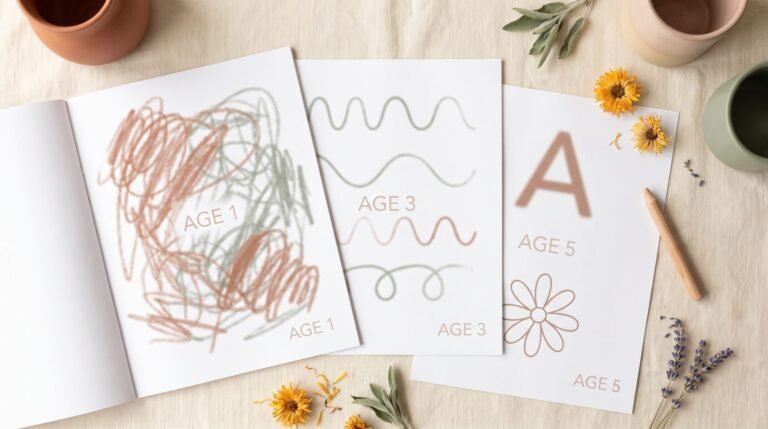
How to Improve Pencil Grip in Young Children
You’ve probably seen it: your preschooler picks up a crayon and wraps their entire fist around it, pressing so hard the tip nearly breaks. Or maybe they hold it loosely with just two fingers and can barely control where the line goes. Neither of those is unusual — pencil grip is a skill that develops over time, not something children automatically know how to do. But it is something you can actively support at home, and it matters more than most parents realize.
Learning how to improve pencil grip is one of the most practical things you can do to set your child up for easier, more confident writing. And the best part? Most of the strategies don’t involve sitting at a table with a pencil at all — they involve play. If you want something structured to practice at home alongside these strategies, our handwriting worksheets offer a calm, focused way to build those skills. But first, let’s understand what a good pencil grip actually looks like — and why it matters.
What Does a Good Pencil Grip Actually Look Like?
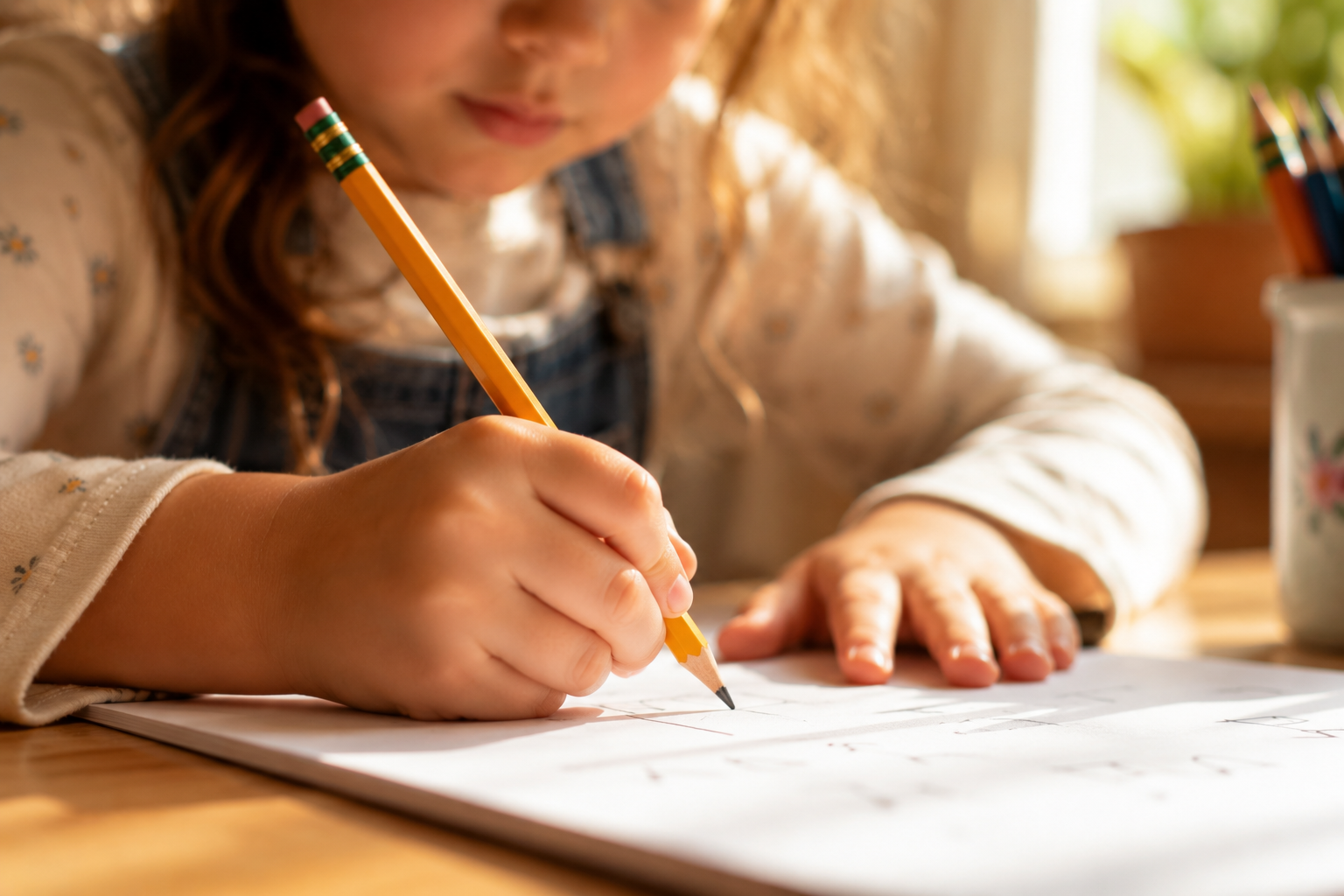
The grip most handwriting experts and occupational therapists recommend for young children is called the dynamic tripod grip: the pencil rests on the middle finger, and is held in place by the thumb and index finger. The other two fingers curl gently beneath. This position allows the fingers to move the pencil fluidly — which is what makes handwriting legible and comfortable over time.
That said, child development experts are increasingly clear that there is no single “correct” grip for all children. Some children naturally develop a lateral tripod (four fingers on the pencil) or a quadropod grip (pencil resting on the ring finger), and these can be perfectly functional. What matters most is whether the grip allows comfortable, controlled movement — not whether it matches a diagram exactly.
Pencil Grip Development: What’s Normal at Each Age
| Age | Typical Grip Pattern | What to Expect |
|---|---|---|
| 1–2 years | Fisted grasp (whole hand around crayon) | Normal and expected — control comes from the shoulder |
| 2–3 years | Palmar grasp (pencil held in palm, fingers wrapped around) | Still normal — transitioning toward finger control |
| 3–4 years | Static tripod (fingers in position but moving as a unit) | Early tripod grip emerging; pressure and control still developing |
| 4–6 years | Dynamic tripod (individual finger movement) | Goal grip — fingers move independently to guide the pencil |
If your four-year-old is still using a fisted grip, that’s worth gently addressing. But a three-year-old with a palmar grasp is developmentally right on track.
Why Pencil Grip Problems Happen
Most children who struggle with pencil grip aren’t being careless or lazy. There are usually real underlying reasons:
Insufficient Hand Strength
The intrinsic muscles of the hand — the small muscles inside the palm — need to be strong enough to hold a pencil in a controlled position. When these muscles are underdeveloped, children compensate by gripping with the whole hand or pressing excessively hard. The fix isn’t to correct the grip — it’s to build the strength first.
Too-Early Introduction of Writing Tools
When children are introduced to pencils and fine writing tasks before their hands are physically ready, they develop compensating grips that feel stable to them but aren’t ideal for controlled writing. Starting with chunky crayons and play-based fine motor activities — and transitioning to pencils gradually — prevents this.
Tools That Are Too Thin or Too Long
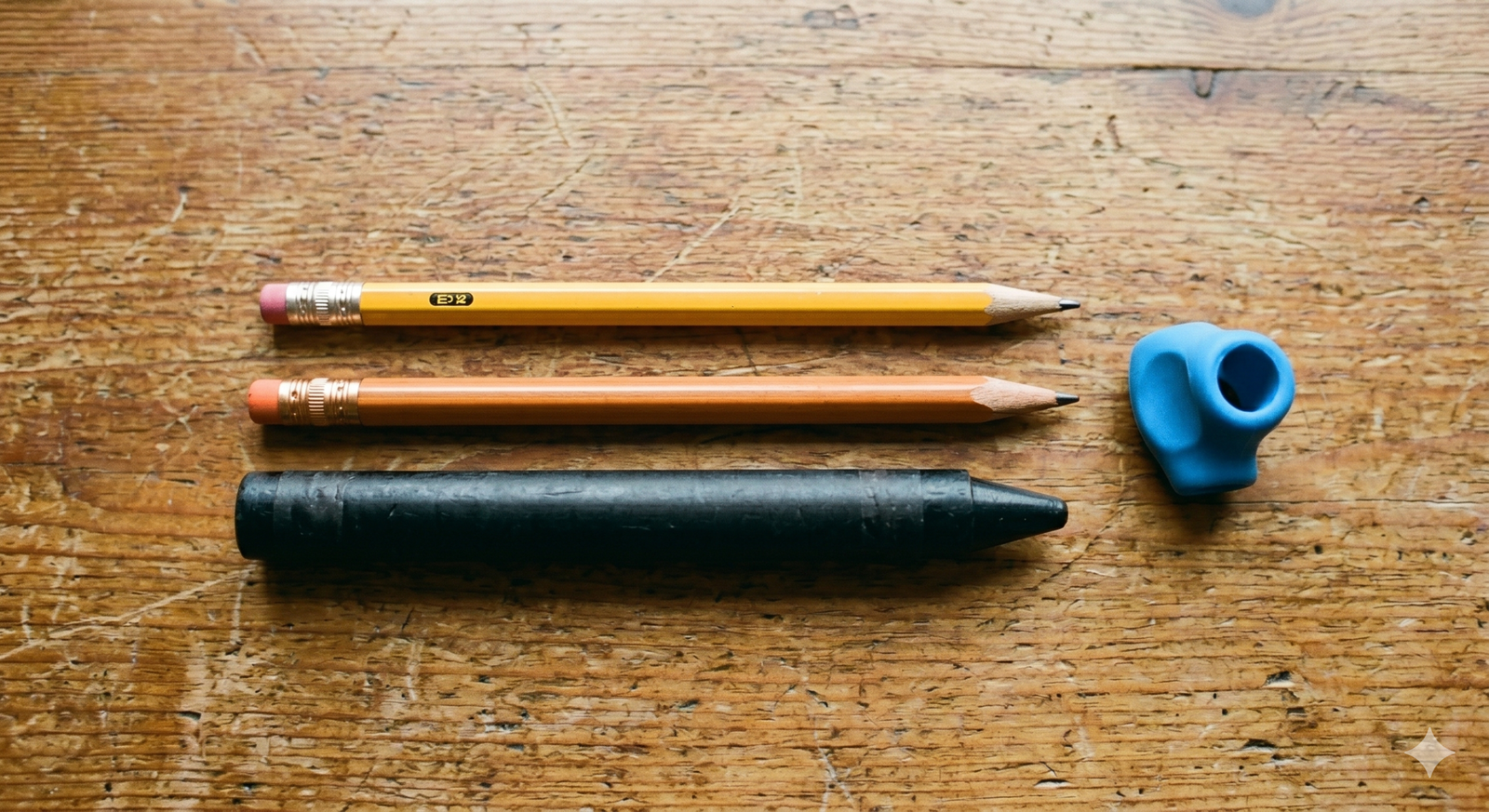
Standard adult pencils are often too thin for preschool hands. A thinner tool requires more compensating grip tension, which leads to fatigue and poor control. Triangular pencils, jumbo crayons, and short pencils (golf pencil length) all naturally encourage a better grip position because they fit the hand more comfortably.
How to Improve Pencil Grip: Practical Strategies That Work
Build Hand Strength First Through Pencil Grip Activities
Before worrying about grip position, build the foundation. Playdough squeezing, tongs and tweezers activities, lacing cards, spray bottle use, and opening twist-top containers all build the intrinsic hand muscles that support a functional grip. Spend several weeks on these activities before focusing on the grip itself — you’ll see a natural improvement.
Use the Right Tools
Tool choice makes a significant difference in how naturally a good grip develops:
- Triangular crayons or pencils — the three flat sides naturally position thumb, index, and middle finger correctly
- Short pencils — golf-pencil length discourages the fisted grip because there’s no room for extra fingers
- Pencil grips — soft rubber attachments that slide onto a standard pencil and provide a moulded guide for finger placement
- Jumbo crayons for younger children — easier to control and don’t require the fine pinch of a standard pencil
Break crayons into short pieces — about 1 inch long. Short crayons physically cannot be held in a fisted grip, so children naturally transition to a finger grip. This is one of the most recommended preschool handwriting tricks used by occupational therapists, and it costs nothing extra since you’re just using what you already have.
Model Without Pressure
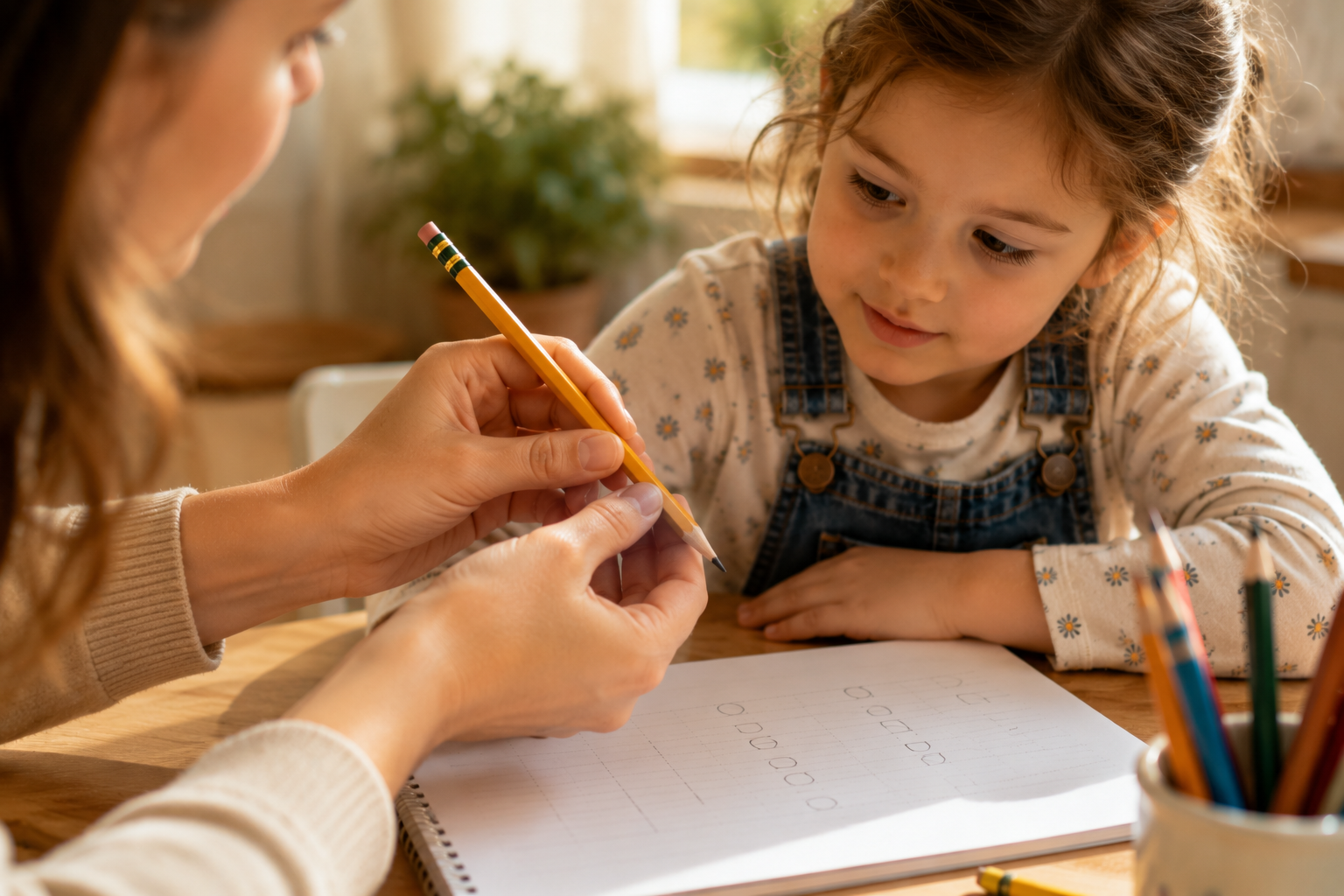
Let your child see you hold a pencil correctly — drawing, writing a shopping list, addressing an envelope. Narrate it casually: “I hold my pencil like this — thumb here, pointer finger here.” Then move on. Don’t turn it into a lesson or a correction. Children are powerful observers, and casual repeated modeling is often more effective than direct instruction for this age group.
Try Tracing for Pencil Grip Development
Tracing activities for pencil grip are particularly valuable because they give children a specific path to follow, which naturally encourages slower, more controlled movement. Slow movement requires active grip management — which is exactly the kind of practice that builds good habits. Start with wide dotted lines, then shapes, then letters.
Our tracing worksheets are designed with this kind of controlled practice in mind — calm, uncluttered pages that encourage focus and careful movement rather than speed.
Preschool Handwriting Practice at the Right Time
Once your child’s grip is stabilizing — typically around age 4 to 4.5 — short structured handwriting practice sessions help consolidate good habits. Keep sessions to 10 minutes maximum. Use paper with large lines or a low-line format so the focus stays on grip and control rather than letter size precision.
Our preschool tracing worksheets bridge this stage well — structured enough to build real pencil control, simple enough to keep it calm and pressure-free.
What Not to Do When Correcting Pencil Grip
Some well-meaning approaches can actually make things worse. Here’s what to avoid:
- Forcing a grip change mid-activity. Physically repositioning a child’s fingers while they’re trying to focus on drawing or writing splits their attention and creates frustration. Offer tools and build strength instead.
- Repeated verbal corrections. “Hold it right!” said repeatedly during practice turns writing into a negative experience. One gentle model per session is enough.
- Rushing to letter writing. Introducing formal letter writing before a child’s grip is stable means they’ll write with whatever compensating grip they have — and that habit becomes increasingly hard to change the longer it’s used.
- Comparing to other children. Grip development varies widely. A child who develops a functional dynamic tripod grip at age 5.5 is not behind — they’re on their own timeline.
A Simple Pencil Grip Improvement Plan
- Switch to triangular pencils or short crayons this week
- Do 10 minutes of playdough or tongs activities daily for hand strength
- Try the broken crayon trick — short crayons encourage natural finger grip
- Model your own pencil grip casually once a day (writing a list, drawing)
- Start one tracing session with “let’s go slow like a snail” to encourage grip control
- Avoid correcting grip verbally during activity — model before, not during
Tools That Support a Better Grip
Short, thick tools place fingers where they belong almost without teaching. Grips help some children and bother others, so try one before buying more.
- Short triangular beginner pencils (Ticonderoga)View on Amazon
- Pencil grips, 6 packView on Amazon
- Large crayons for small hands (Crayola)View on Amazon
- Fine motor tool set (Learning Resources)View on Amazon
As an Amazon Associate, PrintableBloom earns from qualifying purchases.
Conclusion
Improving pencil grip in young children rarely happens through correction — it happens through strength, the right tools, and enough repetition of controlled movement that good habits form naturally. The fisted grip your three-year-old is using right now isn’t a problem to fix. It’s a stage to support through.
Give them playdough. Give them short crayons. Give them tracing pages and tongs and spray bottles and time. And one day — sooner than you think — you’ll look over and see a child holding a pencil with easy, natural control, writing their name without being told how to hold it.
That’s not magic. That’s what a few months of the right kind of practice looks like.
Frequently Asked Questions
At what age should a child have a proper pencil grip?
A dynamic tripod grip — the mature, functional grip — typically develops between ages 4 and 6. Many children achieve it naturally by the time they start kindergarten. A fisted or palmar grasp is normal and expected in children under age 3. If a child is over age 5 and still using a whole-hand fisted grip, it’s worth mentioning to a pediatrician or occupational therapist for guidance.
Should I correct my preschooler’s pencil grip every time I see it?
Frequent verbal correction during writing activities tends to be counterproductive — it splits attention and creates negative associations with writing. A more effective approach is modeling good grip before an activity, providing tools that naturally encourage better positioning (triangular pencils, short crayons), and building hand strength through play. Occasional gentle modeling is fine; constant correction is not.
Do pencil grips (rubber grip aids) actually work?
They can be helpful for some children, particularly those who are motivated to improve their grip but struggle to maintain finger positioning independently. However, they work best as a transitional tool alongside hand strengthening activities — not as a permanent fix. If a child relies on a grip aid for years without underlying strength improving, the aid becomes a crutch rather than a support.
My child presses way too hard when writing. Is that a grip problem?
Often yes. Excessive pressure while writing is frequently linked to grip instability — when a child isn’t confident in their finger control, they compensate by pressing harder to feel more in control. Building hand strength and using a proper grip tool usually reduces excessive pressure over time. If it persists past age 6, an occupational therapist can assess whether there are additional sensory processing factors involved.
Are there exercises specifically for pencil grip improvement?
Yes — and most of them feel like play. Playdough squeezing, tongs transfer activities, lacing cards, and spray bottle use all target the intrinsic hand muscles that support grip. The broken crayon technique and triangular pencil use address grip positioning directly. Slow tracing activities build the controlled movement habits that a functional writing grip requires.
When should I be worried about my child’s pencil grip?
Consider consulting an occupational therapist if: your child is over 5 and still using a fisted whole-hand grip; they show significant fatigue or pain during short writing tasks; their grip is notably different from peers and causing real difficulty with writing or drawing; or they are strongly resistant to all writing tools despite other fine motor development appearing normal. Most grip “issues” in children under 5 resolve naturally with the right support — but persistent concerns always deserve professional input.
Related reading
- Why Tracing Activities for Preschoolers Matter Before Writing
- Simple Fine Motor Activities for Preschoolers That Build Real Skills
- Easy Cutting Activities for Preschoolers Ages 3–5
- What to Do If Your Child Hates Worksheets