Best Rainy Day Learning Activities for Kids
There’s a particular kind of dread that sets in when you look out the window at hour two of a rainy day, the kids are bouncing off the walls, and the tablet is starting to look like the only way anyone survives until dinner. Every parent knows it. The trick to surviving — and even enjoying — these days isn’t having one perfect activity. It’s having a deep well of simple, low-prep ideas you can pull from when the weather traps everyone inside.
The best rainy day activities for kids do double duty: they keep little ones happily occupied AND sneak in real learning, all without requiring a craft store run or hours of setup. If you want some ready-to-go printables to keep in your back pocket for exactly these days, our coloring pages are a perfect rainy-day staple. But let’s build out a full toolkit of indoor ideas you can rotate through.
Why Rainy Day Activities Can Be More Than Just Time-Fillers
It’s tempting to think of rainy day activities as mere survival — anything to get through the hours. But child development experts point out that unstructured indoor time, when filled with the right activities, can actually be developmentally rich. Indoor days often allow for the kind of deep, sustained, focused play that busy outdoor days don’t.
When children aren’t rushing from one thing to the next, they sink into activities more deeply — building more elaborate block structures, telling longer pretend-play stories, working through a puzzle with real persistence. Research shows that this kind of sustained, self-directed play builds attention span, problem-solving, and creativity. So a rainy day isn’t just something to endure. It’s an opportunity, if you set it up well.
Rainy Day Learning Activities by Type
| Activity Type | What It Builds | Prep Level |
|---|---|---|
| Coloring & drawing | Fine motor, creativity, focus, color recognition | Zero prep |
| Cut & paste crafts | Scissor skills, planning, hand coordination | Low prep |
| Sensory bins | Fine motor, sensory processing, focus | Low prep |
| Indoor movement games | Gross motor, energy release, following directions | Zero prep |
| Pretend play | Language, social skills, imagination, narrative | Zero prep |
| Building & puzzles | Spatial reasoning, persistence, problem-solving | Zero prep |
The Best Rainy Day Activities for Kids (Organized by Energy Level)
The secret to a successful rainy day is matching activities to your child’s energy at the moment — alternating high-energy bursts with calmer focused activities so no one burns out (including you).
High-Energy Activities (For Burning Off Steam)
When the walls are closing in and everyone has too much energy, these indoor preschool activities channel that energy productively:
- Indoor obstacle course. Cushions to jump over, a blanket tunnel to crawl through, tape lines to balance on. Builds gross motor skills and burns energy.
- Animal movement game. “Hop like a bunny, stomp like an elephant, slither like a snake.” Combines movement with following directions and a touch of learning.
- Dance freeze. Play music, dance, freeze when it stops. Builds listening skills and self-regulation.
- Balloon keep-up. Keep a balloon off the floor. Surprisingly absorbing and great for hand-eye coordination.
Calm Focused Activities (For After the Energy Burns Off)
Once some energy is released, children settle beautifully into these calmer educational rainy day ideas:
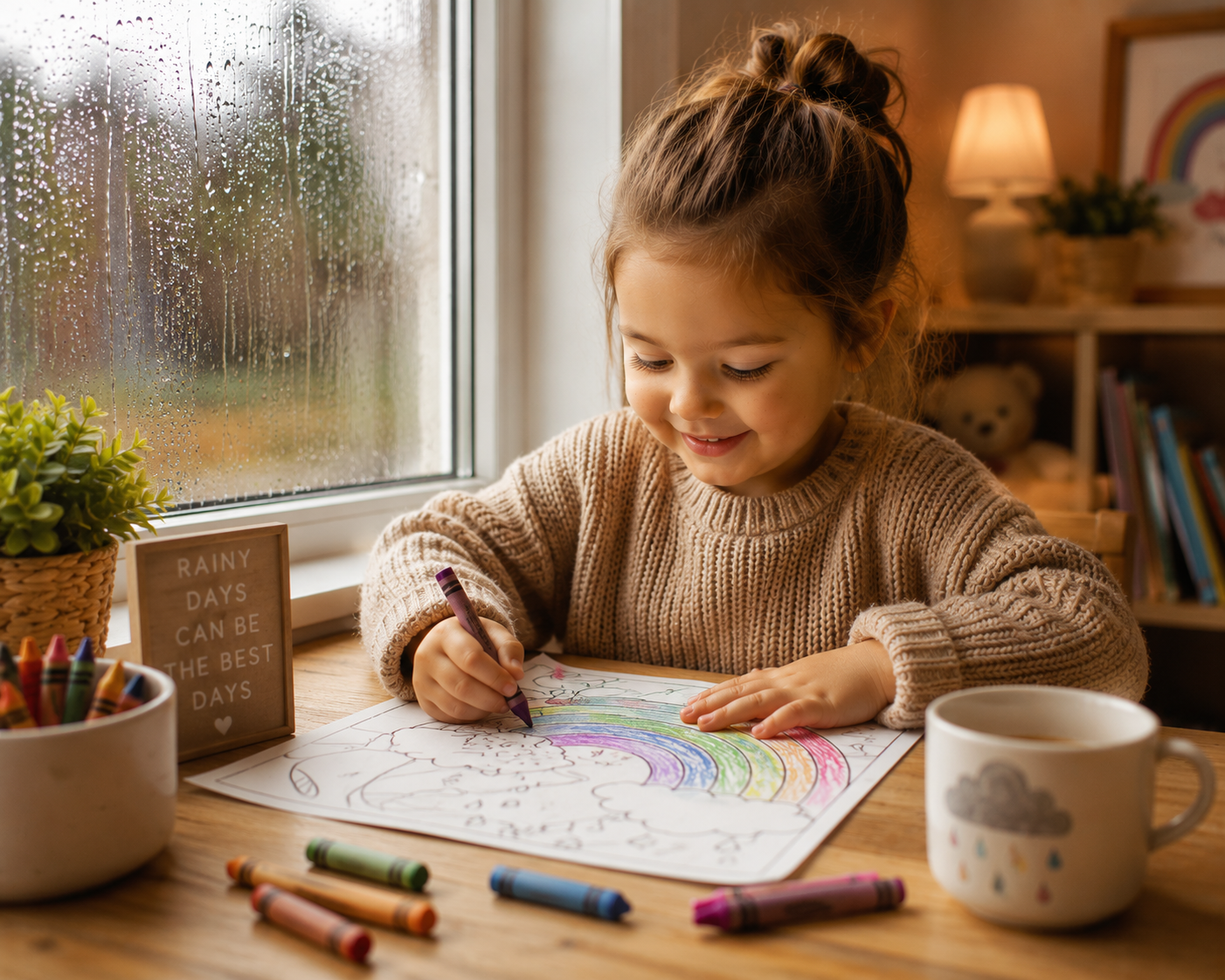
- Coloring and drawing. The ultimate low-prep calm activity. Print themed coloring pages for variety.
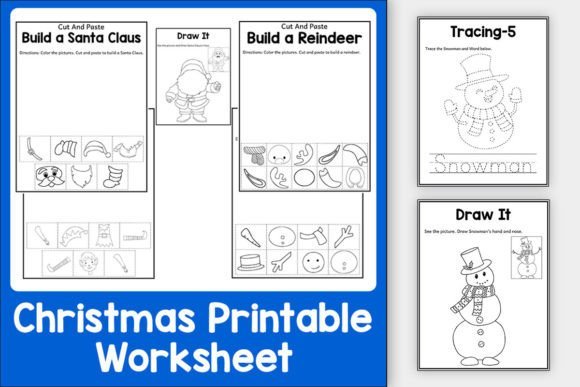
- Cut and paste crafts. Combines scissor practice with the satisfaction of making something.
- Puzzles. Build focus and spatial reasoning. Rotate puzzles so they feel fresh.
- Playdough. Endlessly engaging, builds hand strength, and is genuinely calming for many children.
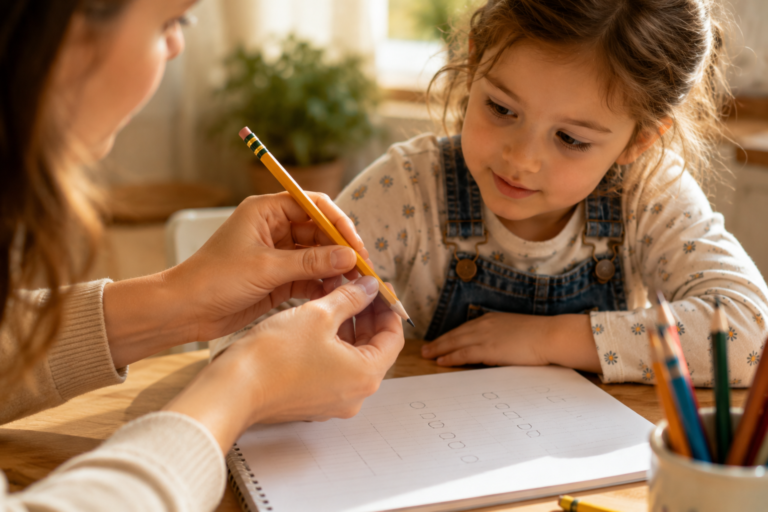
- Worksheets and learning activities. A short tracing, matching, or counting page fits naturally into a calm rainy-day stretch.
Keep a designated “rainy day box” stocked with special activities that ONLY come out on indoor days — a new coloring book, special stickers, a puzzle they haven’t seen in a while, fresh playdough, printed worksheets with fun themes. Because these items are reserved for rainy days, they feel novel and exciting rather than like the same old toys. The novelty alone buys you significant engagement, and rotating the contents keeps it working all season.
Sensory Activities (For Deep Absorption)
Sensory play is rainy-day gold because it absorbs children for long stretches:
- Sensory bins. Dry rice, pasta, or beans in a bin with scoops and small toys. Easily 30+ minutes of focused play.
- Kitchen sink water play. A stool, some cups, and supervised water play at the sink. Endlessly fascinating.
- Homemade playdough. Making it together is an activity in itself — measuring, mixing, kneading.
- Baking together. Measuring, pouring, mixing — math and science disguised as fun, with a delicious reward.
Turning the Rain Itself Into a Learning Activity
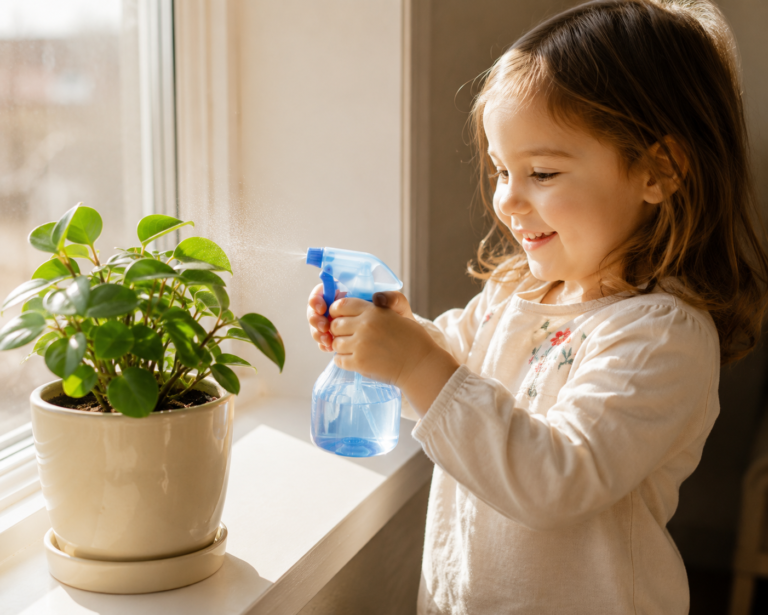
Don’t forget the most obvious rainy-day resource: the rain. Children are naturally fascinated by weather, and you can turn it into rich learning:
- Watch and describe. Sit by the window and talk about the rain — where it comes from, where it goes, why puddles form. Build vocabulary and curiosity.
- Rain measuring. Put a clear container outside and measure how much rain collects. Simple, real-world math and science.
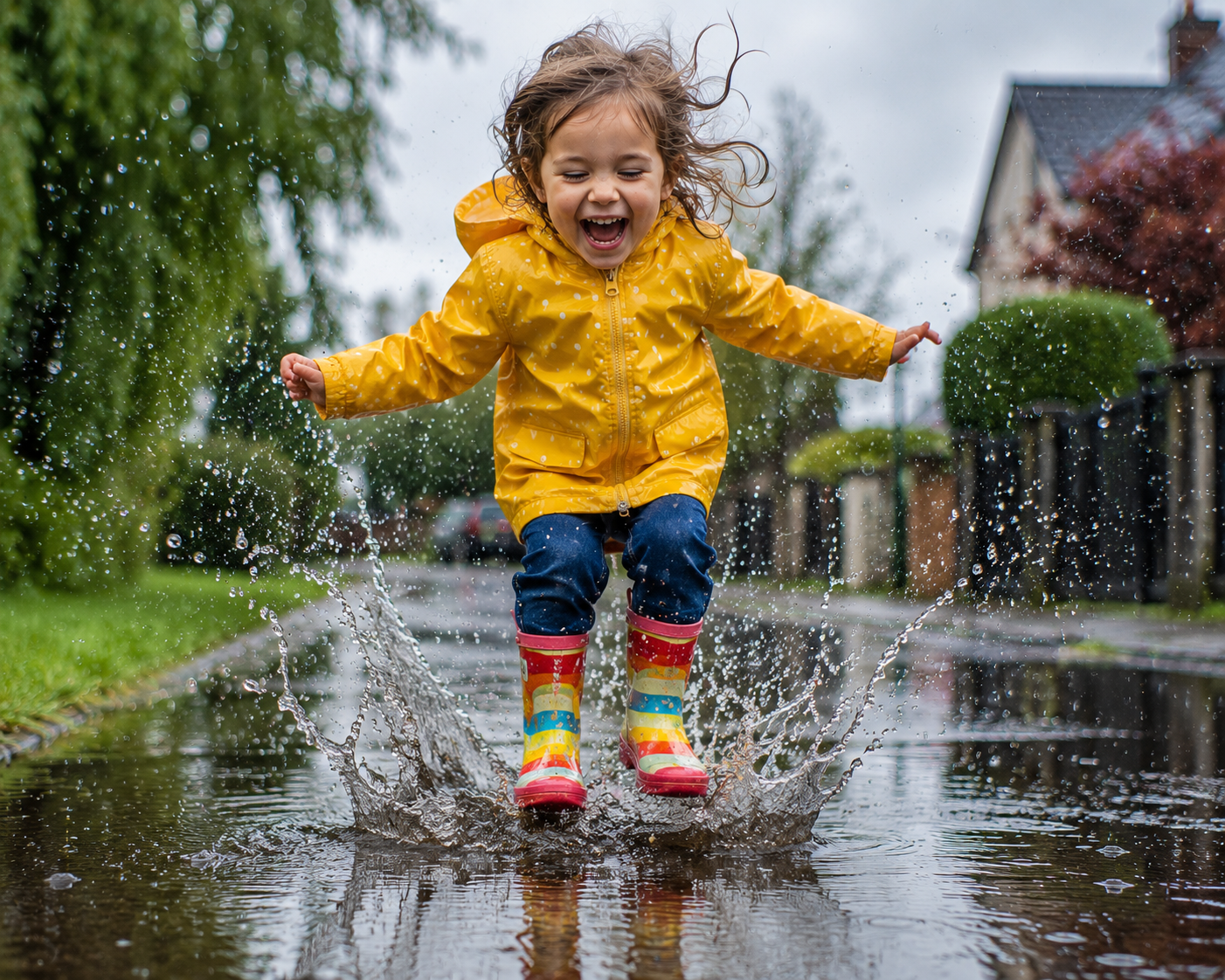
- Puddle jumping. If it’s safe and warm enough, rain boots and a puddle-jumping session outside is the best rainy-day activity of all — pure joy plus gross motor fun.
- Rain art. Drop washable marker dots on paper, set it briefly in the rain, and watch the colors spread. Art meets science.
Building a Rainy Day Rhythm
A long indoor day goes much more smoothly with a loose rhythm rather than a free-for-all. Here’s a structure that works:
- Morning: High-energy activity first (obstacle course, dance) to burn off energy
- Mid-morning: Calm focused activity (coloring, puzzle, worksheet) while they’re settled
- Before lunch: Sensory play or baking together
- After lunch/nap: Pretend play or building — the deep, sustained kind
- Late afternoon: Another energy burst, then a calm wind-down activity
Alternating energy levels keeps everyone regulated and prevents the meltdowns that come from too much of one mode. Our cut and paste worksheets and toddler worksheets are great to keep on hand for those calm-focused stretches.

A Rainy Day Activity Checklist
- Start with high-energy movement to burn off steam
- Follow with calm focused activities (coloring, puzzles, worksheets)
- Include at least one sensory activity for deep absorption
- Keep a special “rainy day box” with reserved novel activities
- Turn the rain itself into learning (watching, measuring, puddle jumping)
- Alternate energy levels throughout the day
- Don’t fear getting wet — sometimes the rain is the activity
Rainy afternoons are also a good time to get ahead on family birthdays. Kids can color and fold these printable birthday cards and practice writing a short message inside.
A Rainy Day Box
A few supplies kept aside for wet afternoons make the first hour indoors much easier.
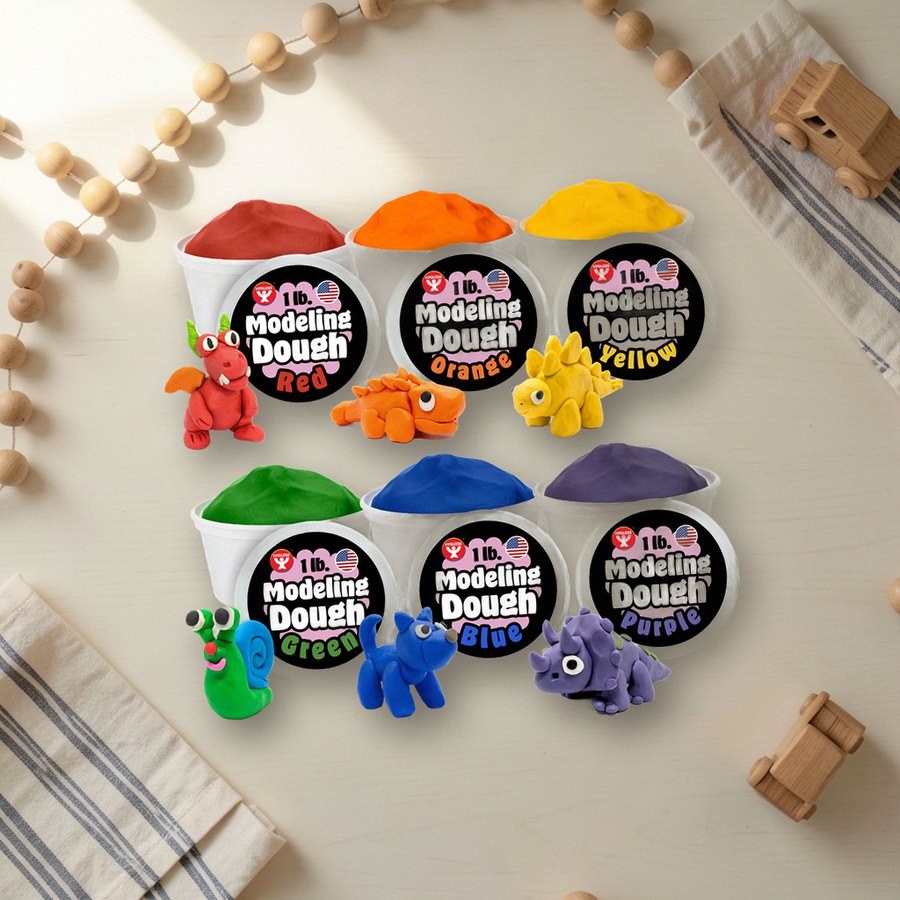 Modeling dough, 6 colorsView on Amazon
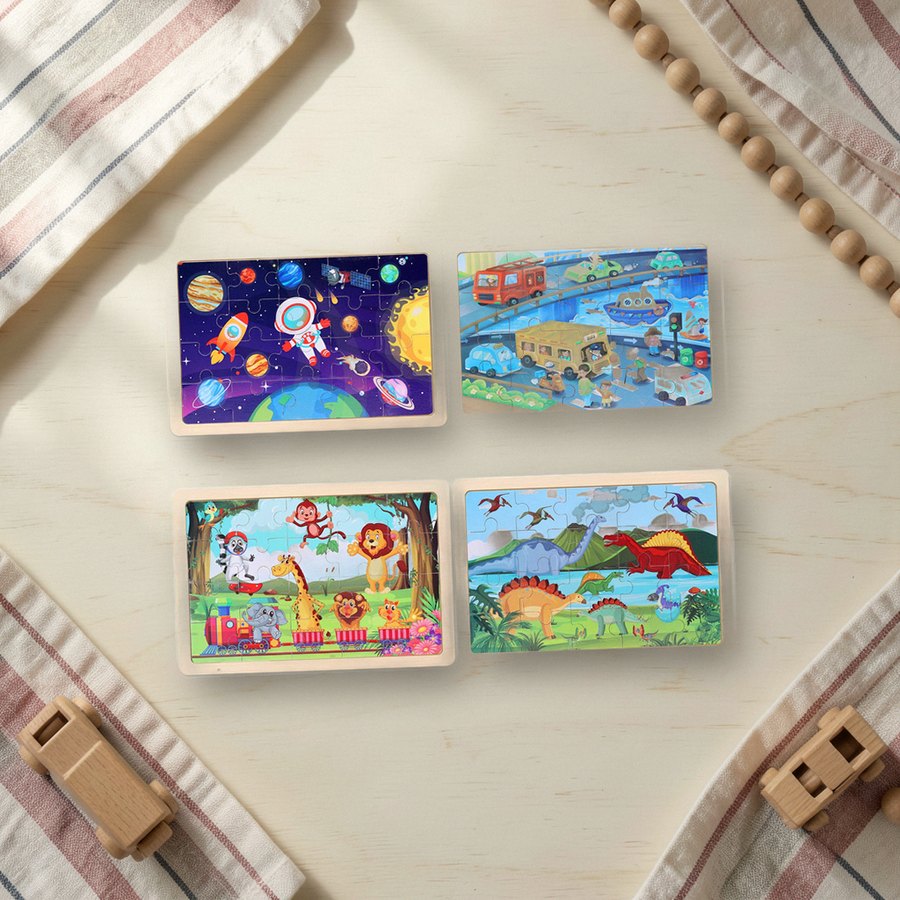 Wooden jigsaw puzzles for ages 3-5, 4 packView on Amazon
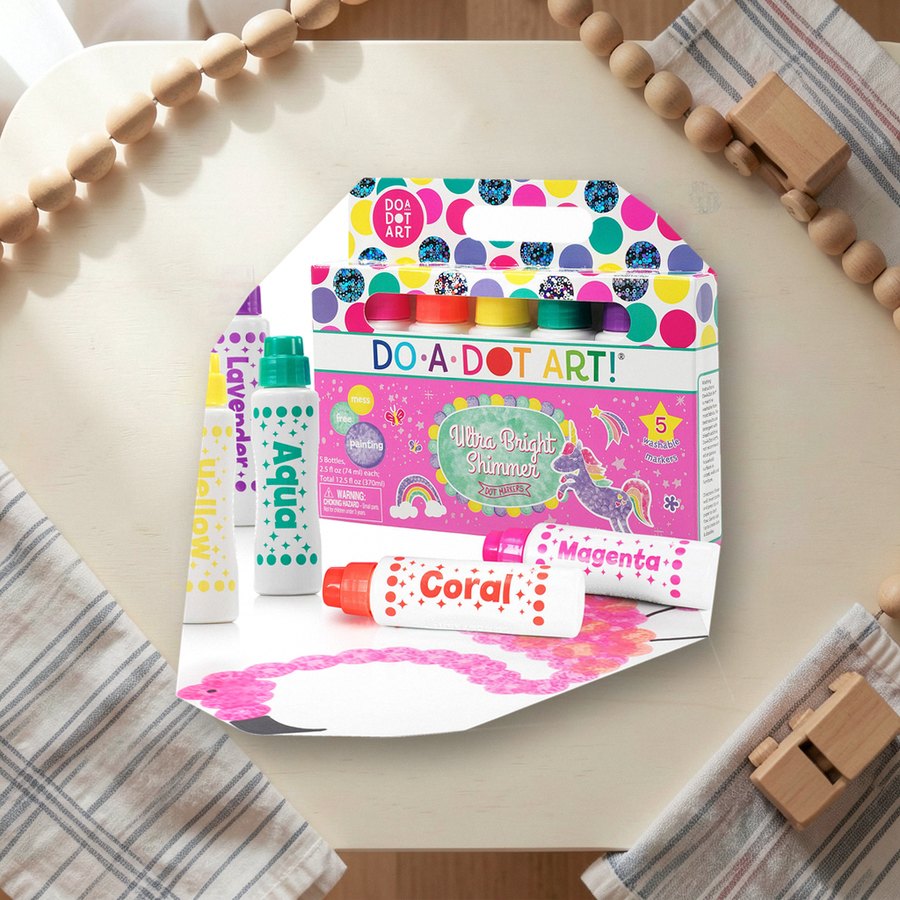 Washable dot markers (Do A Dot Art)View on Amazon
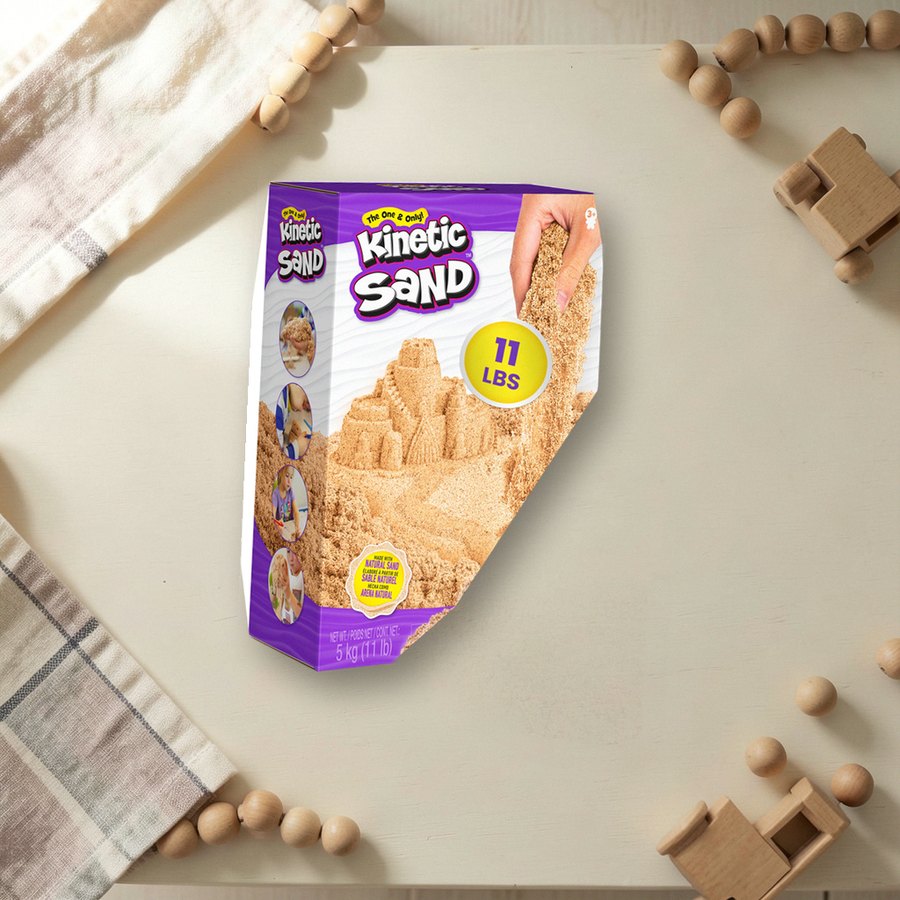 Kinetic sandView on Amazon
As an Amazon Associate, PrintableBloom earns from qualifying purchases.
Conclusion
Rainy days don’t have to be something to survive. With a deep enough well of simple ideas and a loose rhythm to the day, those gray indoor hours can become some of the cozy, creative, connected times you and your child remember most fondly.
The obstacle course in the living room. The sensory bin that bought you forty minutes of peace. The coloring page done side by side while the rain tapped the window. The wild, joyful puddle-jumping that left everyone soaked and laughing.
You don’t need to be endlessly entertaining or perfectly prepared. You just need a handful of go-to ideas and the willingness to lean into the day instead of fighting it. Keep the rainy day box stocked, alternate the energy, and remember — sometimes the best rainy day activity is simply putting on the boots and jumping in.
Frequently Asked Questions
What are the best indoor activities for kids on rainy days?
The best rainy day activities balance high-energy options (indoor obstacle courses, dance games, balloon keep-up) with calm focused ones (coloring, puzzles, cut and paste crafts, worksheets) and deeply absorbing sensory play (rice bins, water play, playdough, baking). Rotating through different types — and matching the activity to your child’s energy at the moment — keeps a long indoor day running smoothly.
How do I keep my kids entertained on a rainy day without screens?
Have a deep well of simple, low-prep activities ready and rotate through them. Start with energy-burning movement, transition to calm focused activities, include sensory play for deep absorption, and use pretend play and building for sustained engagement. A reserved “rainy day box” of novel activities adds excitement. The key is variety and matching activities to energy levels rather than relying on one thing to last all day.
What rainy day activities are also educational?
Many rainy day activities build real skills: coloring and cut-and-paste build fine motor skills, puzzles build spatial reasoning, sensory bins build focus, baking builds early math and science, pretend play builds language and social skills, and worksheets reinforce letters and numbers. Even the rain itself offers learning — watching weather, measuring rainfall, and exploring how puddles form all build curiosity and early science understanding.
How can I get my high-energy child through a rainy day indoors?
Prioritize movement. Start the day with energy-burning activities — indoor obstacle courses, dance freeze, animal movements, balloon games. Once some energy is released, high-energy children settle into calmer activities much more easily. Plan to repeat energy bursts throughout the day rather than expecting one calm session to last. Trying to force a high-energy child into quiet activities before they’ve moved usually backfires.
What should I keep in a rainy day activity box?
Stock a rainy day box with items reserved only for indoor days, so they feel special: a new coloring book, special stickers, a puzzle they haven’t seen recently, fresh playdough, themed printable worksheets, washable markers, and simple craft supplies. Rotate the contents periodically to maintain novelty. The fact that these items only appear on rainy days makes them genuinely exciting and buys you meaningful engagement.
Is it okay to let kids play in the rain?
In safe conditions — warm enough temperatures, no lightning or storms — playing in the rain is a wonderful activity. Puddle jumping builds gross motor skills, provides sensory experiences, and brings genuine joy. With rain boots, appropriate clothing, and a warm bath and dry clothes ready afterward, embracing the rain can turn a frustrating indoor day into a memorable adventure. Many children find it the highlight of a rainy day.
Related reading
- Fun Screen-Free Activities for Toddlers That Actually Work
- Calm and Quiet Activities for Toddlers and Preschoolers
- Easy Learning Games for Preschoolers at Home
- Daily Preschool Learning Routine for Busy Moms