Easy Learning Games for Preschoolers at Home
Here’s something every parent eventually discovers: a preschooler will resist a “lesson” but throw themselves wholeheartedly into a “game” — even when the two involve exactly the same skill. That’s not a trick to feel guilty about. It’s actually how young children are designed to learn. Play isn’t a break from learning at this age; play is learning.
The best learning games for preschoolers are simple, require almost no setup, and slip real skill-building into pure fun. You don’t need to buy anything or prepare elaborate materials. If you’d like to combine game-based learning with some printable activities, our alphabet worksheets pair beautifully with the letter games below. But let’s dive into the games themselves — organized by skill so you can find exactly what you need.

Why Learning Games Work So Well for Preschoolers
There’s a reason “learning through play” has become such a widely repeated phrase — it’s backed by a strong body of research. Child development experts consistently find that play-based learning produces stronger engagement, better retention, and more positive attitudes toward learning than direct instruction at the preschool age.
When learning is wrapped in a game, several good things happen at once. The child is intrinsically motivated, so they engage longer and more deeply. The emotional tone is positive, which helps the brain encode the learning. And the active, hands-on nature of games suits how preschoolers’ brains are wired to absorb information. A counting game teaches counting — but it also teaches that learning is fun, which may be the more valuable lesson.
Learning Games by Skill Area
| Skill Area | Game Example | What It Builds |
|---|---|---|
| Alphabet | Letter hunt around the house | Letter recognition in real contexts |
| Numbers | Counting scavenger hunt | Counting, number sense, one-to-one correspondence |
| Matching | Memory card game | Visual memory, matching, concentration |
| Colors & Shapes | Color/shape scavenger hunt | Recognition, categorization, observation |
| Fine Motor | Pompom transfer race | Pincer grip, hand strength, coordination |
| Listening | Simon Says | Following directions, self-regulation, attention |
Easy Alphabet Learning Games
These alphabet learning games build letter recognition through fun, with no worksheets required:
- Letter Hunt: Pick a letter and search the house for it — on packaging, books, signs. “Let’s find five things with the letter B!” Builds recognition in meaningful contexts.
- Letter Sound Sort: Gather small objects and sort them by their beginning sound. Ball and book in the /b/ pile, cup and car in the /c/ pile.
- Alphabet Hopscotch: Write letters in chalk (or tape paper letters to the floor) and call out a letter for your child to hop to. Movement plus letters.
- Name Building Race: Mix up magnetic or paper letters and race to build their name. Their name is the most meaningful word they know.
Easy Counting Games for Preschoolers
These counting games for preschoolers turn number practice into something kids actively want to do:
- Counting Scavenger Hunt: “Find me 4 spoons!” “Bring me 3 socks!” Combines counting with movement and a sense of mission.
- Snack Math: Count out crackers, then “if you eat one, how many are left?” Counting plus early subtraction, with a tasty reward.
- Dice Games: Roll a die, count the dots, do that many jumps. Connects numbers to quantity and movement.
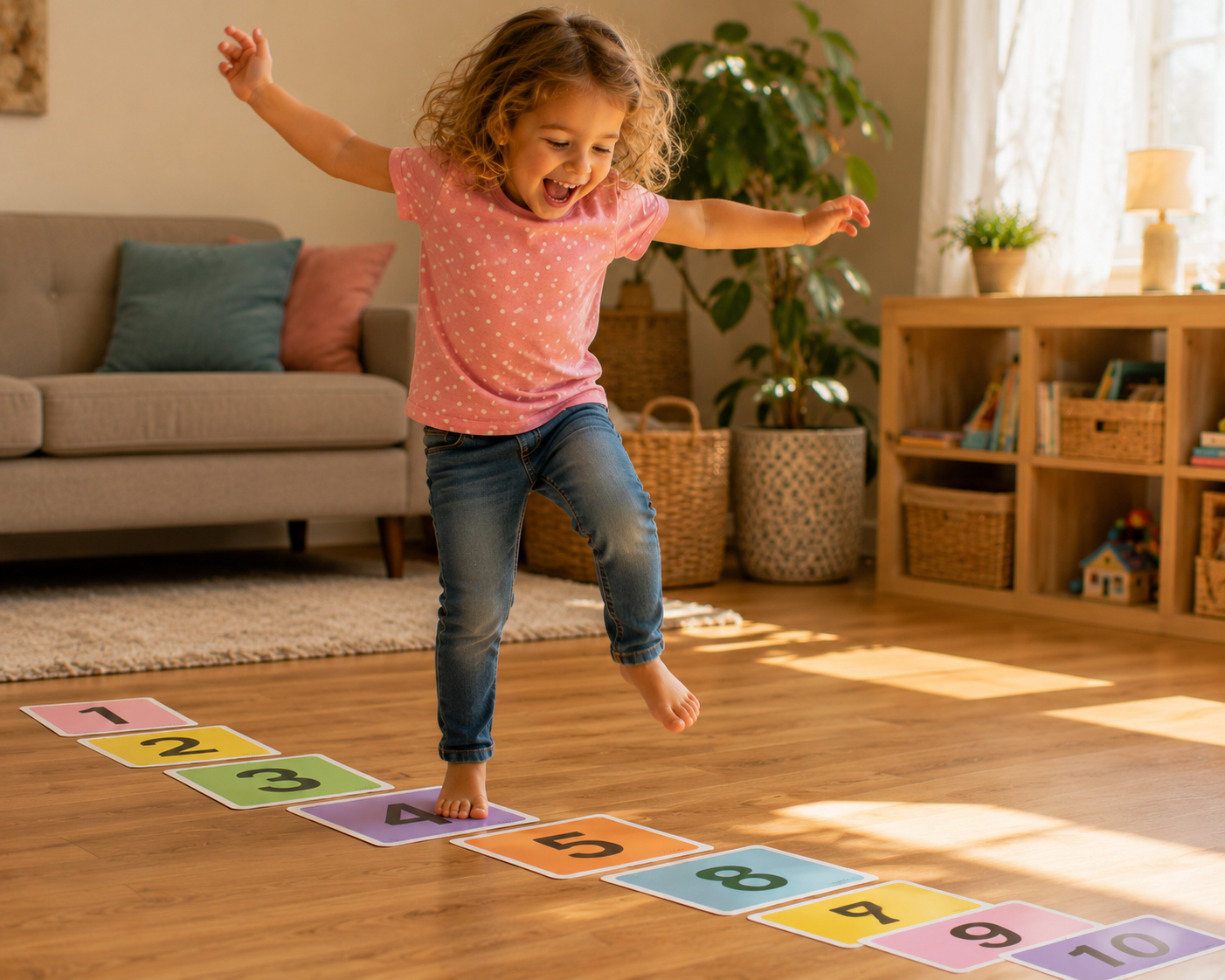
- Number Line Hop: Tape numbers 1–10 on the floor in a line. Call a number to hop to, or roll a die and hop that many spaces.
Scavenger hunts are the ultimate preschool learning game because they combine movement, a clear goal, and a sense of mission — three things that supercharge engagement. You can make a scavenger hunt out of almost any skill: find things that start with a letter, find a certain number of objects, find all the red things, find three circles. Zero prep, endlessly adaptable, and kids genuinely love the “hunt” framing.
Easy Matching and Memory Games
Matching games build visual discrimination, memory, and concentration — and preschoolers find them genuinely satisfying:
- Memory/Concentration: Lay cards face down, flip two at a time, find the pairs. Start with just 4–6 pairs for younger children.
- Sock Matching: A real chore turned game — match socks from the laundry pile. Practical and skill-building.
- Shadow Matching: Match objects to their outlines or shadows. Builds shape recognition and visual matching.
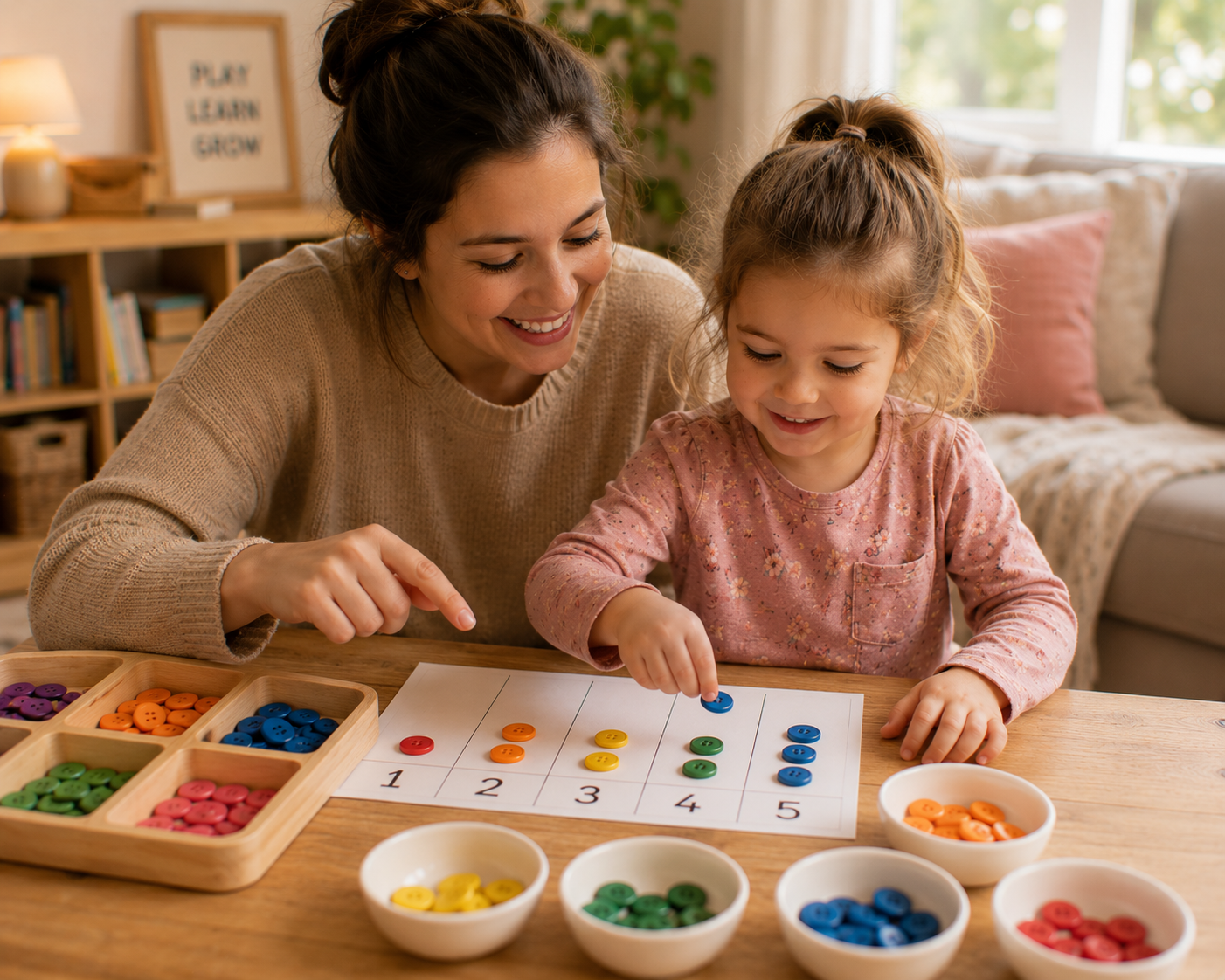
- Sorting Games: Sort buttons, toys, or blocks by color, size, or type. Builds the categorization skills underlying logical thinking.
Easy Fine Motor Games
These games build hand strength and coordination while feeling like pure fun:
- Pompom Transfer Race: Move pompoms from one bowl to another using tongs or tweezers. Race against a timer or each other.
- Threading Challenge: See how many beads can be threaded onto a string in a few minutes. Builds the pincer grip.
- Sticker Lines: Place stickers along a drawn line. Builds precision and hand control.
- Playdough Hide and Seek: Hide small objects in playdough and have your child dig them out. Builds hand strength through squeezing and pulling.
Movement and Listening Games
These games build self-regulation, listening, and following directions — crucial skills that don’t involve any academic content but matter enormously:
- Simon Says: The classic. Builds listening, following directions, and impulse control.
- Red Light, Green Light: Builds self-regulation and quick response to instructions.
- Freeze Dance: Dance to music, freeze when it stops. Self-regulation plus pure joy.
- Animal Movements: “Move like a bear, a snake, a frog.” Combines movement with following directions.
How to Make Any Activity Into a Learning Game
Once you understand the formula, you can turn almost anything into a learning game. The key ingredients are:
- A clear goal or mission (“find 5 red things”)
- An element of fun or challenge (a race, a timer, a hunt, a silly twist)
- Active participation (moving, finding, doing — not just sitting)
- Your enthusiasm (your energy is contagious — if you’re into it, they’re into it)
With those ingredients, counting becomes a scavenger hunt, sorting becomes a race, and letter practice becomes a treasure hunt. The skill is identical to a worksheet — but the experience couldn’t be more different. Pair these games with our numbers worksheets and matching activities for a well-rounded mix of play and gentle structured practice.
A Learning Games Checklist
- Keep a few go-to games ready for each skill (alphabet, counting, matching, fine motor)
- Use scavenger hunts — they work for almost any skill
- Add movement whenever possible (hopping, racing, dancing)
- Connect games to your child’s current interests
- Bring your own enthusiasm — your energy sets the tone
- Use everyday objects (socks, buttons, snacks) — no special materials needed
- Keep games short and end while it’s still fun
Game Pieces Worth Keeping
Many of the games above work with objects from the kitchen drawer. A few sets make them quicker to start.
 Bear counters, 102 piecesView on Amazon
 Magnetic letters and numbersView on Amazon
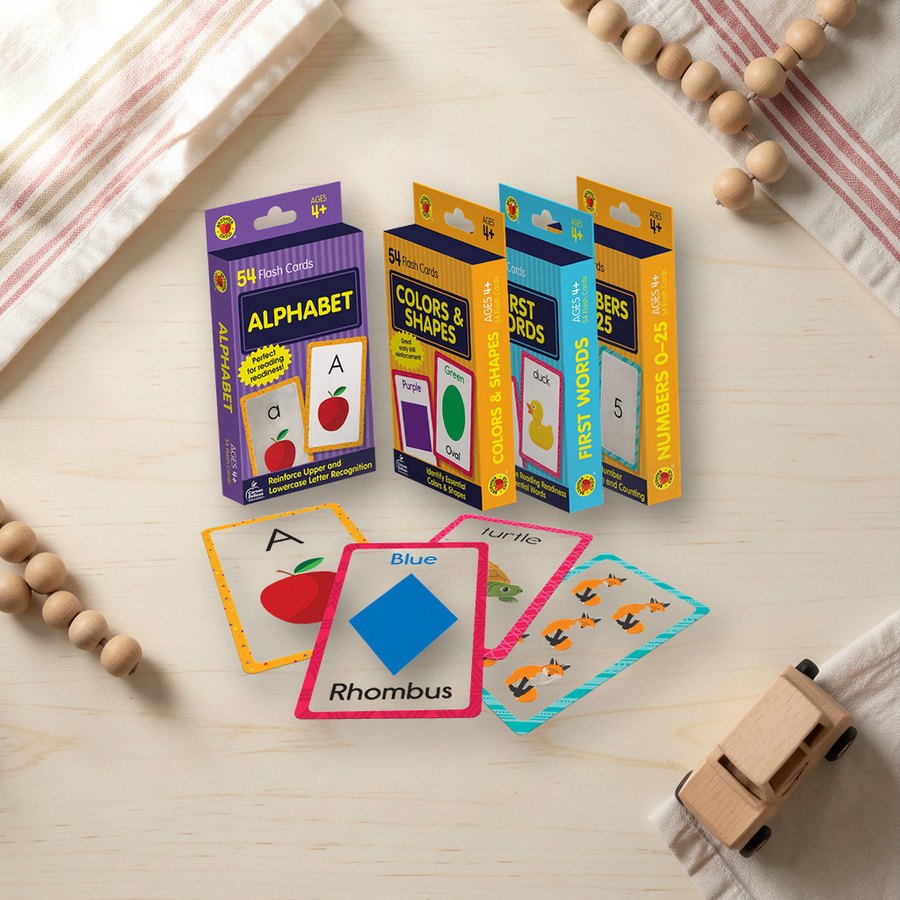 Toddler flash cards, 4-packView on Amazon
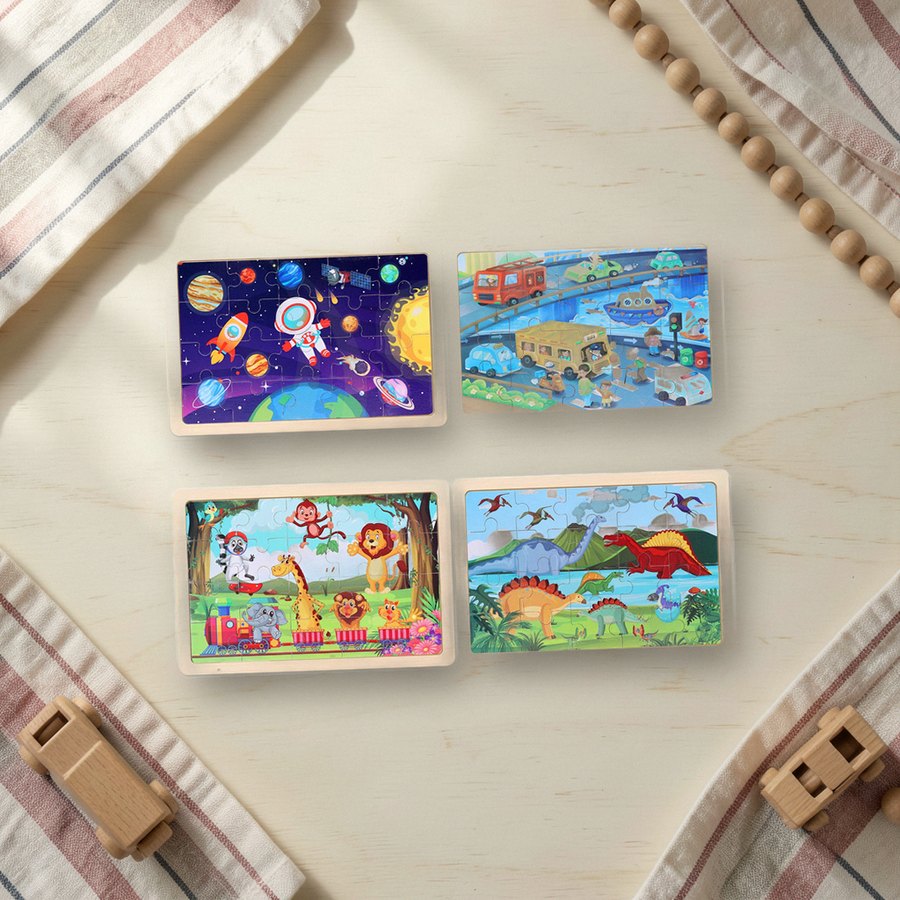 Wooden jigsaw puzzles for ages 3-5, 4 packView on Amazon
As an Amazon Associate, PrintableBloom earns from qualifying purchases.
Conclusion
The best learning games for preschoolers aren’t found in a box or an app. They’re the letter hunt at the grocery store, the pompom race against the timer, the counting scavenger hunt through the living room, the game of Simon Says that’s secretly building self-control. Real skills, built through real fun, with the everyday objects you already have.
Your preschooler is wired to learn through play — so lean into it. Turn the lesson into a game, bring your enthusiasm, and watch them dive into the very skills they might resist in worksheet form. The counting, the letters, the matching, the listening: it’s all happening, wrapped in laughter and movement and the simple joy of playing together.
And the best part? When learning feels this good, children come back to it again and again — not because they have to, but because they want to. That love of learning, built through play right now, is a gift that lasts a lifetime.
Frequently Asked Questions
What are the best learning games for preschoolers?
Some of the most effective and easy learning games include letter hunts (alphabet recognition), counting scavenger hunts (number skills), memory/matching card games (visual memory), pompom transfer races (fine motor), and Simon Says (listening and self-regulation). The best games combine a clear goal, active participation, fun, and connection to a child’s interests — and most require only everyday household objects.
How do learning games help preschoolers develop?
Learning games build academic skills (letters, numbers, matching) while simultaneously developing engagement, motivation, and a positive association with learning. Research shows preschoolers learn at least as well through play as through direct instruction, with higher engagement and better retention. Games also build skills that worksheets can’t — like following directions, self-regulation, and social interaction — making them uniquely valuable for whole-child development.
Can I teach my preschooler academic skills through games alone?
Largely, yes. The core preschool foundations — letter recognition, counting, number sense, matching, fine motor skills — can all be built through games and play. Many families use games as their primary learning approach, supplemented occasionally with short printable activities. Play-based learning is not a lesser approach; for preschool-age children, it’s often the most effective one. A mix of games and gentle structured practice works well for most children.
What learning games require no preparation?
Many of the best learning games need zero prep: letter and counting scavenger hunts (using objects already in your home), Simon Says, freeze dance, animal movement games, sock matching from the laundry, and sorting household objects by color or type. These can be started on the spot whenever you have a few minutes, making them perfect for busy days or unexpected downtime.
How long should learning games last for preschoolers?
Most learning games work best in short bursts of 5–15 minutes, depending on the child’s age, interest, and energy. As with all preschool activities, it’s best to end while the child is still engaged and enjoying it — this keeps the positive association strong and makes them eager to play again. Some highly engaging games may naturally last longer when a child is deeply absorbed, and that’s perfectly fine.
How do I make learning fun for a child who resists structured activities?
Turn the skill into a game with a mission, movement, and fun. A child who refuses a counting worksheet will often happily go on a counting scavenger hunt. Add elements like races, timers, hunts, or silly twists. Connect activities to their interests, bring genuine enthusiasm yourself, and use everyday objects rather than formal materials. The same skill in game form frequently meets zero resistance from children who push back against seated work.
Related reading
- What to Do If Your Child Hates Worksheets
- Simple Fine Motor Activities for Preschoolers That Build Real Skills
- Homeschool Learning Ideas for Preschoolers That Actually Work
- Best Ways to Teach Numbers to Preschoolers at Home