Why Visual Schedules Work for Young Kids (and How to Start One)
If you have ever tried to move a two-year-old from the bath to pajamas, or coax a four-year-old away from blocks to the dinner table, you know how quickly a calm afternoon can tip into tears. It is not that your child is being difficult on purpose. Young kids simply do not hold time and sequence in their heads the way we do, and being told “we’re leaving in five minutes” often lands as a surprise. A visual schedule gives them something we take for granted: a way to see what is coming next.
What a visual schedule is (and why pictures beat words for young kids)
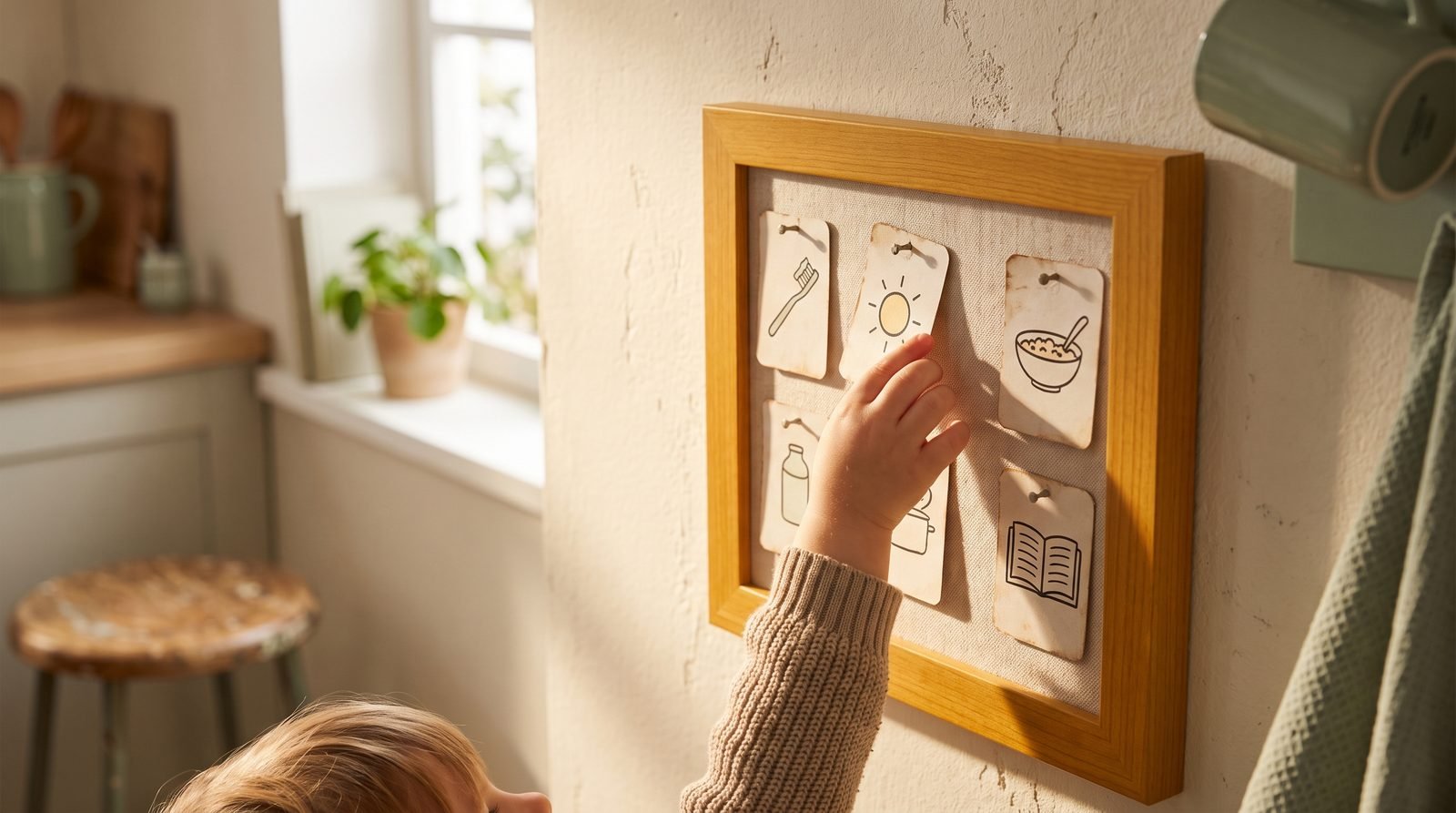
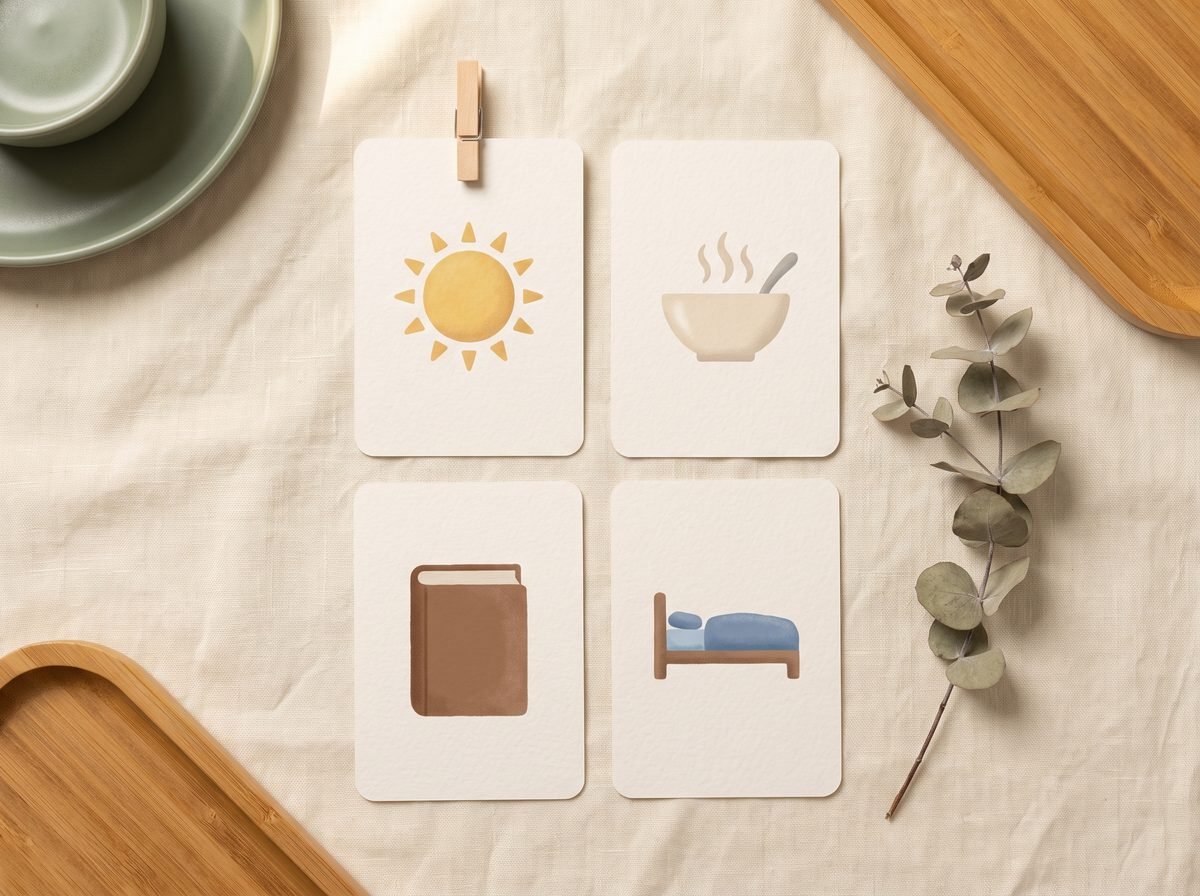
A visual schedule is simply a row or column of pictures that shows the steps of a routine in order: wake up, get dressed, eat breakfast, brush teeth, and so on. Each step gets one small image or icon, sometimes with a word underneath. That’s the whole idea. It can be a laminated strip on the fridge, a small board by the door, or a few cards clipped together.
The reason pictures work so well for the 2-to-7 crowd comes down to how their brains process information. Spoken words disappear the instant they are said. A toddler who hears “first shoes, then park” has to hold that whole sentence in working memory, and working memory is still very much under construction at this age. A picture stays put. Your child can look at it, point to it, and check it again thirty seconds later when they’ve forgotten. For a child who isn’t reading yet, a clear picture of a toothbrush communicates instantly in a way the word “brush teeth” never could.
There’s also a quieter benefit. When the schedule tells your child what happens next, you stop being the constant source of instructions. Instead of “put your shoes on, now your coat, no not yet, now your coat,” you can point and say, “What’s next on your chart?” The picture becomes the boss, and that small shift takes a surprising amount of friction out of your day.
How predictability lowers anxiety and meltdowns
Most meltdowns at this age are not about the specific thing being asked. They’re about the unexpectedness of it. A child deep in play who is suddenly told to stop feels the same jolt an adult would feel if someone walked up and closed their laptop mid-sentence. The transition itself isn’t the problem; the surprise is.
When a child can see the shape of their day, that surprise mostly evaporates. They learn that snack comes after outside time, and that quiet time comes after lunch, every single day. Predictability tells a young nervous system, “You are safe, you know what happens here.” That sense of safety is what lowers the baseline tension that so often tips into a meltdown.
You’ll often notice a child glancing at the schedule on their own, reassuring themselves. A three-year-old might walk over, look at the pictures, and say “then park!” with obvious relief. That’s the schedule doing its real job: it’s not making your child obey, it’s helping them feel oriented and calm. A visual schedule works best sitting inside a predictable daily rhythm, so if your days still feel a little chaotic, it’s worth building that gentle, dependable structure first and letting the schedule slot into it.
Which parts of the day to put on a schedule first
You do not need to schedule the entire day, and you shouldn’t try to at the start. Pick the one stretch that reliably goes sideways. For most families that’s either the morning rush or the bedtime wind-down, because those are the times with the most steps and the least patience on everyone’s part.
A good starting schedule is short: four to six steps. A morning schedule for a preschooler might be: get dressed, eat breakfast, brush teeth, shoes, backpack, door. A bedtime schedule might be: bath, pajamas, brush teeth, two books, lights out. Notice these are concrete, physical actions, not vague ideas like “get ready.” Each picture should point to something your child can actually do.
Resist the urge to schedule the fun, flexible parts of the afternoon. Free play does not need a card. The schedule earns its keep at the pinch points, the moments that involve stopping one thing and starting another. Once your first routine is running smoothly for a week or two, you can add a second stretch if it helps. Think about the natural bookends of your child’s day, the common morning and evening steps most families share, and borrow from those rather than inventing a schedule from scratch.
How to build your first picture schedule step by step
Here is a simple way to put one together this week without overthinking it:
- Choose one routine. Morning or bedtime. Just one.
- List the steps out loud with your child. Walk through the routine together and name each step. Involving them here makes the schedule feel like theirs, not a rule imposed on them.
- Find a picture for each step. You can print simple icons, snap a photo of your own child doing each step, or draw stick figures. Real photos of your child are especially powerful for toddlers, who recognize themselves instantly.
- Put them in order, left to right or top to bottom. Young kids read a sequence spatially, so keep the direction consistent every day.
- Add a “done” action. Kids love a sense of completion. Let them flip each card over, move it to a “finished” pocket, or slide a clothespin down the strip as each step is done. This is the part children get genuinely excited about.
- Post it at their eye level. Not yours. It should live where your child stands during that routine, low on the fridge or beside the bed.
Keep it modest. A crooked, hand-drawn schedule that you actually use beats a beautiful laminated one that lives in a drawer. You can always refine it once you see what works.
Using it at transitions (the hard moments)
The schedule really proves itself at transitions, so it’s worth being deliberate about how you use it there. A few minutes before a change, bring your child to the chart rather than calling out across the room. Point to where they are now and to what comes next. “Right now we’re doing blocks. Look, next is snack.” Seeing it is far more effective than hearing it.
Give the transition a small on-ramp. Pair the picture with a warning your child can grasp, like “two more turns, then we check the chart,” or a short song that signals the change is coming. The picture handles the what, and the warning handles the when, which is the part young kids struggle with most.
When they resist, and sometimes they will, let the schedule be the neutral party. “I know, blocks are so fun. But snack is next on your chart, see?” This keeps the pushback aimed at the picture instead of at you, and it keeps your tone calm because you’re not the one issuing the order. Over time, many kids start narrating their own transitions, which is exactly the self-regulation you’re hoping to grow.
Keeping it flexible when plans change
Real life doesn’t follow the chart every day, and that’s fine. A schedule is a tool for predictability, not a contract you have to honor perfectly. The trick is to make change itself predictable.
When something is different, show it on the schedule rather than just announcing it. If you can, add a special card, a picture of Grandma’s house, a car for an outing, so your child sees the change coming instead of feeling it as a rupture. Some families keep a simple “surprise” or “change” card exactly for this. Placing it on the strip tells your child, “Yes, today is different, and that’s okay, here’s what’s happening instead.”
Talking through changes this way actually builds flexibility over time. A child who learns that changes are shown and explained, not sprung on them, becomes more adaptable, not less. The goal was never a rigid day. It was a day your child can understand and trust. If you’re weaving learning time into an already-full schedule, a daily learning routine for busy parents shows how to keep it light and doable.
Visual schedules for kids who need extra structure
Some children lean on structure more than others, and that’s simply part of the wide range of normal in early childhood. A child who gets easily overwhelmed by transitions, who craves knowing exactly what’s next, or who settles noticeably when the day is spelled out will often get even more out of a visual schedule than their peers. There’s nothing to diagnose or worry about here; some kids just do their best when predictability is built in.
For these children, a few small adjustments help. Keep the schedule even more consistent from day to day. Break bigger steps into smaller ones, so “get dressed” becomes underwear, shirt, pants, socks. Give extra warning before transitions, and let your child move at their own pace through the sequence. The more dependable and calm you can make the sequence, the more a child who craves predictability will lean on it and settle.
Common mistakes that make schedules fall apart
If a schedule stops working, it’s usually one of a handful of fixable things rather than a sign that “it doesn’t work for my kid.” Watch for these:
- Too many steps. A twelve-step chart overwhelms a young child. Trim it back to the essentials.
- Using it only when things go wrong. A schedule that appears only during a battle feels like a punishment. Use it every day, on the good days too, so it becomes a familiar friend.
- Posting it too high. If your child can’t see it or touch it, it’s your chart, not theirs.
- Skipping the “done” step. The satisfaction of marking a step finished is a big part of what keeps kids engaged. Don’t leave it out.
- Expecting instant results. Give any new schedule a week or two of consistent use before you judge it. The calm builds gradually as the routine becomes familiar.
Starting a visual schedule is one of those small changes that pays off far beyond its effort. You’re not just smoothing out a rough patch of the day; you’re handing your child a way to understand time, anticipate change, and feel steady in their own routine. Begin with one tricky moment, keep it simple, and let it be imperfect. Within a couple of weeks you’ll likely notice fewer surprises, softer transitions, and a child who glances at their little row of pictures and knows, with quiet confidence, exactly what comes next.
Supplies for Building a Picture Schedule
A picture schedule survives daily use when the cards are laminated and attach with hook-and-loop dots.
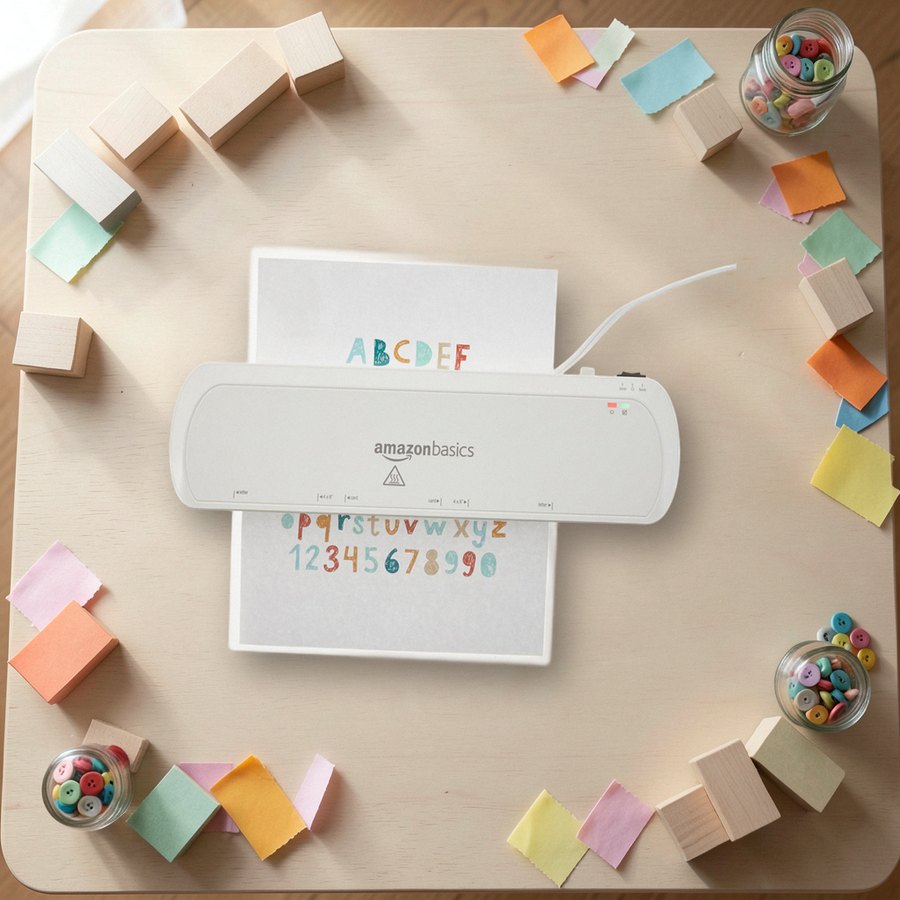 9-inch thermal laminatorView on Amazon
 Laminating pouches, 3 milView on Amazon
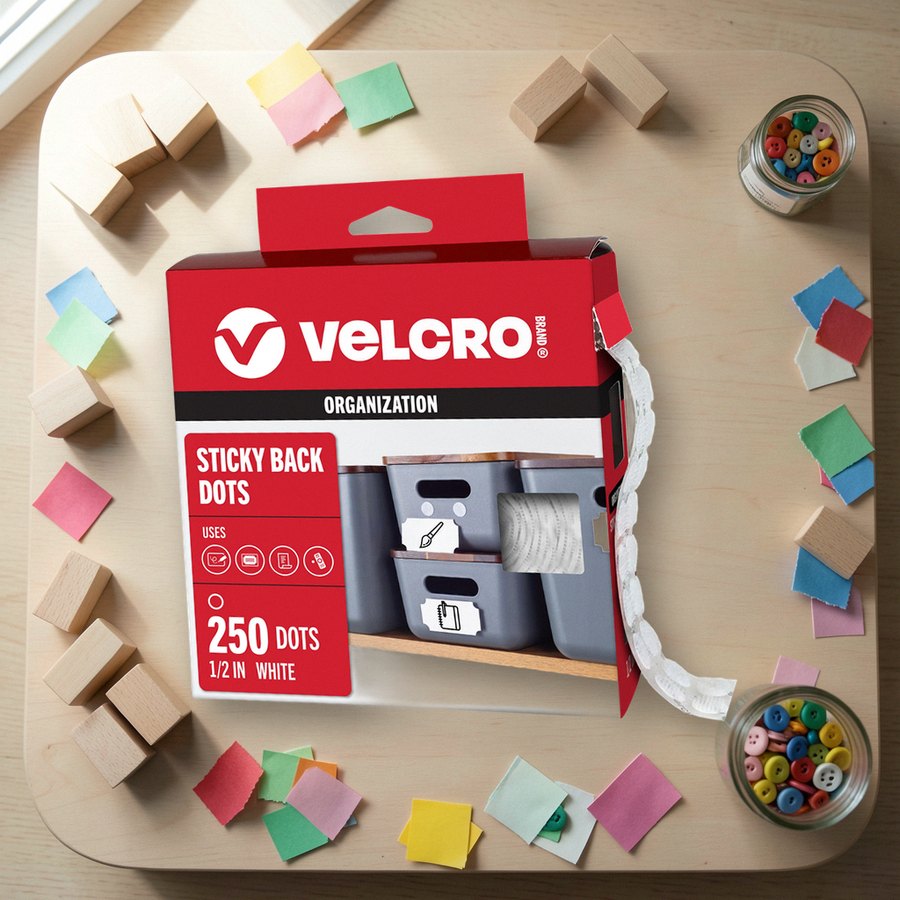 Adhesive hook-and-loop dotsView on Amazon
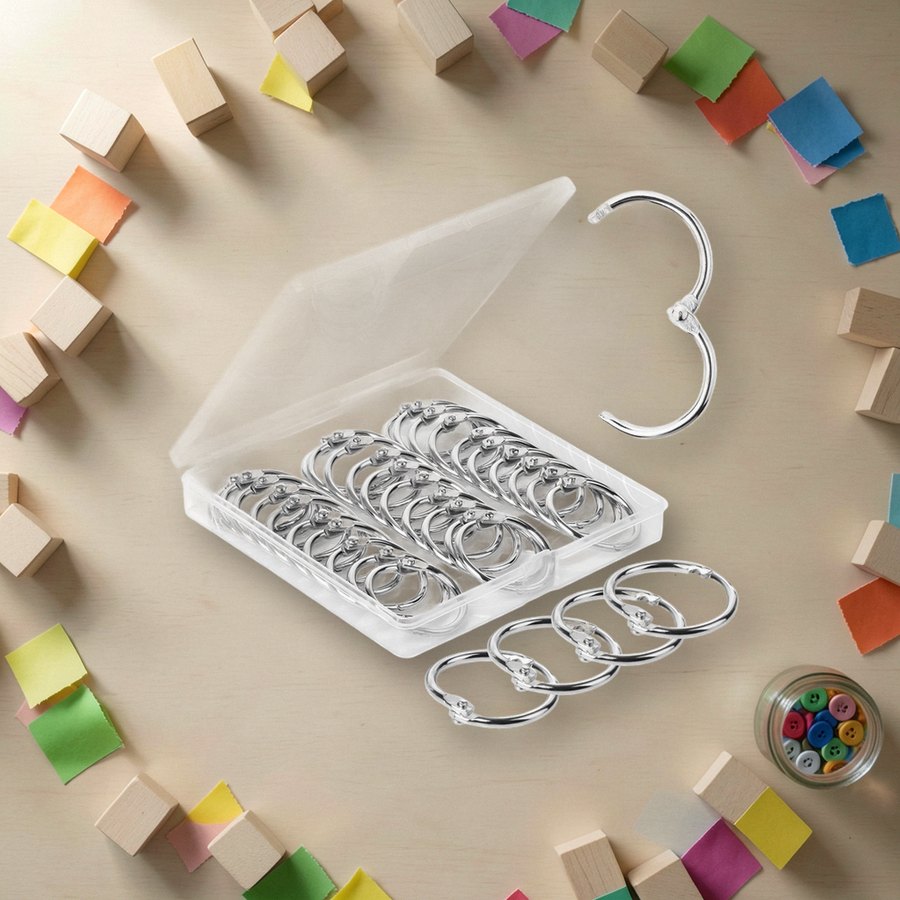 1-inch binder ringsView on Amazon
As an Amazon Associate, PrintableBloom earns from qualifying purchases.