Building the Hand Strength Kids Need Before Writing (Ages 2-6)
If you’ve ever watched your child grip a crayon like they’re trying to break it in half, press so hard the paper tears, or give up after two wobbly letters and slide off the chair, I want you to take a breath. That frustration you’re seeing isn’t stubbornness, and it almost never means anything is wrong. More often than not, it means the small muscles in their hands simply aren’t ready yet.
I’ve spent years in early-childhood classrooms watching this exact scene play out, and the same quiet truth comes up again and again: neat writing doesn’t start with letters. It starts with strong little hands. Let’s walk through how that strength is built, gently and without pressure, at home.
Why hand strength is the hidden foundation of neat writing
Handwriting looks like a brain-and-eyes job, but it’s really a muscle job. To form a single letter, a child has to hold a pencil steadily, control tiny movements with their fingertips, and keep their wrist and forearm stable while the fingers do the fine work. That’s a lot of coordinated strength packed into a very small area.
When those muscles aren’t ready, kids compensate in ways that look like “bad handwriting.” They grip harder to make up for weak fingers. They move their whole arm because the fingers can’t isolate. They fatigue after a few minutes and start rushing. None of that is a character flaw. It’s a hand that’s still under construction.
Here’s the reassuring part: hand strength develops through play, not drills. Squeezing, pinching, pulling, and cutting all build the exact muscles a pencil needs. If you focus on the hands first, the writing tends to sort itself out later with far less struggle.
Signs a child’s hands aren’t strong enough yet
You don’t need any special training to notice these. In fact, most parents have already seen them without knowing what they meant. A few common signs the hands need more time and play:
- Pressing too hard or too soft — either denting the paper or leaving faint, ghostly lines because they can’t sustain pressure.
- A fist grip or thumb-wrapped grip instead of holding the crayon with the fingertips.
- Tiring quickly — shaking out the hand, complaining it “hurts,” or wanting to stop after a minute or two.
- Moving the whole arm to color or draw, rather than the fingers doing the small work.
- Avoiding fiddly tasks like buttons, zippers, stickers, or small toys.
Please read these as a green light for more hands-on play, not a red flag. These are developmental signposts, not diagnoses. A three-year-old showing all five of these is completely typical. The response is the same either way: less worksheet time, more real-world squeezing and building.
Everyday activities that build strength (squeezing, pinching, tearing)
The best hand-strength “equipment” is already in your kitchen and recycling bin. What matters is the type of movement, because each one targets muscles a pencil will later rely on.
Squeezing builds the overall grip and palm strength that stabilizes the hand. Think spray bottles (misting plants is a favorite), squeezing sponges in the bath, kneading and rolling dough, or a turkey baster moving water between two cups.
Pinching builds the thumb-and-first-two-fingers “tripod” that eventually holds the pencil. This is the big one. Clip clothespins onto the edge of a bowl, pick up pom-poms with child-safe tweezers, press coins into a piggy bank, or pop bubble wrap one bubble at a time.
Tearing and crumpling strengthens the fingers while giving lots of satisfying feedback. Tear strips of paper for a collage, crumple newspaper into balls for an indoor toss game, or peel stickers off a sheet and place them one by one.
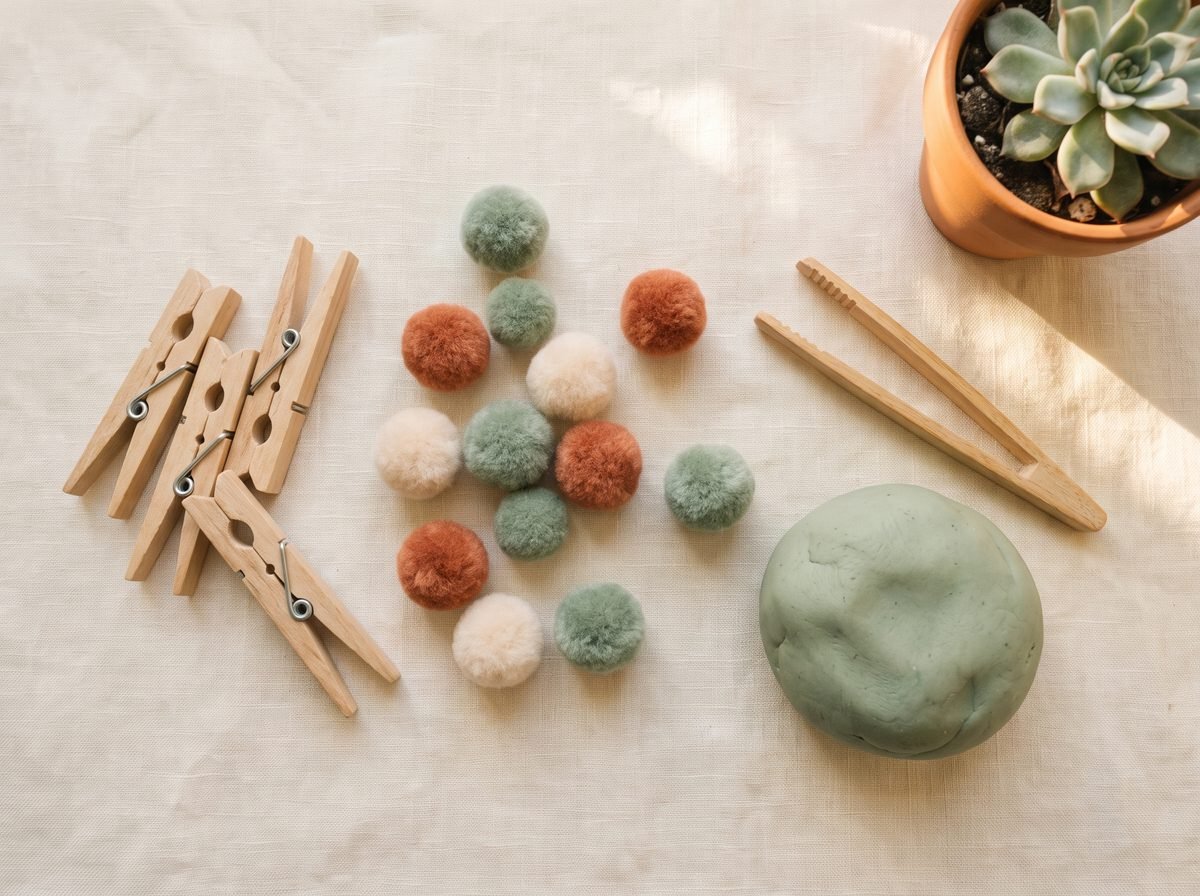
You don’t need to schedule these or call them “activities.” A basket of clothespins by the couch, dough at the kitchen table, a spray bottle in the garden — that’s genuinely enough. If you’d like a few more structured ideas that still feel like play, these simple fine motor activities are an easy place to start.
How cutting builds the exact muscles writing needs
Of all the pre-writing skills, cutting with scissors is the one I’d protect most fiercely. It’s almost magical in how directly it prepares a hand for a pencil.
Here’s why. Opening and closing scissors uses the same thumb-index-middle-finger group that forms a mature pencil grip. At the same time, the child has to tuck their ring and pinky fingers into the palm to stabilize the hand — and that “separation of the two sides of the hand” is exactly what lets fingertips move independently while the wrist stays steady. On top of that, one hand cuts while the other turns the paper, which builds the two-handed teamwork writing quietly depends on.
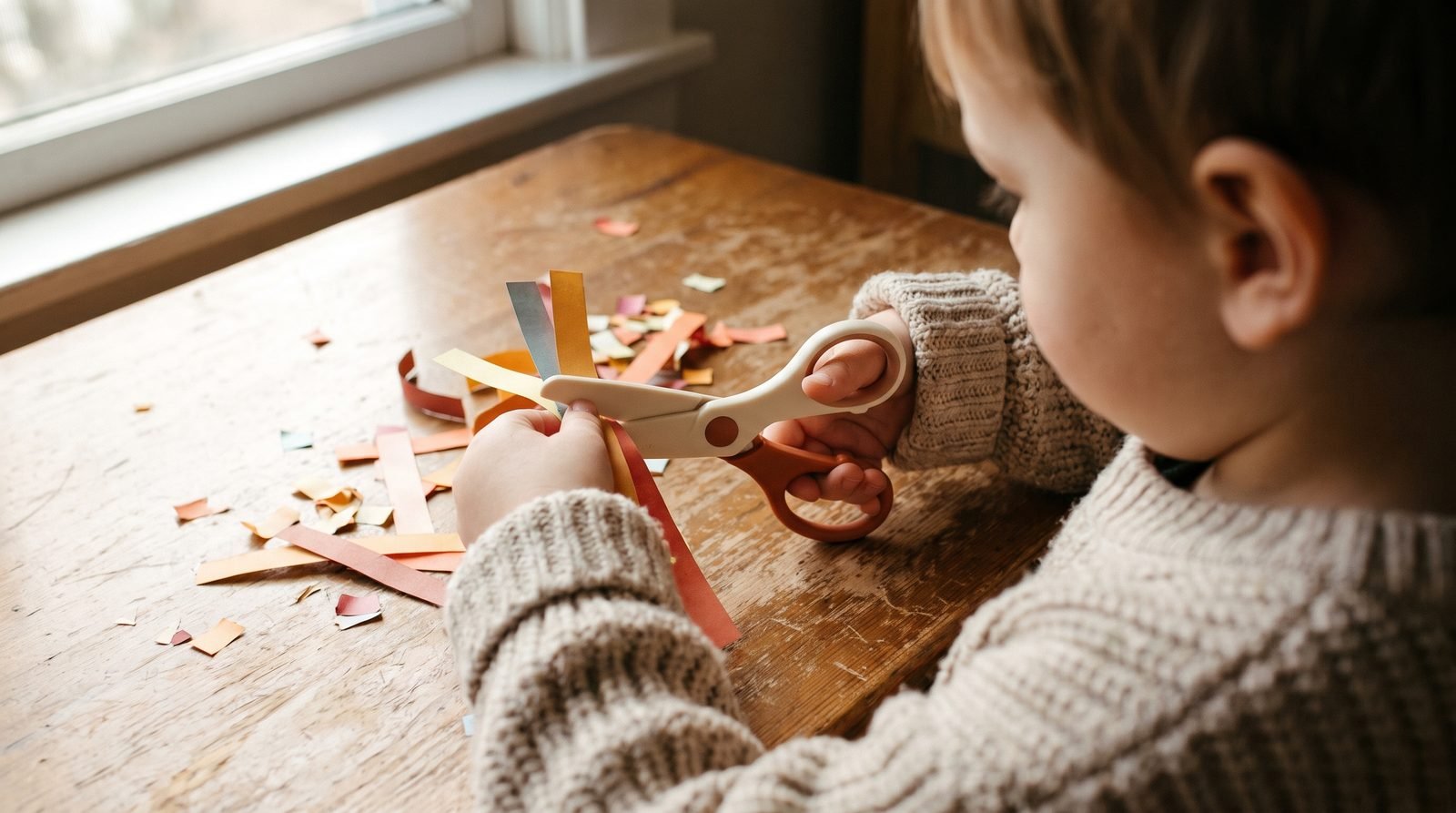
Start simple and let success come first. Snipping is the entry point: hand your child thin strips of stiff paper (index cards or cardstock hold up better than floppy printer paper) and let them make single snips, turning the strips into confetti. From there, progress to cutting along a thick straight line, then gentle curves, then simple shapes.
If you want a gentle, sequenced path through those stages, this guide to easy cutting activities for ages 3-5 lays it out step by step, and printable cutting practice sheets give kids clear lines to follow so every attempt ends in a small win. A quick safety note: always use child-safe scissors and stay nearby, especially for the under-fours.
From strong hands to controlled tracing
Once hands have been squeezing, pinching, and cutting for a while, tracing stops being a battle. A child with stronger fingers can now hold the pencil lightly, keep it moving along a line, and stop where they mean to — the three things tracing actually asks for.
Notice the progression here. We’re not jumping from weak hands straight to letters. We’re going grip, then cutting, then tracing, then forming letters, and each step rests on the one before it. Tracing is the bridge between “my hand is strong” and “my hand is controlled.”
Keep early tracing big and forgiving. Trace in a tray of salt or sand with a finger first — no pencil pressure to manage at all. Move to thick lines and large shapes before small ones. Vertical surfaces help a lot too: tape paper to the wall or use an easel, because working upright naturally builds wrist strength and a better grip. When your child is ready for paper practice, our fine motor skills worksheets keep the lines large and the wins frequent.
A gentle progression toward forming letters
Only after grip, cutting, and tracing feel comfortable does it make sense to ask for real letters — and even then, start with the shapes that hide inside them. Vertical lines, horizontal lines, circles, and crosses come before any letter. A child who can draw a confident circle and a straight down-stroke already has most of what lowercase letters require.
When you do introduce letters, resist the urge to start with the alphabet in order. Begin with letters built from simple strokes — L, T, I, H, O — and save the diagonal, curvy ones for later. And please let go of perfection. The goal at this stage is a hand that can move where the child intends it to, not a page that looks like a font. Confidence carries a child much further than tidiness ever will.
What to expect by age 2, 4, and 6
Every child moves at their own pace, so hold these loosely. They’re a map of the territory, not a timetable.
Around age 2: Expect whole-hand grips and big, joyful scribbles. This is the squeezing-and-tearing stage. Chunky crayons, dough, and stacking toys are perfect. Scissors aren’t expected yet, though snipping with help can begin near three.
Around age 4: Many children are pinching well, snipping and cutting along lines, and starting to hold a pencil with three fingers. Tracing thick lines and simple shapes fits here, along with copying circles and crosses. Some letters may appear — often the ones in their name — and that’s a lovely, natural entry point.
Around age 6: A more settled tripod grip, cutting out shapes, and forming most letters with reasonable control are typical. Handwriting is still developing and will keep refining for years — stamina and neatness both grow gradually, so short and frequent beats long and frustrating.
Quick daily activities that stack up
You don’t need a program. You need a handful of tiny moments that add up. Small doses, done often, build more strength than one long session ever will. A realistic day might include:
- Morning: squeeze a sponge or spray-bottle the plants (30 seconds).
- Snack time: pinch and peel a mandarin, or open their own containers.
- Play: a few minutes of clothespins, dough, or bubble wrap.
- Afternoon: snip paper strips into confetti with safe scissors.
- Wind-down: finger-tracing shapes in a salt tray or a little sticker art.
None of that looks like schoolwork, and that’s exactly the point. Strong hands are built in the ordinary moments of a day.
So if your child is still gripping too hard or losing steam after a few letters, you haven’t fallen behind and neither have they. You’re simply at an earlier, more important step — building the hands that make writing possible. Keep it playful, keep it short, and trust the progression. The neat letters will come, and they’ll come far more easily on top of strong little hands.
Tools That Build Hand Strength
Squeezing, pinching and snipping build the muscles that later hold a pencil.
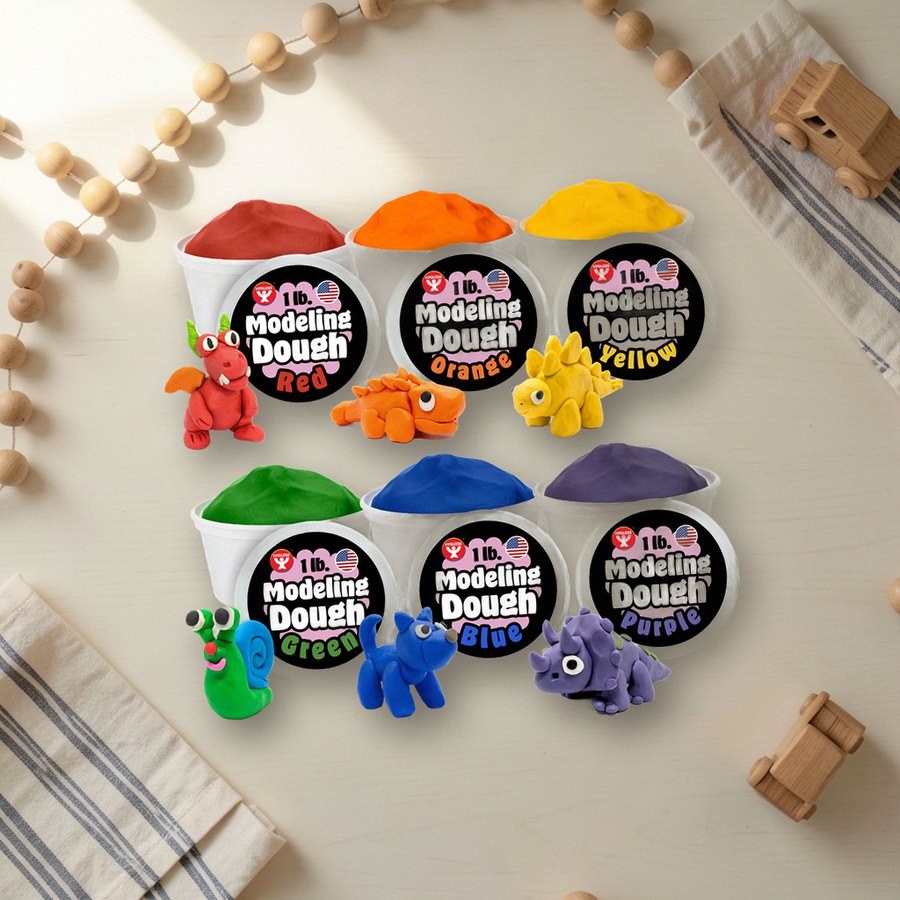 Modeling dough, 6 colorsView on Amazon
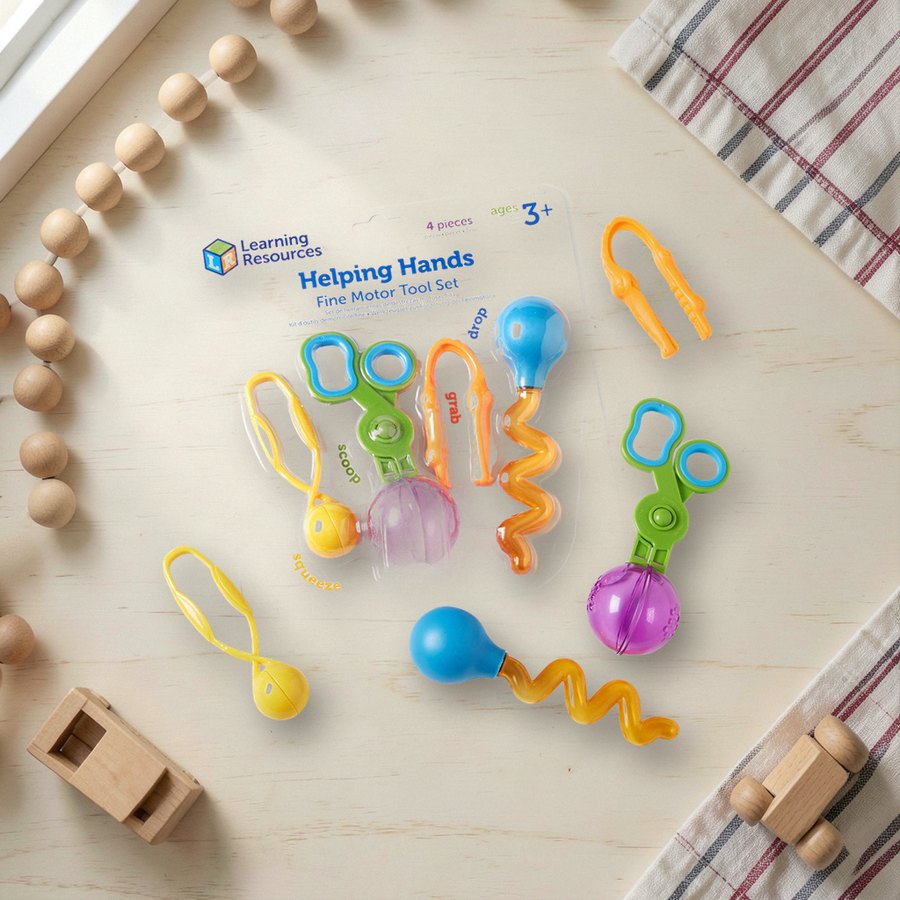 Fine motor tool set (Learning Resources)View on Amazon
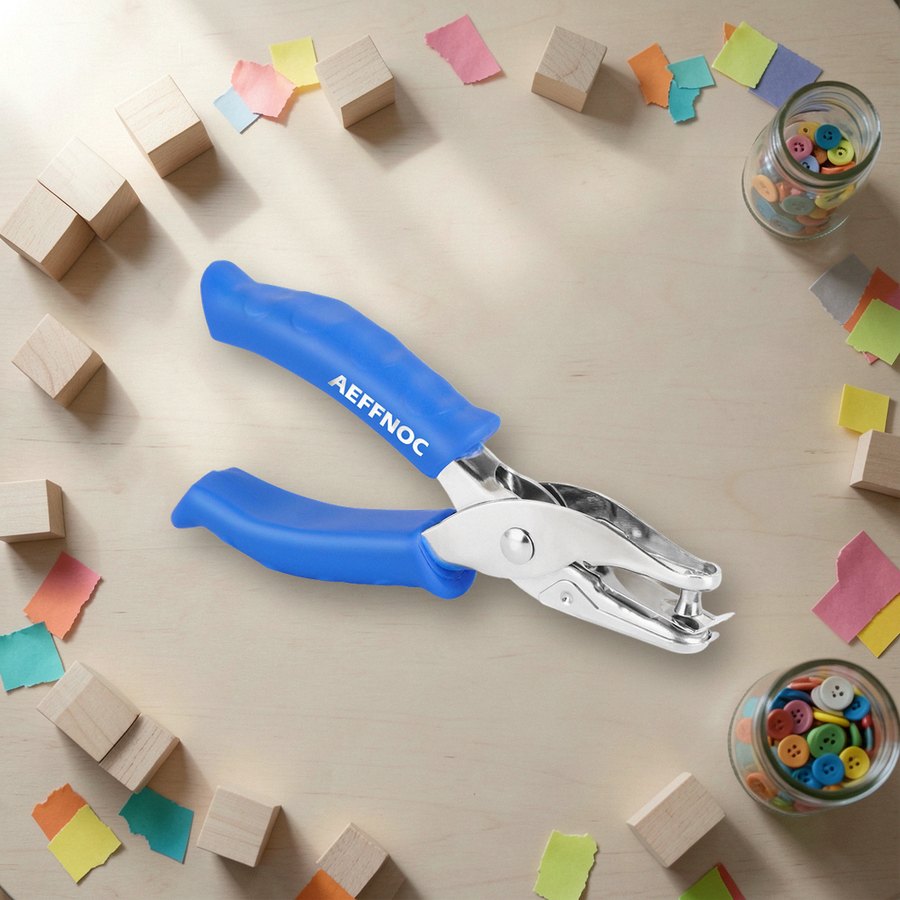 Single hole punch with soft gripView on Amazon
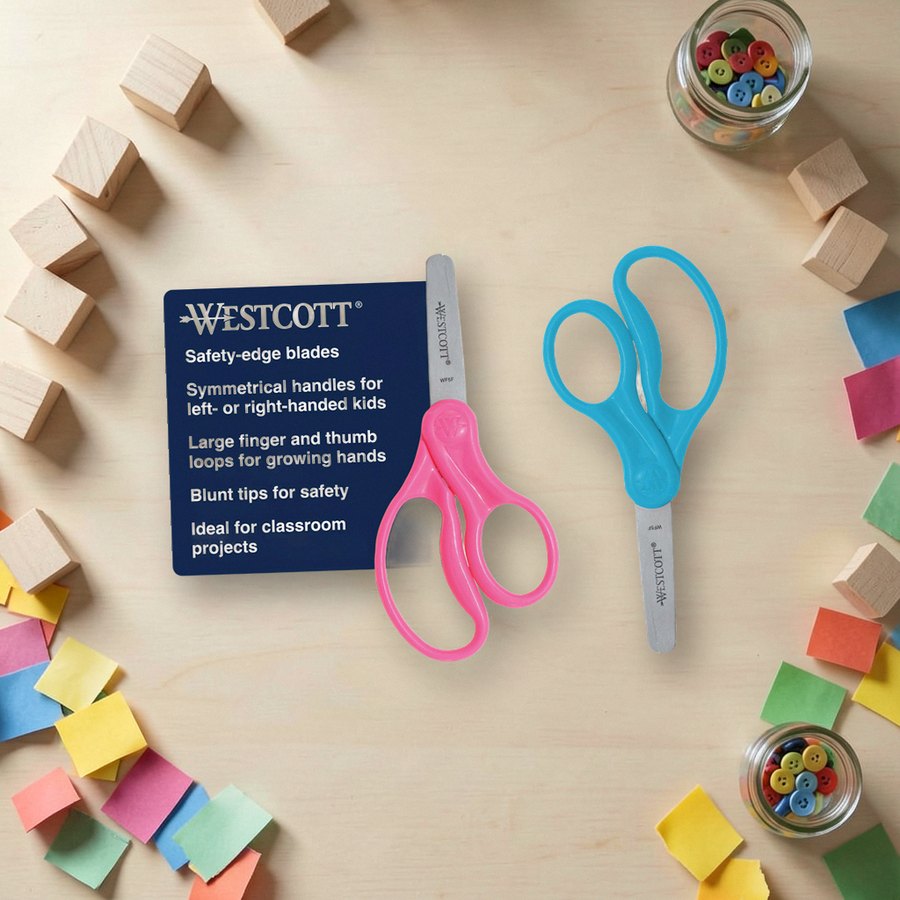 Blunt-tip kids scissorsView on Amazon
As an Amazon Associate, PrintableBloom earns from qualifying purchases.