Teaching Letter Sounds to Preschoolers: Where to Start
Your child can proudly sing the alphabet song, so you point at a cereal box and ask, “What sound does that make?” and get a blank look. If that little moment has left you wondering whether you’ve been teaching the wrong thing, take a breath. You haven’t done anything wrong, and you’re in exactly the right place to help your child take the next step.
Knowing the names of the letters and knowing the sounds they make are two different skills, and the gap between them is one of the most common things I reassure parents about. Let’s walk through where to actually start with letter sounds, which ones come first, and how to keep it playful instead of drilling.
Letter names vs. letter sounds – why sounds come first
Here’s the distinction in plain terms. The letter name of the first letter is “ay.” The sound it usually makes in words like apple and ant is a short “aaa.” When your child eventually reads, they don’t sound out a word by saying the names of the letters (“bee-ay-tee” gets you nowhere near “bat”). They blend the sounds: “b-a-t.” That’s why, for the purpose of reading, sounds do the heavy lifting.
None of this means the alphabet song was wasted. Letter names give your child a shared vocabulary and a sense of the alphabet as a set, and most kids pick names up naturally. If you want a fuller picture of how that early recognition develops, I wrote about how preschoolers actually learn the alphabet separately. For now, the mindset shift is simple: names are the label, sounds are the tool. When you play letter games from here on, quietly lead with the sound. Point at the letter and say “that says mmm,” not just “that’s M.”
One small habit makes a big difference: say sounds cleanly. Try to voice “mmm,” “sss,” and “fff” without the extra “uh” tacked on the end. “Buh” and “duh” are hard to avoid entirely with stop sounds like b and d, but keeping them short (“b,” not “buhhh”) makes blending far easier down the road.
Which sounds to teach first (and why not A-B-C order)
It feels natural to start at A and march to Z, but that order is surprisingly unhelpful for reading. Alphabetical order clusters some tricky, low-use letters early and delays the ones children need most. Reading programs used in schools deliberately teach sounds in a different sequence, and you can borrow the same logic at home.
A well-loved starting set is s, a, t, p, i, n. There’s a reason those six come first: with just those sounds, your child can build and read a whole batch of real little words – sat, tap, pin, nap, tip, pit, sip, tin, pan. Nothing motivates a child like realizing the sounds actually spell something they can read themselves.
A sensible order to introduce sounds, a few at a time, looks like this:
- Group 1: s, a, t, p, i, n
- Group 2: m, d, g, o, c, k
- Group 3: e, u, r, h, b, f, l
- Group 4: j, v, w, x, y, z, and the two-letter sounds like sh, ch, th
Don’t rush the groups. A single sound might live in your household for several days before the next one arrives. Focus on lowercase letters first, since that’s what your child will meet most in books. Capitals can come later and casually.
Making sounds stick with everyday objects and play
Letter sounds settle in fastest when they’re attached to real things your child can hold, hear, and giggle about – not flashcards drilled at the table. The goal at this stage is hearing sounds, which is a listening skill more than a paper-and-pencil one.
A few gentle games that genuinely work:
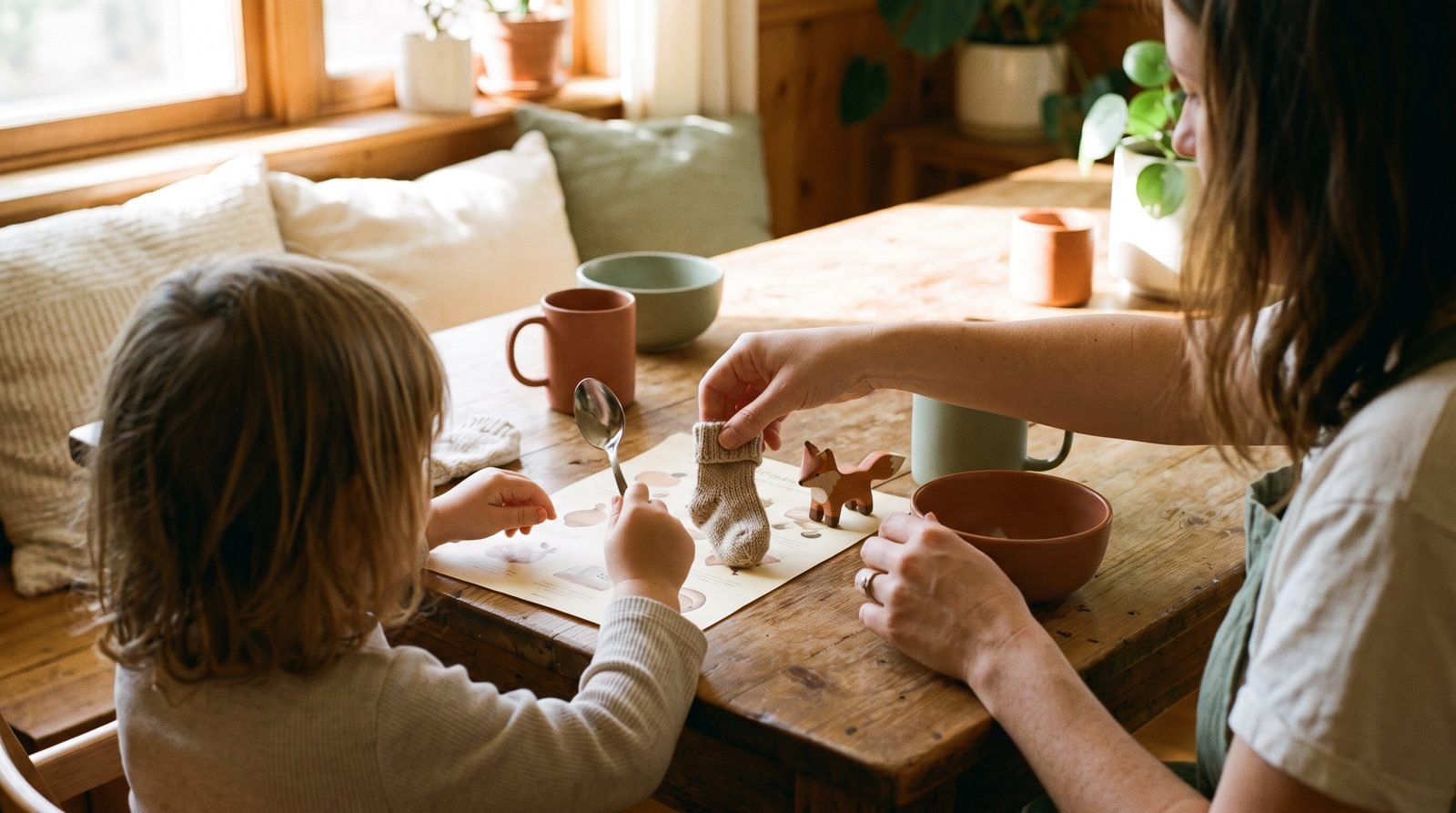
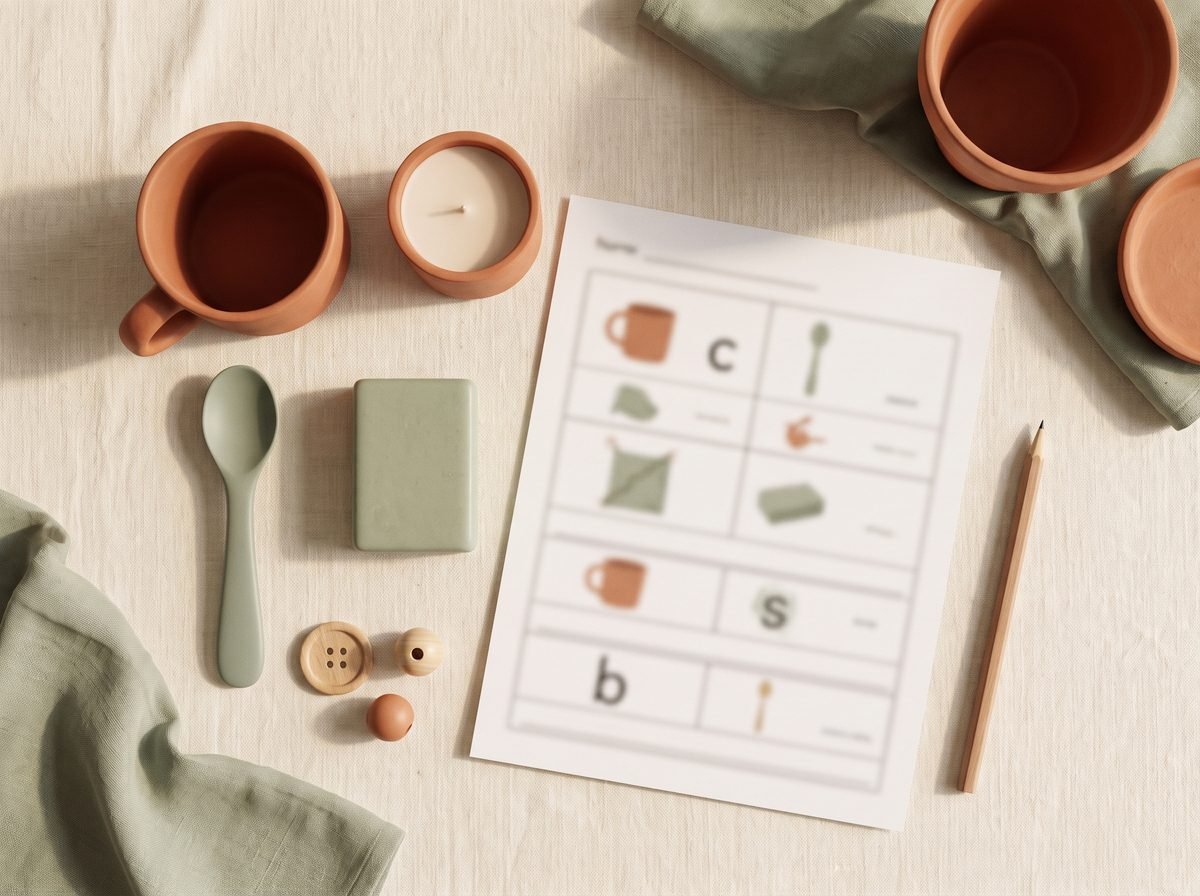
- Sound hunt. “Let’s find three things that start with sss.” Off you go around the house collecting a sock, a spoon, a stuffed snake. Say each word slowly, stretching the first sound.
- I spy, with sounds. Instead of “I spy something blue,” try “I spy something that starts with mmm.” (mug, mat, mom).
- Sound sorting. Gather a small pile of objects and two bowls. Put everything starting with “t” in one, everything with “p” in the other. Small hands love sorting.
- First-sound snack. At snack time, ask what sound banana or cracker starts with. Everyday moments beat scheduled lessons.
Keep each burst short – five minutes is plenty for a three- or four-year-old. If your child loses interest, you stop. Frustration teaches a child that letters are a chore, and that’s the one outcome we’re trying hard to avoid. Warm and brief beats long and tense every single time.
Blending the first simple sounds together
Once your child can reliably hear and produce a handful of single sounds, you can start gently nudging toward blending – the moment where separate sounds slide together into a word. This is the actual doorway to reading, and it deserves patience.
Start with your mouth, not with print. Say the sounds of a short word slowly, with tiny gaps: “c… a… t.” Then ask, “What word is that?” Many children need to hear it several times, and many will guess wildly at first (“cat? car? dog?”). That’s normal. You can help by shrinking the gaps each time until the sounds nearly touch: “c-a-t.”
Stick to three-sound words that follow the consonant-vowel-consonant pattern, using only the sounds your child already knows: sat, pin, tap, mat, dog, sun, bed. When they can blend by ear, then bring in the printed letters and run a finger under each one as you say its sound. Blending by ear first, print second – that order saves a lot of confusion.
If blending isn’t clicking yet, it usually means more time is needed hearing individual sounds, not more pressure. Drop back to the sound games for a few weeks and try again. Reading readiness has its own timetable, and pushing rarely speeds it up.
Common tricky sounds and letter confusions
A few predictable stumbles trip up nearly every new reader. Knowing they’re coming means you won’t worry when they show up.
- b and d. The classic mirror-image mix-up. It’s a normal part of learning and often lingers well into the early school years – it is not a red flag on its own. A simple visual anchor helps: the word “bed” makes a little bed shape, with b as the headboard and d as the footboard.
- Short vowels. The vowels a, e, i, o, u are the hardest sounds to keep straight, especially e and i. Give them extra time and lots of listening practice.
- Letters that don’t say their name. C, g, and y are common culprits (“c” often sounds like “k,” “g” has a hard and soft version). Early on, just teach the most common sound and don’t overload with exceptions.
- Stop sounds with an “uh”. “buh, kuh, duh” make blending muddy. Keep clipping them shorter.
When your child mixes something up, resist the urge to correct sharply. A calm “let’s listen again together” keeps the whole thing feeling safe. If you notice persistent, significant struggles well past the early years, it’s always fine to mention it to your pediatrician or your child’s teacher – but ordinary mix-ups at ages three, four, and five are simply the sound of a brain learning.
How printable phonics practice fits in
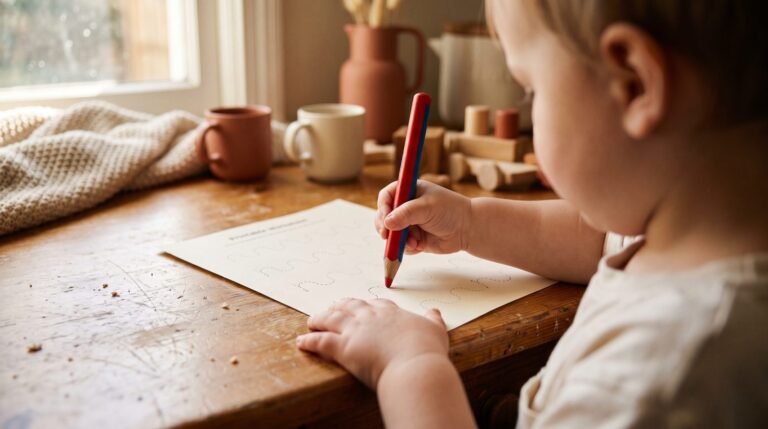
Once sounds are being heard and a little blending is happening, printable practice becomes a helpful companion – not the main event. A worksheet’s real job is to give a child a chance to link the sound they already know by ear to the letter on the page: tracing an “s” while saying “sss,” circling the pictures that start with “m,” matching a beginning sound to an object.
My rule of thumb: play and talk come first, paper reinforces. If you’d like simple, no-pressure sheets to slot into the routine, our alphabet letter practice printables pair well with the sound games above, and as your child moves toward blending and early words, the kindergarten phonics worksheets pick up the thread. Keep sessions short, celebrate effort over accuracy, and let the printable be one small piece of a mostly playful, mostly verbal journey. It also helps to keep sight of the bigger picture of early reading skills every preschooler needs, of which letter sounds are just one strand.
What’s realistic for ages 3, 4, and 5
Every child is on their own clock, but these gentle benchmarks can help you set expectations without pressure:
- Age 3: Mostly about listening. Playing rhyming games, noticing that “mommy” and “milk” start the same, maybe recognizing the sound of the first letter of their own name. Formal letter-sound teaching is entirely optional here.
- Age 4: Learning the sounds of many single letters, hearing the first sound in lots of words, and beginning to notice ending sounds. Some fours start blending simple words; many don’t yet, and that’s fine.
- Age 5: Knowing most letter sounds, blending three-sound words, and reading a few simple words independently. This is where a lot of the pieces start clicking, often right around the start of kindergarten.
If your child is ahead of these, wonderful. If they’re behind, also wonderful – these are wide, forgiving ranges, not deadlines.
Signs your child is ready for early reading
Rather than a fixed age, watch for readiness signals. A child tends to be ready to move into real blending and early reading when they:
- Recognize the sounds of most letters quickly, without long pauses;
- Can tell you the first sound of a spoken word (“what does fish start with?”);
- Notice and enjoy rhymes and words that start alike;
- Show curiosity about print – asking what a sign says, pretending to read a favorite book;
- Can sit with a short sound game for a few minutes without frustration.
You don’t need every box checked. A handful of these means it’s a good time to gently introduce blending. And if the signs aren’t there yet, keep playing with sounds and reading aloud together – you’re building the foundation either way.
Teaching letter sounds isn’t about worksheets stacked to the ceiling or hitting a milestone by a certain birthday. It’s a series of small, warm moments – a sound hunt in the kitchen, a giggle over a silly word, a proud “I read it!” when three sounds finally click together. Start with a few sounds, keep it light, follow your child’s lead, and trust that the rest will come. You’ve got this, and so does your little one.
Simple Materials for Sound Practice
Sound practice is mostly talking. Movable letters help when you start blending two or three sounds.
 Magnetic letters and numbersView on Amazon
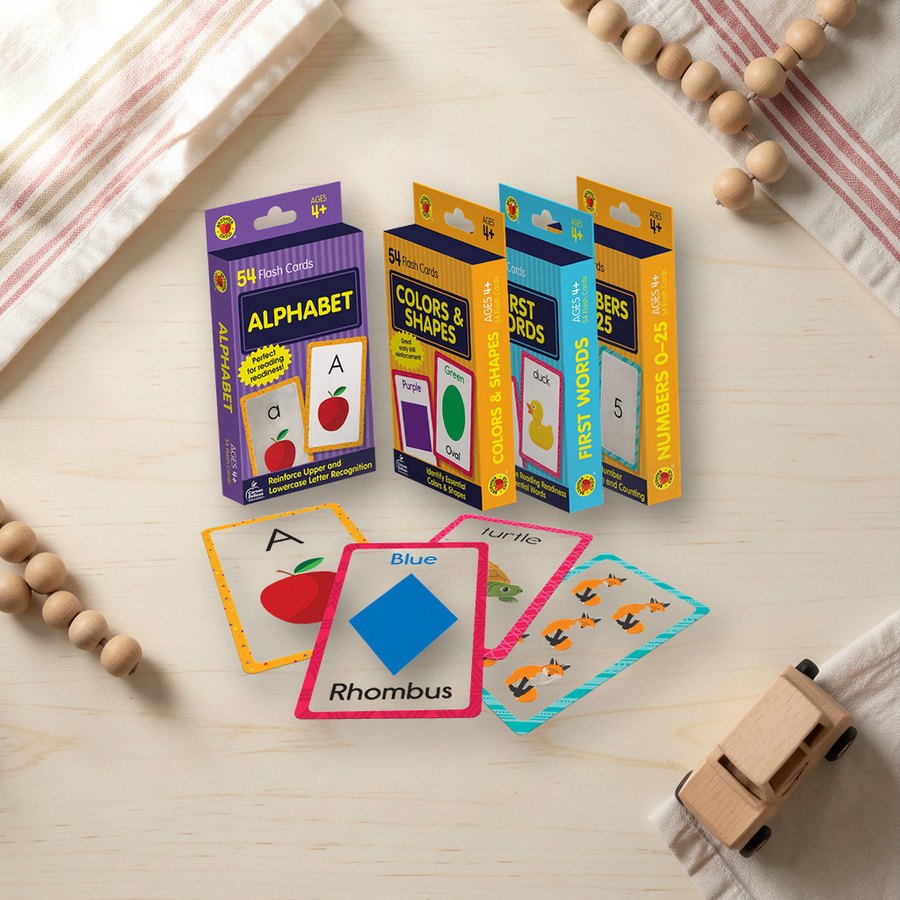 Toddler flash cards, 4-packView on Amazon
 9 x 12 dry erase lapboards, 2 packView on Amazon
As an Amazon Associate, PrintableBloom earns from qualifying purchases.